Online Reporter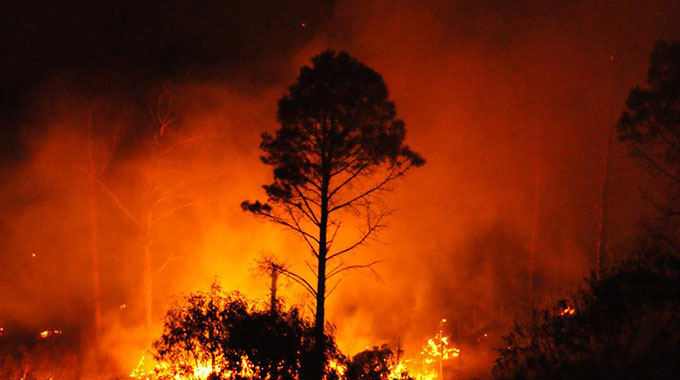
Lovemore Kadzura
Mutare Bureau
Veld fires destroyed pasture, woodland, and property worth over US$7,2 million last year, Minister of State for Manicaland Provincial Affairs and Devolution Advocate Misheck Mugadza said yesterday.
Speaking in Mutare yesterday in a call for united action by all involved to mark the launch of the Provincial Fire Watch, Minister Mugadza said the province has borne the full brunt of veld fires, including the loss of three lives and the destruction of timber estates, natural forests, and grazing land.
Last year, Zimbabwe recorded 4 554 veld fires, which destroyed 92 964 hectares of woodland and pasture and caused damages exceeding US$7,2 million.
“Sadly, three fire-related deaths were reported, including two in Makoni and one in Chipinge districts of Manicaland. Within Manicaland, 74 083ha were lost to fire in 2024, a staggering 251 percent increase from the 21 000ha burnt in 2023.
Nyanga district was the hardest hit, with 42 980ha burnt, most notably within the Nyanga National Park.
“The consequences of veld fires extend beyond biodiversity loss. They threaten food security, infrastructure, and climate resilience, contributing to desertification, land degradation, and greenhouse gas emissions, thus eroding both ecological and economic stability.
“We commend the invaluable contributions of stakeholders working to reduce veld fires and their impacts. The Timber Producers Federation continues to invest in preventive infrastructure such as modern fire equipment, fireguards, lookout towers, and rapid response teams to protect plantations and communities.
“The private sector, in collaboration with local authorities and community organisations, is promoting sustainable land-use practices.
“Agritex officers have intensified farmer education programmes, advocating safe land preparation, fire risk awareness, and integrated land management practices to minimise fuel loads.
“Civil society organisations are providing training and advocacy support, while traditional leaders are playing a vital role in enforcing community by-laws, leading awareness campaigns in high-risk areas, and mobilising communities for tree planting and land protection initiatives.
“These combined efforts are crucial in enhancing community sustainability and resilience,” said Minister Mugadza.
He encouraged people to develop and adopt a culture of tree planting to replace the losses being caused by uncontrolled veld fires.
“I encourage everyone to actively participate in reforestation and afforestation programmes. These initiatives are crucial for enhancing forest cover, restoring degraded lands, and reducing the risk of veld fires.
“Planting trees helps to create natural windbreaks, retain soil moisture, store carbon, and regulate microclimate, thus building resilience to environmental hazards and fostering a healthier planet.
“I have made it a personal and professional commitment to include a tree-planting activity at every official event I attend. This is a deliberate effort to lead by example and ensure that we are actively contributing to forest expansion and ecosystem restoration in Manicaland.
“We are also urging traditional leaders, local authorities, and institutions to adopt similar practices and dedicate land for community woodlots, fruit orchards, and the regeneration of indigenous tree species,” said Minister Mugadza.