Online Reporter
Nesbert Tafadzwa Madziwa
THE hypothetical capture of Venezuelan President Nicolas Maduro by the United States under
’s leadership, whether framed as law enforcement, counter-narcotics, or democracy promotion, would mark one of the most consequential ruptures in the post-World War II international order.
It would not merely be an act against Venezuela as it would signal a transformation in how power is exercised globally, how sovereignty is respected, and how natural resources increasingly shape coercive foreign policy.
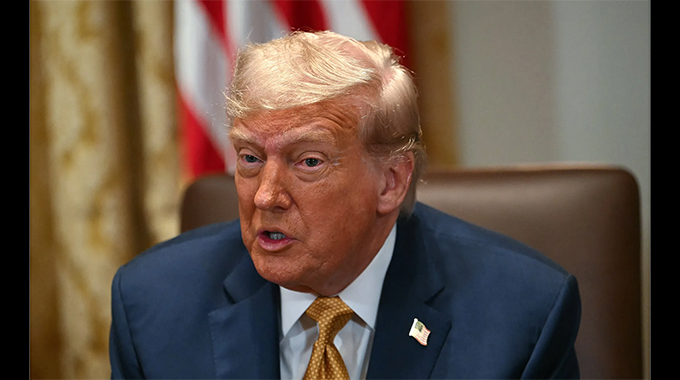
At its core, such an action would expose the tension between declared values and material interests, particularly the US’ enduring strategic fixation on oil.
Oil first, democracy later
Venezuela sits atop the largest proven oil reserves on earth. This single fact complicates every moral argument advanced about democracy, corruption, or drug trafficking. While Washington has long accused Caracas of narco-criminality and authoritarianism, history shows that such accusations often function as cover narratives, mobilised selectively when strategic resources are at stake.
The language of democracy, in this context, becomes instrumental rather than principled. If democracy were the primary concern, consistency would demand similar urgency in cases where allied regimes violate the same standards. Instead, enforcement appears resource-driven.
This pattern is not new.
Panama as precedent: Noriega and the logic of indictment
The US’ 1989 invasion of Panama and the capture of General Manuel Noriega, justified through drug trafficking indictments, offers a historical parallel.
Noriega, once a US intelligence asset, became expendable when he no longer aligned with American strategic interests, particularly over control of the Panama Canal and regional influence.
The lesson from Panama was that criminal indictment can be weaponised geopolitically. Once framed as a criminal rather than a head of state, sovereignty becomes elastic, borders negotiable, and military intervention rebranded as justice.
A similar logic, applied to Venezuela, would represent the normalisation of regime removal by abduction.
Green light for global unilateralism
Public policy scholar Sultan Barakat, warns that the capture of a sitting president — if allowed to stand — would give Trump “the green light to do it elsewhere.”
This is a sobering assessment. The implication is not limited to Venezuela but extends to any state whose leadership obstructs US strategic or economic interests.
More troubling is the institutional context. Acting without congressional authorisation, such a move would bypass the constitutional checks that traditionally constrain US war powers. Under international law, abducting a sitting head of state constitutes an act of war. Yet in this scenario, executive discretion overrides both Congress and the global legal order.
The question then becomes unavoidable: who can still stop the United States?
Africa in the crosshairs: Are resource states safe?
For Africa, the implications are profound.
If sovereignty can be suspended in Venezuela due to oil, what about African states endowed with strategic minerals, gas, or newly discovered petroleum? Zimbabwe’s recent oil discovery in Muzarabani inevitably raises concern. Is resource discovery a blessing — or a vulnerability?
African states have historically suffered from external securitisation of their resources, where internal governance narratives are internationalised to justify pressure, sanctions, or intervention. The Venezuelan scenario would reinforce the perception that resource ownership invites geopolitical exposure, not protection.
Scholar Lee Jaspers Snr captures this anxiety succinctly:
“This action sends a chilling message to the world, especially African, Caribbean and Latin American nations: your leaders are removable, your borders are negotiable, and your sovereignty exists only until it conflicts with US interests.”
He further asserts: “Democracies do not kidnap heads of state.”
This is not rhetorical exaggeration but a warning grounded in precedent.
Responsibility of the East: Beyond condemnation
Russia and China, as major Eastern powers and permanent members of the UN Security Council, cannot limit their response to statements of concern. Condemnation without consequence risks legitimising unilateral coercion.
If global power is to remain balanced, pressure must be operationalised through diplomatic isolation, legal challenges in international courts, economic countermeasures, and co-ordinated multilateral resistance to norm erosion. Silence, or symbolic protest, only accelerates the collapse of international restraint.
Today Venezuela, tomorrow someone else
If the world normalises the abduction of presidents under the guise of law enforcement or democracy promotion, the precedent will spread. Oil-rich states will be the first targets, but not the last.
International order does not collapse suddenly. It erodes incrementally, through tolerated exceptions that become routine practice.
If the global community watches quietly today, tomorrow’s victim may not have the luxury of outrage — only regret.