admin
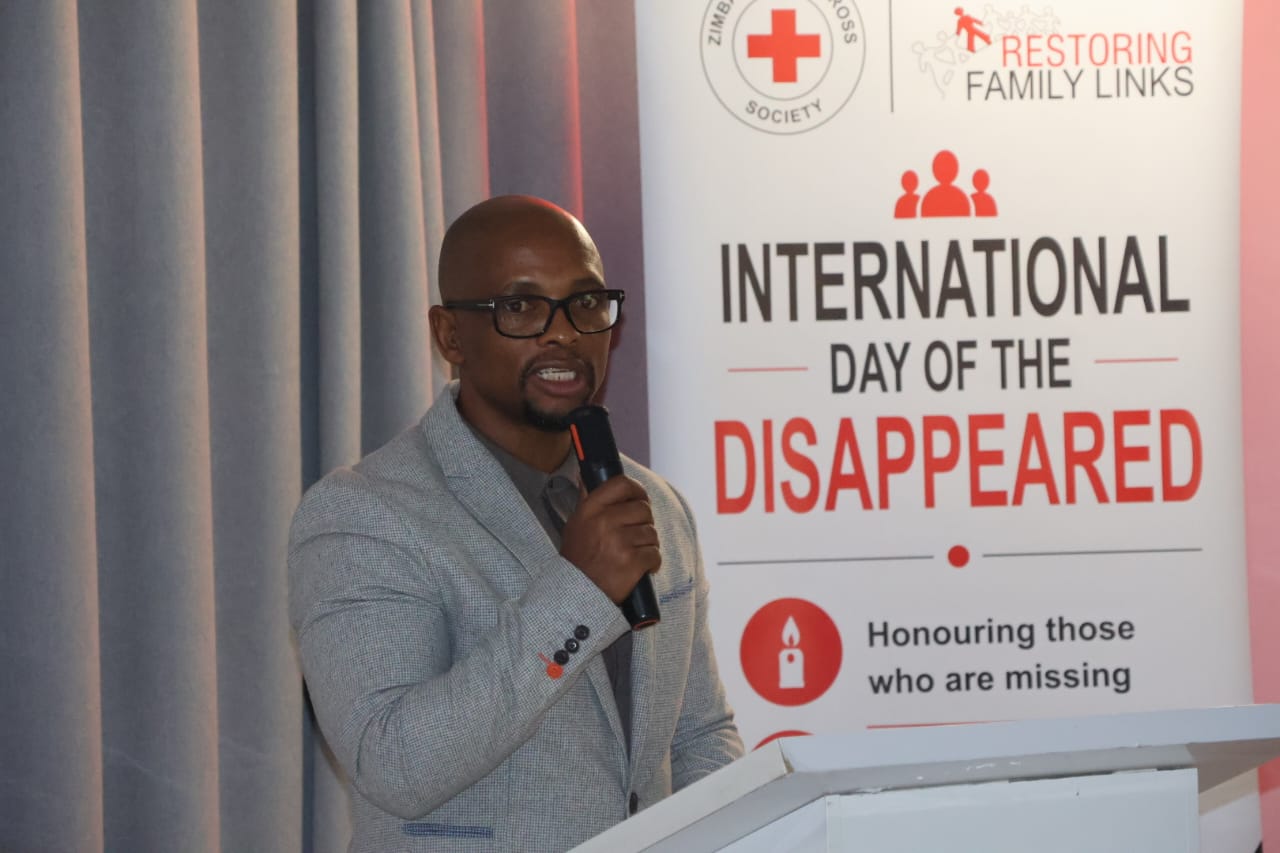
adminSOUTH Africa-born and bred Kurt Egelhof is a man whose passion for arts and culture can almost not be equalled in Southern Africa. The passion can almost be felt, in fact touched.
Having started his professional career as a drama-trained actor in 1981, he has worked in film, theatre and television as a producer, director and for heavyweight offerings like Isidingo, Scandal, Backstage and Generations.
Bulawayo was privileged to see the veteran actor on stage at the recently held Intwasa Arts Festival koBulawayo where he performed his bio-drama For Generations, which left audiences both emotionally wrecked and also artistically intrigued.
The piece is the story of his life – his grandfather, father and son.
This engaging piece begins in the Transkei on the eve of the Second World War. Central to the play is a uniquely South African anomaly that one family can change from German to Xhosa to Zulu to Jewish as it moved around the country, yet all the time maintaining the surname “Egelhof”. From the unrecognised musical talents of his German grandfather, a war-veteran; to the impact on his father’s life of the gruelling hours that he worked on the docks; through his own experiences as an actor in South Africa; to the dreams of his sports-mad son, this family’s story is at once both uniquely South African and universal, recounting a tale of victories and defeats, and highlighting a nation’s efforts to raise its sons as good men and role models for the generations of sons and daughters to come.
He plays all the characters all alone.
Sunday Leisure correspondent, Bruce Chimani (BC), managed to interview the talented Egelhof (KE) on his experience in Zimbabwe among other things. Excerpts of the interview are below.
BC: Kurt, please tell us about your experience in Zimbabwe and also at the Intwasa festival?
KE: Intwasa was my third visit to Zimbabwe. I came previously for the Amnesty International Concert in 1988, and then about three months ago for a management workshop with Nhimbe Trust and Pamberi Trust in Harare. Obviously by this time, September 2014, not yet being a naturalised Zimbabwean, (I was once jokingly offered honorary Nigerian citizenship by the then Minister of Communications – in 2000), I considered a future of living and working in Zimbabwe as a real option – because unlike the popular folklore of Southern Africa today, Zimbabwe is streaks ahead of South Africa when it comes to human relations.
BC: Why is this particular issue of human relations so paramount to you?
KE: My practice as an arts and culture practitioner lies purely in the human resource: people are at the centre of what I do for a living, and the Zimbabwean people made me feel like I had just arrived home. I felt more respected by the average citizen on the streets of Zimbabwe than in South Africa.
BC: That’s a great compliment for this country. What was your overall impression of the festival though?
KE: I would say that there is a disconnect between the festival and the public in the sense that on the streets of Bulawayo, you don’t feel the festival (or its festivities). The streets of Skies look like “business as usual”. One has to go “find” the festival, which inevitably is to be found behind closed doors. This is not a good thing. Intwasa needs to go out and meet its people more – in the streets of Bulawayo.
BC: But what did you think of the culture and obviously the art?
KE: I find Zimbabweans have a lot to teach SA about how to get along with each other. The culture? Well, it’s African – I’m an African, so I was very comfortable with where I was – because the truth is the Africa context is a continental thing and we should be looking more towards that common cultural vision rather than what separates from border post to border post.
However, I would say that there is also a deep sect oral vacuum left behind by the break in continuity from white Rhodesia’s methodologies, training and opportunity-creation in the arts and culture sector – versus the aspirations of young black Zimbabwean artistes trying to uplift their sector – economically and creatively.
That vacuum needs to be met with committed creative and financially abled people to close as soon as possible. There is a wealth of jobs to be created by a healthy Creative Industries Sector. And if it means importing those skills to quicken the filling of that creative and professional vacuum, well, you know where to find me . . . ! Performing arts needs to be current, and challenging and terrifying and exciting.
BC: Okay, it’s really hard to ask a veteran like you this question – but did you in anyway learn anything over the period you were here for the Festival?
KE: One is always learning. I learned a lesson in humility from being at Intwasa – for the fact that at home in SA I take my resources for granted sometimes. And what I saw during the festival was a very brave and positive approach by artistes toward the scant resources they had at their disposal – and a commitment to make that work for them. That’s a good thing. Because when you produce theatre from nothing, it’s capable of going deep down to the core of your soul.
BC: I watched For Generations at Intwasa and I was blown away, I am only learning of this concept of “Bio-Drama” – care to share more on it and its importance on the theatre landscape? Is the particular play ALL real life? What really inspired it?
KE: The content of For Generations is factually true and correct. It is all real life. My life. Sometimes, in various stages of development, because I was not for example a witness to my grandfather’s departure to WW2 – simply because I was not yet born, and my dad was only nine years old – I had to intuitively connect with my DNA memory pool, (the pain and joy and fear embedded in there) – and because half of my dad’s genes exist in me, and so on backwards in my gene pool to men and women I don’t even know – I had to quietly travel back in time to “become” him – that little nine year old – and once I figured that mechanism out, the gates opened and the “Bio” of Biodrama (Biographical Drama) came flooding out. Yes, in my case it was autobiographical. Real. And painful.
The importance of this concept of drama on the theatre landscape: it will teach an actor just how precious the lives of their characters are so that not one single word or thought that the character has, is taken for granted by the actor. Actors tend to rush the process of characterisation and grab onto some smart “trick” that works on day two of rehearsals. Boom. They stop trying, no more pushing the envelope, and very quickly stick with that same “trick” till the end of the run. Biodrama will break that bad habit, and give the actor a growth curve for the rest of the play’s existence. I love learning to love myself more and more every time I perform For Generations.
It strikes me as a formidable tool for deepening one’s insight into humanity beyond language, “race”; beyond the cosmetic, the superficial. Actors need that – desperately – the ability to travel deeper into the quality of collective humanity through the insightful unpacking of the journey of one single individual.
BC: So what kind of responses did you get on For Generations here in Zimbabwe and also elsewhere where you have performed?
KE: Everyone cries for the love they lost – be it one’s child, mom, dad, granddad, grandma. I think Zimbabwe was stunned that someone could so bravely go to the heart of the matter and express those dark corners of our souls like only theatre can. I think Zimbabwe loved it!
I loved performing it in Zimbabwe, so the feeling must be mutual. In England, a bunch of farmers – the entire audience – kept me discussing the play for two hours after the play ended! And grown men cried for the love of their moms and dads long passed.
BC: So what are your views on theatre and art in general on the Southern African backdrop?
KE: There is not enough cultural cross pollination between territories in the Sadc region. You cannot subscribe to an “exclusive” vision of this thing we call performing arts, since it’s evolving all the time – as is culture. We must not let the borders separate us! Also, there are massive gaps in understanding the role of the cultural economy in creating jobs, uplifting society, educating the practitioners, influencing public opinion.
Western models did force a very colonial European vision into the sector. Some of it was contaminated, some of it was good. We are left with a bit of both. Africa today is an irreversible hybrid of the interaction between these two monolithic cultures over 400 years ago. We must find that comfortable synthesis and make it work for us. (Starting a show on time for example, and refusing entrance to late comers, is the beginning of earning respect for what we do, in the eyes of those we expect to behold our beauty.)
BC: Quite some challenging words there. Will there be any further bilateral relations with artistes in Zim? How? And when can we expect these?
KE: Yes. PANSA and Nhimbe Trust are going to drive a serious exchange agenda in 2015 – between SA and Zimbabwe, in respect of training for theatre and television, and making product out of those training programmes. The plan is to decentralise the skills sharing programmes across Zimbabwe – not just Harare and Skies. Speak to Josh more about this.
Additionally, based on a very humble three-day Biodrama workshop I held at Nhimbe Trust, in Bulawayo, there are three performers and a writer who are near ready to create their own full length pieces of Biodrama for presentation to an audience. We are planning to progress the direction of the work via skype, but yes, there is a will and a programme to keep the momentum going.


 Online Reporter