Online Reporter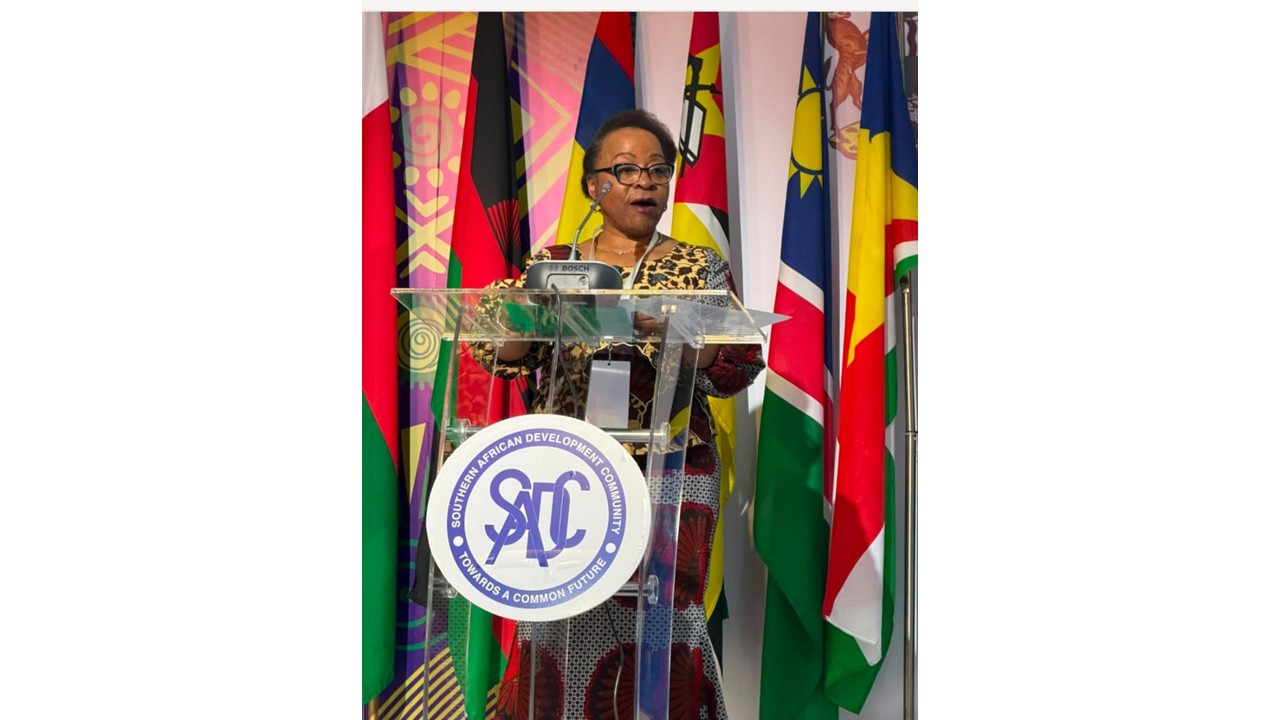
Gibson Mhaka, [email protected]
SOUTHERN African Development Community (SADC) member states should accelerate the implementation of the Single African Air Transport Market (SAATM), embrace artificial intelligence (AI) and invest in climate-resilient infrastructure to unlock regional integration and sustainable economic growth, SADC Deputy Executive Secretary for Regional Integration Ms Angele Makombo Ntumba has said.
Speaking during a high-level plenary discussion during the Sixth SADC Cluster Meeting of Ministers Responsible for Transport, ICT, Information and Meteorology in Bulawayo on Thursday, Ms Ntumba said the region stood at a critical juncture where enhanced connectivity, digital transformation and climate resilience had become indispensable for economic growth and regional prosperity.
The high-level ministerial roundtable dialogue was held under the theme: “Liberalised Skies and AI-Enabled Climate-Resilient Infrastructure to Accelerate Regional Integration and Sustainable Development in SADC.”
Ms Ntumba said transport, aviation, information and communication technologies (ICTs) and meteorology could no longer be treated as stand-alone sectors, as they had become increasingly interconnected drivers of regional development.
“This Ministerial Round Table is convened at a particularly critical moment for our region. SADC Member States are actively working to deepen regional connectivity, enhance mobility, accelerate digital transformation, harness emerging technologies such as artificial intelligence and develop infrastructure systems that are resilient to increasing climate-related shocks,” she said.
“In this context, transport, aviation, information and communication technologies and meteorology can no longer be treated as separate policy domains. Rather, they are increasingly interdependent pillars that underpin regional integration, trade facilitation, disaster preparedness and sustainable development.”
She said the effective implementation of the Single African Air Transport Market remained central to improving connectivity across the continent and unlocking economic opportunities.
“The liberalisation of African skies, through the effective implementation of the Single African Air Transport Market, remains central to improving air connectivity across the continent. It is a key enabler for reducing the cost of travel, promoting tourism, facilitating trade and strengthening linkages between our economies,” said Ms Ntumba.
She noted that improved aviation connectivity was not only about facilitating the movement of people, but also about enabling the efficient flow of goods, services, skills, investment and opportunities across the region.
The Deputy Executive Secretary said SADC’s vision for regional integration was increasingly being shaped by technological innovation, particularly artificial intelligence and Digital Public Infrastructure (DPI), which have the potential to transform public service delivery and economic activity.
She said AI could play a significant role in strengthening climate and weather forecasting, improving disaster preparedness, optimising transport routes and enhancing infrastructure management.
“When integrated with artificial intelligence, satellite-based observation systems, digital platforms and real-time monitoring technologies, climate and weather intelligence becomes significantly more powerful. It enables Member States to better anticipate risks, reduce potential losses and safeguard strategic infrastructure investments across the region,” she said.
Ms Ntumba added that AI and Digital Public Infrastructure presented transformative opportunities for the region.
“Artificial intelligence can enhance predictive maintenance, strengthen climate and weather forecasting, optimise transport routes, improve disaster risk management and support more efficient and responsive public service delivery.
“Similarly, Digital Public Infrastructure can advance digital identity systems, enable secure and efficient payment platforms and facilitate trusted data exchange, thereby strengthening trade, mobility and regional interoperability.”
She warned that climate change continued to pose significant challenges to the region, with increasing incidents of floods, droughts, cyclones and other weather-related disasters threatening infrastructure, transport networks and essential services.
The increasing frequency of extreme weather events, she said, highlighted the need for infrastructure planning to be informed by climate risk assessments, robust data systems and early warning mechanisms.
“Infrastructure planning must be increasingly informed by climate risk considerations, robust data systems, early warning mechanisms and a long-term resilience perspective,” she said.
Ms Ntumba stressed that meteorological services had become increasingly important in supporting aviation safety, infrastructure planning, emergency preparedness and cross-border mobility.
“Meteorological services extend far beyond the provision of weather forecasts; they constitute a critical foundation for aviation safety, infrastructure planning, emergency preparedness, transport operations and the facilitation of cross-border mobility,” she said.
The SADC Deputy Executive Secretary also revealed that the region had already begun laying the groundwork for the responsible adoption of artificial intelligence.
She said the African Union’s adoption of the Continental AI Strategy in July 2024 had provided a framework for coordinated AI development across the continent, while several SADC member states had undertaken AI Readiness Assessments to evaluate their preparedness for AI development, deployment and governance.
These countries include Botswana, Malawi, Mauritius, Mozambique, Namibia, South Africa, Tanzania and Zimbabwe.
“Furthermore, a number of Member States are in the process of developing National AI Strategies and policies to guide the responsible adoption of these technologies,” she said.
At regional level, Ms Ntumba said the SADC Secretariat had developed draft terms of reference for the formulation of a comprehensive SADC AI Model Strategy and Regulatory Framework.
“The proposed framework will provide ethical safeguards to protect citizens from potential AI-related risks, while at the same time enabling Member States to fully harness the benefits of AI,” she said.
She reiterated the Secretariat’s commitment to supporting member states in advancing infrastructure development, digital transformation, climate resilience and sustainable economic integration.
However, she stressed that achieving these objectives would require strong collaboration among governments, regulators, industry players, academia, development finance institutions and international cooperating partners.
“The SADC Secretariat remains firmly committed to supporting Member States in advancing regional infrastructure development, digital transformation, climate resilience and sustainable economic integration.
“However, this agenda requires strong and sustained multi-stakeholder partnerships beyond Governments, including regulators, industry, academia, development finance institutions, meteorological services and international cooperating partners,” said Ms Ntumba.
She urged delegates to focus on practical solutions capable of accelerating regional integration and delivering tangible benefits to citizens across Southern Africa.
“Let us use this platform not only for the exchange of ideas, but also to identify actionable solutions that can be adapted and implemented across the SADC Region.”
The Sixth SADC Cluster Meeting of Ministers Responsible for Transport, ICT, Information and Meteorology ends in Bulawayo on Friday.