Online Reporter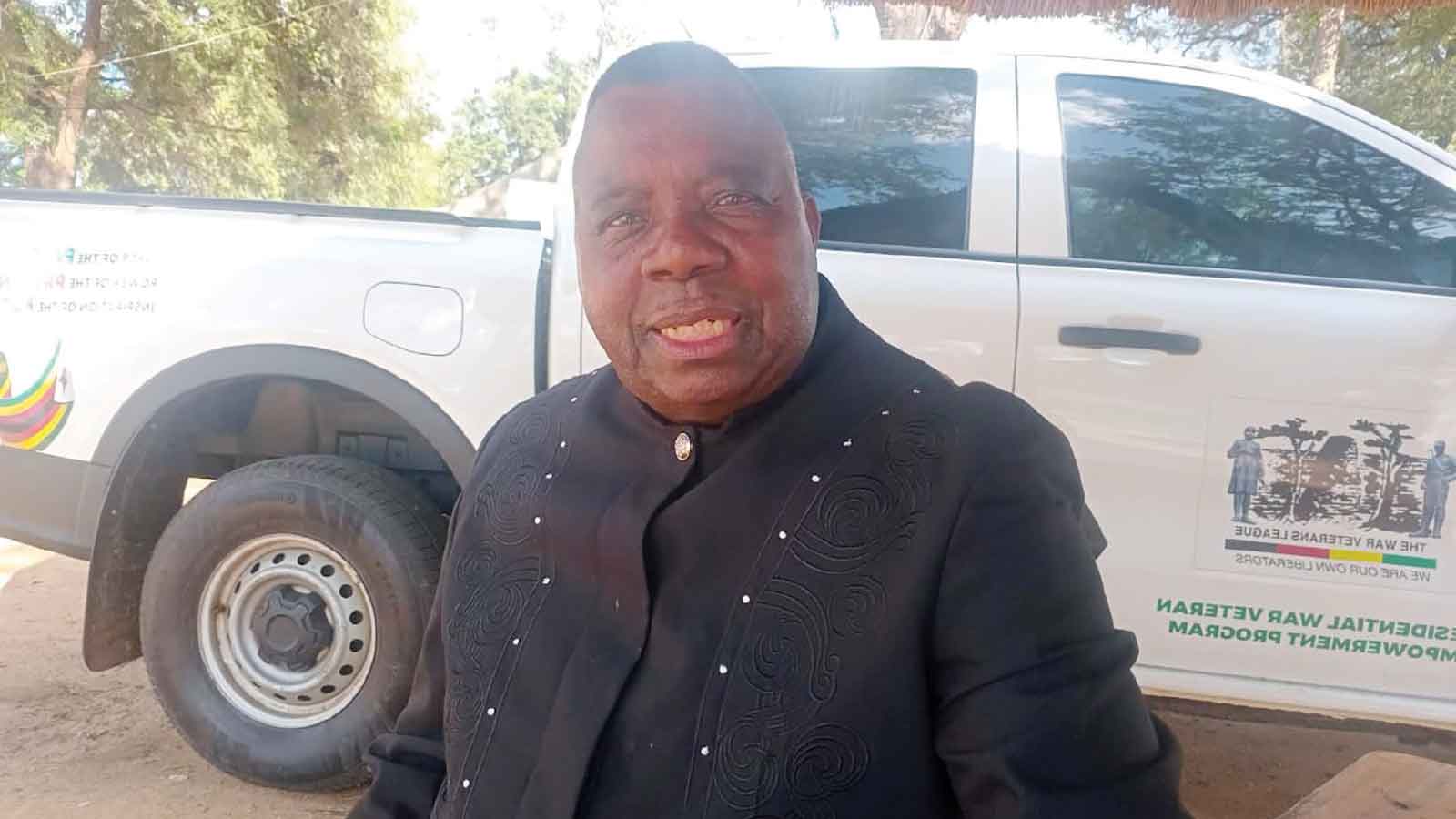
George Maponga
Masvingo Bureau
THE year was 1975, the location was Mgagao Camp — about 62 kilometres south of Iringa town in southern Tanzania — and the cast was a group of between 25 and 30 ZANLA (Zimbabwe African National Liberation Army) officers who were members of the General Staff.
The script was the watershed Mgagao Declaration that sealed the fate of then-ZANU founding leader Reverend Ndabaningi Sithole, replacing him with Cde Robert Mugabe, who was then secretary-general.
Rev Sithole and Cde Mugabe had been elected secretary-general and president, respectively, at the historic Gweru Congress in 1964.
At the same event, Cde Leopold Takawira was chosen as vice president, while Cde Herbert Chitepo became chairperson of the party.
When the Mgagao Declaration was signed by young ZANLA General Staff officers in Tanzania in 1975, Cde Chitepo had died in a car bomb explosion in Zambia on March 18.
Earlier, Cde Takawira had also passed away in a Rhodesian prison in 1970.
Cde Mugabe was thus chosen by the combatants as the interim ZANU leader tasked with spearheading the armed struggle until Zimbabwe’s independence.
He would eventually be confirmed as ZANU leader at the Chimoio ‘’Congress’’ in 1977.
Further, he later on became independent Zimbabwe’s first Prime Minister.
One of the signatories of the Mgagao Document, who was a young ZANLA military officer and member of the General Staff, Major-Genera Gibson Mashingaidze (Retired), went down memory lane, recounting how the Mgagao Declaration came into being.
Maj-Gen Mashingaidze (Retd) — who went to Mgagao in 1973 to train as a freedom fighter and used the nom de guerre Gibson Gumbo — was to command the 4 Infantry Brigade in Masvingo and also the Presidential Guard after independence.
The decorated retired army general and freedom fighter participated in some of the high-profile battles to dismantle Ian Smith’s Rhodesian war machine, including the Grand Reef Airbase attack on December 18, 1977 to avenge the heinous and bloody Chimoio attack that had been carried out a month earlier.
Soon after the attack, ZANLA Commander and ZANU Chief of Defence General Josiah Magama Tongogara tasked Cde Mashingaidze to lead a special team that included now-Defence and War Veterans Affairs Minister Cde Oppah Muchinguri-Kashiri to retrieve crucial documents containing personal files of all freedom fighters in Mozambique.
This was done to ensure that sensitive information did not fall into enemy hands.
The task was successfully completed.
Cde Mashingaidze, who specialised in the recoilless gun during training, was also an instructor at Mgagao.
His peers at the training camp included Vice President Dr Constantino Chiwenga (Dominic Chinenge), Bernard Manyadza (Parker Chipoyera), Basten Beta and others who were members of the General Staff.
Sithole’s fatal mistake
In an interview last week, Maj-Gen Mashingaidze (Retd) said the historic event was precipitated by Rev Sithole’s actions during a visit to Tanzania.
‘’The Mgagao Declaration was signed during the time of detente, when fighting had virtually stopped and we had nothing to do as guerrillas in the camps.
“Our national chairman (Cde Chitepo) had died in a car bomb explosion. Most of our leaders in the ZANLA High Command, including Gen Tongogara, were in prison in Zambia, except Mujuru (the late General Solomon), who up to this day I don’t know how he managed to escape from Zambia, while other commanders were arrested over Cde Chitepo’s death,’’ he recounted.
‘’The detente period also saw Frontline leaders managing to pressure nationalist leaders in Rhodesia to collapse their respective parties and unite under one political party, and Bishop Abel Muzorewa was chosen as leader of what was called the African National Congress in 1975. It was agreed that all nationalist leaders under the ANC banner would visit guerrilla camps to address them, so our leader, Rev Sithole, was part of the ANC leaders who visited us at Mgagao in 1975 during the time of detente.’’
It was during this visit that Rev Sithole made a fatal mistake that ultimately cost him his position.
‘’When Rev Sithole started greeting us (ZANLA commanders at Mgagao) one by one, he would ask each one of us our place of origin back home in Zimbabwe, and it became clear that he wanted to know the tribe of each one of us — the ZANLA commanders who were at Mgagao,” added Maj-Gen Mashingaidze (Retd).
“He made a cardinal mistake and had crossed a red line, because in our doctrine during the liberation struggle, we all came from one province called Zimbabwe, and we saw that Rev Sithole wanted to divide us along tribal and ethnic lines, and with that his fate was sealed.’’
The comrades spent many days drafting the Mgagao Document, which was signed by between 25 and 30 ZANLA General Staff members.
Cde Mujuru (Rex Nhongo), he said, inexplicably did not sign the historic document.
‘’He (Cde Mujuru) was always like that during the war, just like when I told you that we don’t know how he managed to escape arrest in Zambia when all other ZANLA commanders, including Gen Tongogara, were arrested after Cde Chitepo’s assassination, but we later on discovered that Rex (Gen Mujuru) had escaped from Zambia to Tanzania.
“After drafting of the Mgagao Declaration, Rex again exhibited strange behaviour before he found excuses to avoid signing and, resultantly, he did not sign the declaration we made at Mgagao that elevated (Cde) Mugabe as ZANU leader.’’
It was, however, agreed among the ZANLA guerrilla contingent that a substantive ZANU president would be elected in an independent Zimbabwe.
‘’(Cde) Mugabe was elected by the Mgagao commanders by virtue of being the most senior available leader who had been ushered into office at the 1964 Gweru Congress, where he was elected secretary-general,’’ added Cde Mashingaidze.
After the change of leadership, the next task was to make this known to leaders of the Frontline States and, by extension, the Organisation of African Unity (now the African Union).
Meeting Nyerere
‘’I was chosen to lead a group of five ZANLA commanders who were to deliver the Mgagao document to President Julius Mwalimu Nyerere so that he could pass on the message to other Frontline leaders. So, we requested to meet President (Julius) Nyerere through the ZANU representative in Tanzania, who was based in Dar es Salaam, Cde Boas Matarise, who then accompanied us to him, making us a total of six people who met the president.’’
During the meeting, President Nyerere asked Cde Mashingaidze to explain the rationale behind the declaration.
The Tanzanian leader asked the delegation to remain in Dar es Salaam while he conferred with other leaders of the Frontline States.
‘’President Nyerere was a very astute and intelligent man who also took no prisoners, so he told us that he had heard and understood us that we had lost confidence in Rev Sithole’s leadership and wanted Cde Mugabe to be the interim leader, and also that we wanted to resume the armed struggle against Smith’s racist regime until we freed our country . . .’’
Clashing with Cde Shamuyarira
While they were still in Tanzania, Cde Mashingaidze had a run in with Dr Nathan Shamuyarira at the party offices in Dar es Salaam.
“We would spend our time in Dar es Salaam at the ZANU offices with Cde Matarise and one day while the five of us were there, (Cde) Shamuyarira arrived at the offices and asked who we were and what skinny boys like us wanted there,” he said.
“He was speaking in English and contemptuously looking at us, all the while brandishing a FLORIZI (Front for the Liberation of Zimbabwe) flag.
‘’My other four colleagues asked me as their team leader to tell (Cde) Shamuyarira to immediately leave the ZANU offices with his flag and when I engaged him, he was not only abusive but intransigent.
“I grabbed the FROLIZI flag from his hand and the last thing I remember was me grabbing him by the collar and shoving him, forcing him to roll down the staircase until he fell to the ground.
“He dusted his suit and left the offices, and we burned his FLORIZI flag, and I never met him (Cde Shamuyarira) again until after independence when he was now a Cabinet minister.”
After some days, President Nyerere called them back to his offices, where he announced that leaders of the Frontline States had agreed and supported the Mgagao Declaration.
This paved the way for Cde Mugabe to be released from Quelimane in Mozambique, where he was restricted by Mozambican President Samora Machel upon his escape from Rhodesia.
Buoyed by the endorsement, Cde Mugabe assumed the leadership of ZANU, culminating in the historic Chimoio ‘’Congress’’, where his leadership was endorsed and the liberation war intensified until the Rhodesian regime capitulated and agreed to Lancaster House Conference talks in 1979.
Overall, this culminated in elections that birthed an independent Zimbabwe on April 18, 1980.
Born on May 12, 1951, Maj-Gen Mashingaidze (Retd) was a member of the peacekeeping force during the ceasefire period, responsible for encouraging freedom fighters under Manica province to move into the Dzapasi Assembly Point.
He was attested into the Zimbabwe National Army as a Colonel.
He rose to the rank of Brigadier-General when he commanded the 4 Infantry Brigade.
He was promoted to Major-General upon retirement in 2006.
He is currently the Masvingo War Veterans League provincial chairperson and also national chairperson of the Veterans of the Liberation Struggle Board.
Cde Mashingaidze is now into sugarcane farming in the Lowveld.