Remember Deketeke
Veteran journalist Ropafadzo Mapimhidze has been remembered as a fearless reporter, mentor and champion of women’s and children’s rights, who dedicated her life to uplifting fellow journalists and serving communities.
Colleagues, former editors, family and friends paid tribute to the late journalist, whose decades-long career left an indelible mark on Zimbabwe’s media industry, particularly through her commitment to mentoring young journalists and fighting for their welfare.
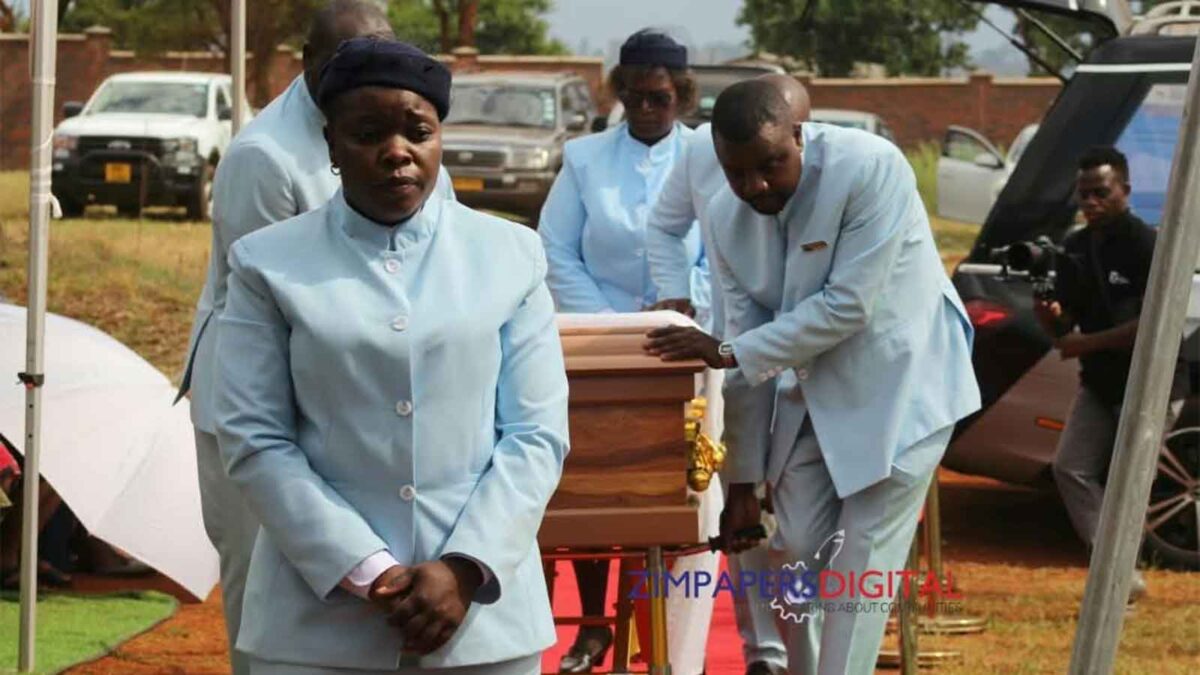
Affectionately known as Cde Ropa, Sis Ropa or Big Ropa in media circles, Mapimhidze (65) who died on November 6 was buried on Saturday afternoon at Sahwira Glen Forest Memorial Park.
Former Herald Supplements and Features Editor Tichaona Chifamba, who worked with Mapimhidze at the publication, described her as a heroine of the journalism profession whose contribution went beyond the newsroom.
He noted she was among the first journalists to join the new Government following independence in 1980, having started her career at the Ministry of Information before moving to Kwayedza and later The Herald.
“She was a fearless journalist, an upholder and a fighter for human rights, especially for young journalists, up-and-coming journalists, and women journalists,” he said.
Chifamba said Mapimhidze was particularly passionate about protecting women journalists at a time they faced numerous challenges in the profession.
He credited her with playing an important role in improving journalists’ welfare through her involvement with the Zimbabwe Union of Journalists (ZUJ).
“At that time, most journalists struggled to raise money to buy houses or acquire property,” said Chifamba. “Ropa, with the Zimbabwe Union of Journalists, pushed for journalists to buy stands at affordable prices so that they could build houses.”
Beyond her professional achievements, Chifamba said, Mapimhidze was a generous and compassionate colleague who was always available whenever fellow journalists faced personal, social or health challenges.
“If you had a problem as a journalist, you knew there was Big Ropa in the newsroom to help you out. Whether it was a social, personal or public problem, she would help,” he said.
He recalled how she mobilised support whenever members of the journalism fraternity lost loved ones and regularly visited colleagues who were hospitalised.
“That is the human side of Ropa that I will miss most. From a personal standpoint, she was my sister. To others she was Big Ropa, but to me she was simply Sisi Ropa,” he said.
Former Herald Editor, Ray Mungoshi, said he grew up under Mapimhidze’s guidance, describing her as a dependable mentor who helped journalists across different generations.
Mungoshi, who joined The Herald in 1989, said Mapimhidze had already established herself in the newsroom and continued assisting journalists.
“I grew up literally in her arms, under her guidance. She was always happy, always willing to help and assist, not only the girl child, but also young male journalists whom she assisted to grow in the newsroom,” he said.
Mungoshi said her influence extended beyond journalists to ordinary members of the public who approached newspapers seeking assistance in publicising issues affecting them.
“She has left a very huge footprint, too huge to be filled by anybody because she has assisted many people, many journalists,” he said.
Former deputy Minister of Information, Publicity and Broadcasting Services Kindness Paradza, also described the late journalist as a veteran who played a significant role in shaping the country’s media landscape.
Paradza said he worked closely with her during their ZUJ days, when he was president and she served as an active member of the union’s executive.
“She was a heroine of our profession. She was a veteran in our field as a journalist. She was one of those early journalists to work in the new Government in 1980 after independence,” he said.
Paradza said Mapimhidze mentored young journalists and contributed to initiatives aimed at improving their welfare.
“She was an easy-going person and a mentor to a lot of our young journalists. We are saddened by the loss,” he added.
At home, Mapimhidze was remembered as a strong-willed, but loving sister and mother.
Her sister, Namatirai Mapimhidze, described her as a no-nonsense person who loved being in charge despite being the third-born in the family.
She said beneath that strong personality was a caring sister who always ensured that everyone was comfortable and had what they needed.
Her daughter, Sarudzai, described her mother as a beautiful soul whose personality could sometimes be misunderstood because of her outspoken nature.
She said her mother’s passion for journalism was inseparable from her commitment to protecting vulnerable members of society, particularly women and children.
“She was so easy to laugh, but she was also someone you could easily get on the wrong side of if you did not have a strong personality,” she said.
Sarudzai said her mother used her journalism career to highlight issues affecting women and children and did not hesitate to confront wrongdoing.
She recalled how Mapimhidze would intervene in cases involving child abuse and other forms of injustice, insisting that perpetrators be held accountable.
Her commitment to community development was equally evident in her involvement in neighbourhood initiatives.
Sarudzai said her mother was among the people who helped establish their neighbourhood association when the family moved to the area in 1999, and was the only woman involved at the time.
“She was community-oriented. Whenever anything broke down in the neighbourhood, whether it was a problem involving water or anything else, she was always there. She would still try to help,” she said.
She also revealed that her mother had hoped to write a book during her final days, carrying around notebooks and papers as she worked on her ideas.
“I think she believed very seriously in writing. She always walked around with a notebook and papers. In her final days, she wanted to write a book, and I feel bad that she did not get the opportunity to tell her story in her own words,” she said.