Chronicle Editor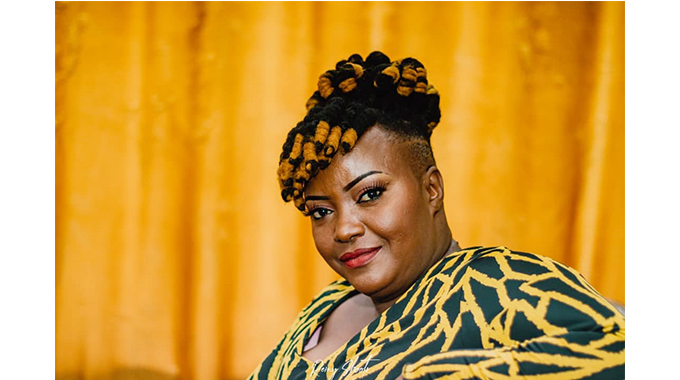
Yoliswa Dube-Moyo
Mrs Sipho Mazibuko, a real trouper modelling instructor, recently decided to “empty her closet” in a post on her Facebook page alleging that self-exiled G40 kingpin, Professor Jonathan Moyo, raped her 11 years ago while she was pregnant.
She said efforts to report Prof Moyo, who was powerful at the time, were ignored.
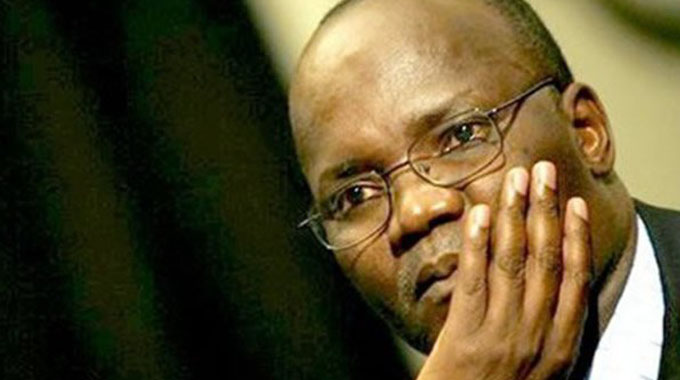
“Well, I have decided to empty my closet and speak out about a man who sexually abused me when I was pregnant and went on to silence me because he was very powerful and untouchable,” said Mrs Mazibuko.
At the time, self-exiled former Police Commissioner Augustine Chihuri was at the helm of the police services.
“I went to the police to open a docket against these evil men who had tormented my mind with sexual and emotional abuse. The police recorded my statement but nothing was done to investigate my case. Till today, my docket died a natural death. After my police report, I was admitted and the same men made sure my admission to hospital was turned into a media curse. I was made a fool,” said Mrs Mazibuko.
Her story mirrors that of many other victims of sexual violence whose defilement is hushed because the perpetrator is powerful or influential.
Some women and girls suffer at the hands of families who would rather sweep the matter under the carpet to “protect” the family name.
“My case didn’t even see the light of day. The police did nothing to those powerful men. They continued with their lives and I languished in a mental hospital. I had given them their names in my docket but they had to be protected because they were in Government offices, they were ministers,” Mrs Mazibuko continued in her post.
She said some powerful men do not care whether one is married or not or whether one consents or not.
“Well, I was sexually abused by Professor Jonathan Moyo and was too scared to even report or tell anyone until that fateful day 11 years ago when I went and told the police at Bulawayo Central Police Station what he had done to me. It happened years ago but it traumatised me. The silence was deafening. It was a loud drumbeat in my mind and I caved in. My mind couldn’t take it anymore.”
Mrs Mazibuko said powerful men were still abusing women and it was time to “expose these devils”.
Across the border in South Africa, DJ Fresh (Thato Sikwane) and DJ Euphonik (Themba Nkosi) recently said they would be going off air as investigations into the rape allegations levelled against them continue.
The claims against the duo came to light after a woman took to Twitter to detail the alleged incident, sparking a widespread debate on social media.
Some went at the woman for not speaking up for so many years and accused her of being malicious and self-serving.
The woman who preferred anonymity said the alleged rape occurred in 2011 at a chillas (small party) she attended with a friend, who was apparently invited by one of the DJs.
At the time, she was a second-year student at the University of Pretoria, where she was studying towards a bachelor’s degree in commerce.
“First, I want to make it clear I was not some kind of stocko or whatsoever people call girls organised to entertain the DJs. I was simply accompanying a friend to a chillas and that’s where the whole thing happened,” the woman told TshisaLIVE.
Sexual violence remains rampant worldwide despite efforts by different groups to mitigate the vice. The World Health Organisation reports that although there has been little research conducted on the problem in most countries, available data suggests that in some countries nearly one in four women may experience sexual violence by an intimate partner and up to one-third of adolescent girls report their first sexual experience as being forced.
Sexual violence has a profound impact on physical and mental health. As well as causing physical injury, it is associated with an increased risk of sexual and reproductive health problems, with both immediate and long-term consequences.
Research shows that its impact on mental health can be as serious as its physical impact, and may be equally long lasting.
Experts say deaths following sexual violence may be as a result of suicide, HIV infection or murder — the latter occurring either during a sexual assault or subsequently as a murder of “honour”.
So much noise is made about sexual violence because it can profoundly affect the social well-being of victims; individuals may be stigmatised and ostracised by their families and others as a consequence. Meanwhile, studies show that sexual violence against women and children is a common phenomenon in Zimbabwe catalysed by a number of factors that stem from the way in which society is structured. The factors include culture, tradition, religion, politics and the economy.
These factors contribute to shaping societal perceptions of why violence against women occurs, how society perceives the victim and the perpetrator and how society responds to address cases of violence against women.
We are, however, increasingly seeing cases of men who are also sexually violated.
Police in Bulawayo are looking for Tinashe Chafachaipa, a 27-year-old man who allegedly drugged a friend and sodomised him after celebrating New Year.
Chafachaipa disappeared after his victim made a report to the police. Confirming the incident, Bulawayo provincial police spokesperson Inspector Abednico Ncube said Chafachaipa was on the run.
He said the complainant suspected that Chafachaipa had sexually abused him when he woke up naked on his bed the following day.
Chafachaipa had invited the complainant to his house to drink beer. At around 10pm the complainant proceeded to the accused person’s place of residence and they started drinking White Hall Whisky together.
“After a few minutes the complainant felt dizzy and slept while sitting on the chair. On 2 January 2021 at around 2am, the complainant woke up and found himself sleeping on the accused person’s bed naked.”
He said the complainant went home to take a bath and discovered that he had semen on his stomach and his penis was very painful.
Members of the public are constantly encouraged to report cases of rape or sexual assault to the police and seek medical attention immediately.
There is no time limit for reporting a rape case while other sexual offences have a 20-year time limit. However, if a report is not made soon after the rape has happened, then physical evidence may be lost and witnesses may be difficult to find, which will make successful prosecution more difficult.
There is a need for increased public education especially in areas that could mitigate the horrific effects of rape on the victims such as HIV prevention through post exposure prophylaxis (PEP) and pregnancy prevention.
Efforts should be strengthened to increase awareness on what cultural practices constitute harmful practices and reducing the continued practice of such harmful practices.
Victims should never be blamed for being raped and perpetrators should never be excused for committing rape.


 Online Reporter