Online Reporter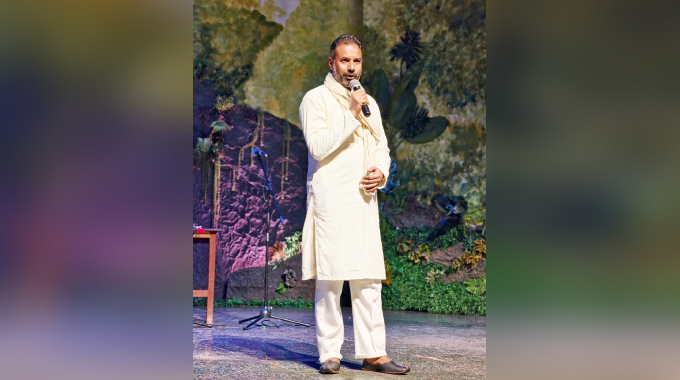
Rutendo Nyeve, [email protected]
THE Indian Embassy in Zimbabwe has reaffirmed its commitment to strengthening bilateral relations through cultural diplomacy and people to people engagement, reinforcing ties that stretch back centuries — long before the establishment of modern diplomatic relations.
Speaking at the inaugural Shastriya Nritya Prastuti, an Indian classical dance performance held at the Simunye Theatre in Victoria Falls at the weekend, Indian Ambassador to Zimbabwe Bramha Kumar said India–Zimbabwe relations date as far back as the 15th and 16th centuries during the era of the Mutapa Kingdom.
“Indians had very strong linkages with Africa. Many came as traders and missionaries, settling in regions stretching from Mozambique to South Africa, with some eventually crossing into what is now Zimbabwe. They found the land and its people welcoming, and today we have fourth and fifth generation Indians living in Harare, Bulawayo, Mutare and other parts of the country,” he said.
The event, hosted by the Embassy of India in Harare in collaboration with the Indian Council for Cultural Relations (ICCR), attracted a diverse audience of local residents, members of the Indian diaspora and cultural enthusiasts. It marked a significant step in using art, heritage and soft power to deepen the centuries old relationship between the two nations.
Ambassador Kumar said cultural diplomacy remains a central pillar of India–Zimbabwe engagement, complementing the strong political ties and growing economic co-operation between the two countries.
“Culture brings people closer in ways politics and economics sometimes cannot. Politically, our countries already share warm relations, and we are seeing increasing co-operation in business, commerce and investment. But culture remains the heart of our relationship,” he said.
Ambassador Kumar added that the visiting dance troupe will perform in other parts of Zimbabwe, broadening cultural exchange and strengthening interpersonal connections.
He highlighted reciprocal co-operation, noting that Zimbabwean cultural groups regularly participate in major events in India, including the internationally renowned Suraj Kund Craft Mela.
“With the success of events like this, I hope to bring more of India’s vibrant colours into our cordial and steadfast relationship,” said Ambassador Kumar.
The evening opened with representatives from Victoria Falls Yoga, who described the event as part of a growing cultural partnership between the two countries.
“The International Day of Yoga has become a much loved annual event here. That celebration laid the foundation for something greater — the belief that culture, movement, storytelling and shared human experience can unite communities,” said Ambassador Kumar.
Cultural Officer at the Indian Embassy in Harare, Mr Parth Singh, said the performance was part of a broader Government of India programme aimed at showcasing the country’s artistic heritage across the world.
“Through Government support, these performances share India’s history, philosophy and artistic traditions, not through lectures, but through living art offered freely for public enjoyment and connection,” he said.
The highlight of the evening was a Kathakali performance — a classical dance drama from the southern Indian state of Kerala.
Mr Singh explained that Kathakali, derived from the Sanskrit words Katha (story) and Kali (performance), combines elaborate costumes, symbolic hand gestures (Mudras), expressive facial emotions (Navarasas) and rhythmic footwork to narrate epic stories.
The performance depicted Kiratham, a tale from the Mahabharata in which the warrior Arjuna is tested by Lord Shiva before receiving a divine weapon.
“It is a timeless reminder that true strength lies in humility, awareness and respect — values that resonate across cultures,” said Mr Singh.
The performers were drawn from the International Centre for Kathakali, an institution founded in 1960 and recognised by India’s Ministry of Culture. With more than six decades dedicated to preserving and promoting the art form globally, the troupe’s visit to Zimbabwe highlights India’s sustained investment in cross cultural dialogue and the strengthening of cultural diplomacy.