Chronicle Editor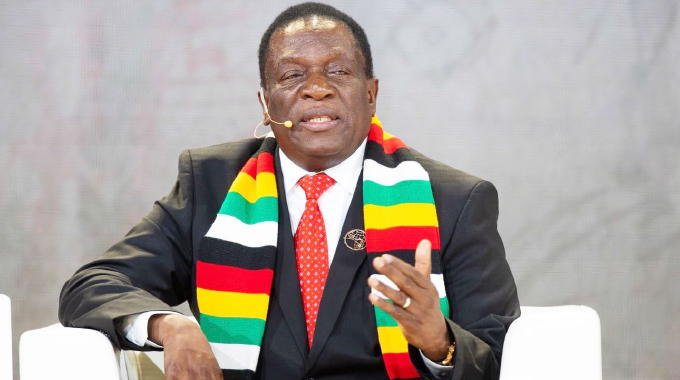
Vusumuzi Dube, Zimpapers Elections Desk
ON January 25 this year, in Dakar, Senegal, President Mnangagwa boldly declared that the country had since turned the corner in its agricultural revolution strides, with the Second Republic having attained food self-sufficiency.
The President made these remarks during his presentation at the Dakar II Feed Africa Summit where he was presenting on Zimbabwe’s vision for growth in agriculture, regional integration, public-private partnerships, and scaling up success stories.
In explaining the journey, the country had taken, President Mnangagwa equated it to what he termed village philosophy which is premised on the fact that a country must be ruled and developed by the people of that country.
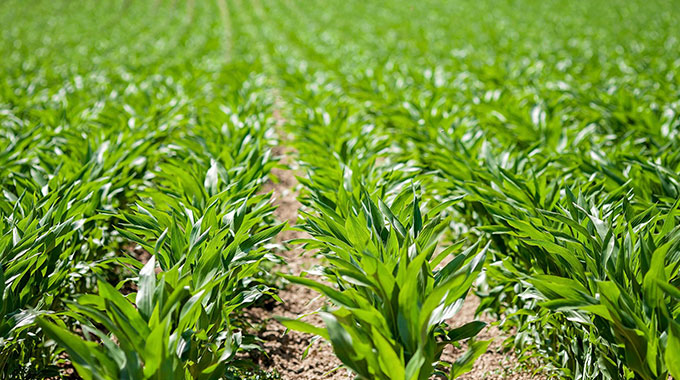
To add to land ownership — as per the village wisdom — the Second Republic under the leadership of President Mnangagwa identified a number of key aspects to address, these inclusive of inputs, irrigation, and also developing climate-proof modes of farming.
“In Zimbabwe, we had the problem of food insecurity and we said, how much food do we want in a year to feed our nation, and the figure we got was 2 million metric tonnes of grain. So, we said, because there is climate change, how many hectares of land can we put under irrigation to produce 2 million-plus metric tonnes to feed the nation and we determined how much yield does a hectare have hence we knew the figures and we did that and we are now food secure.
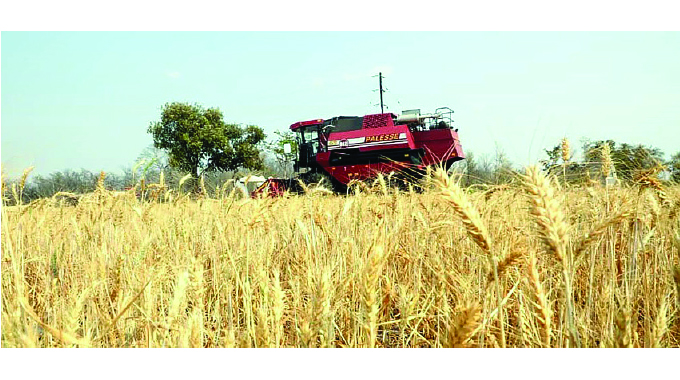
“Secondly, we have been importing our wheat from Ukraine and fertiliser from Russia, now that side is problematic. We thus decided to say we need about 240 000 metric tonnes of wheat, so how many hectares do we need under irrigation to grow wheat and we calculated and put that number under wheat and we are now wheat sufficient and we believe next season we will be able to export wheat,” said the President.
“Also, it is necessary that we harvest water and we have a programme where we are constructing dams in all our eight agricultural provinces and making sure we irrigate enough land to feed the nation,” added President Mnangagwa during his presentation in Dakar.
In that short but precise presentation, the President summed up the country’s journey to food self-sufficiency.
In recent years, Zimbabwe has embarked on an ambitious journey toward achieving food self-sufficiency under the guidance of the Second Republic. Encumbered by years of economic challenges and food shortages, the government has prioritised agricultural reforms and initiatives to address the nation’s food security concerns.
To better understand the significance of Zimbabwe’s pursuit of food self-sufficiency, it is crucial to examine the historical background. The country has long grappled with periods of food insecurity due to a combination of factors such as drought, economic hardships, and inefficient agricultural practices.
The Second Republic arose with a renewed commitment to prioritise this critical issue. Under the leadership of President Mnangagwa, the Second Republic has embarked on a series of agricultural reforms aimed at transforming the sector.
Focusing on enhancing productivity, the government has introduced policies and initiatives such as the Command Agriculture program and the Presidential Inputs Scheme, which provide financial and technical support to small-scale farmers.
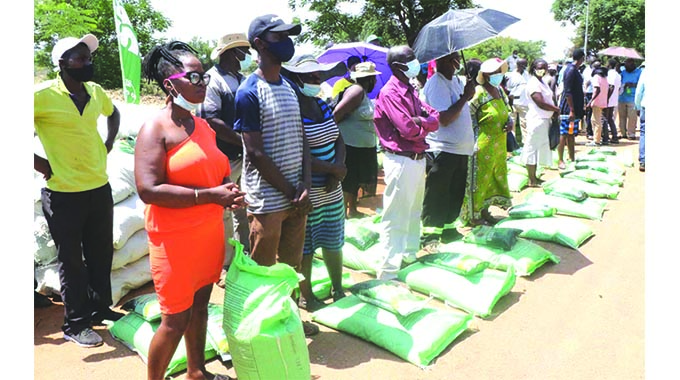
These reforms seek to revitalise the agricultural sector and increase food production. Recognising the pivotal role of infrastructure in agricultural development, the Second Republic also has made significant investments in irrigation facilities, storage systems, and transportation networks.
Modernising these critical components has not only increased the efficiency of farming practices but also improved the accessibility of agricultural inputs and markets, especially in remote areas.
Coupled with these, considering the nation’s vulnerability to climate change impacts, the Second Republic has also prioritised climate-smart agriculture practices.
Farmers have been encouraged and supported in embracing techniques that enhance resilience to climatic shocks through the Pfumvudza/Intwasa techniques. These approaches not only promote sustainable land management but also reduce the risks associated with erratic weather patterns.
Also, with a majority of Zimbabweans relying on smallholder farming for their livelihoods, the Second Republic has placed great emphasis on empowering and supporting this crucial segment of the agricultural sector.
Efforts have been made to provide training, access to credit, and modern farming techniques to smallholder farmers, enabling them to increase productivity and contribute to overall food self-sufficiency.
President Mnangagwa has on numerous occasions expressed his firm commitment to achieving food self-sufficiency in Zimbabwe. Since coming into power, he has recognised that food security is a critical priority for the country and believes that a vibrant and productive agricultural sector is the key to attaining this goal.
As the country attained food self-sufficiency the President has exhibited his appreciation for the challenges that needed to be overcome, such as climate change impacts and limited access to finance.
This, therefore, saw the government strengthening the sector, investing in infrastructure, and promoting climate-smart practices.
So massive have been the developments in the Second Republic’s Agriculture and Food Systems Transformation Strategy, that the country has transformed from a maize importer to becoming an exporter with Lands, Agriculture, Fisheries, Water and Rural Development Minister, Dr Anxious Masuka on Tuesday during a post cabinet briefing announcing that he country has received more than 350 000 tonnes of maize export requests and will start by moving 40 000 tonnes to Rwanda, while processing a request from the Democratic Republic of Congo.
“This is a feat that the Second Republic has achieved in a short space of five years. Zimbabwe, perennially known as a food importer, has emerged on the stage to become self-sufficient first, which was the strategy,” he said.
“Now, we have a surplus that we have considered for export. Yes, Cabinet approved the exportation of 40 000 tonnes of maize to Rwanda, tranched as 10 000 tonnes each month for the next four months.
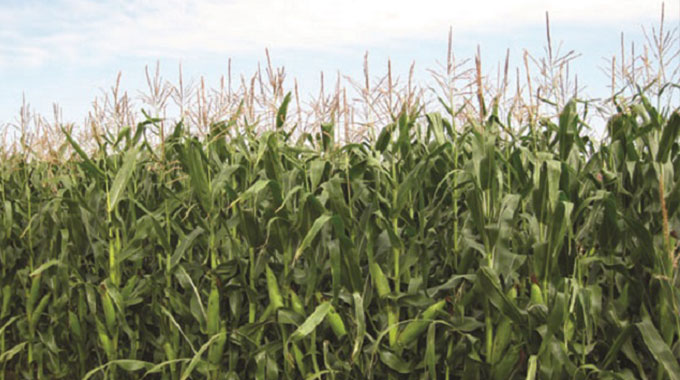
We have also received a request from Democratic Republic of Congo for export of maize; cumulatively we have received requests for 350 000 tonnes of maize.
We are considering our options closely so that we can retain sufficient grain for our use,” said Dr Masuka.
Dr Masuka said the process to export grain had commenced and GMB will oversee that process.
“There is also consideration for export of wheat, we anticipate that as we start the wheat intake season by end of next month, we will have 80 000 tonnes in our strategic grain reserves and since we have a record planting of 86 000 hectares, perhaps we will produce 200 000 tonnes (and) we will probably also consider exportation of wheat.
“This is a good position; we need to go beyond that. We do not want Zimbabwe to become a breadbasket, we want Zimbabwe to become an agro-processing hub,” he said.
In an interview, Dr Masuka revealed that the country has now been confirmed as food secure with enough grain to even cater for livestock.
The Minister said as per their target they wanted to ensure perennial food security in the country inclusive of security for livestock feed.
“Zimbabwe has now become food secure. In terms of maize, the 2.3 million metric tonnes that we are projecting this year against a human consumption estimated 15.1 million people, assuming every Zimbabwean eats maize, every day throughout the year, at 120 kilogrammes per person, we will require 1.8 million metric tonnes. We have even factored now consumption by livestock of 450 000 metric tonnes, from that maize yield, which will then bring us to just over 2,2 million metric tonnes, so we are above that, which is just for maize alone, we, therefore, have a surplus,” said Dr Masuka.
To add to the maize stock, he said, they also have traditional grain, which is pegged at just over 300 000 tonnes, meaning Zimbabwe has just over 2,6 million tonnes of cereals against a requirement for human and animal consumption of 2,2 million tonnes.
The Minister said to add to that figure they also had stocks at the Grain Marketing Board, which are just over 300 000 tonnes, translating to a surplus of 600 000 tonnes.
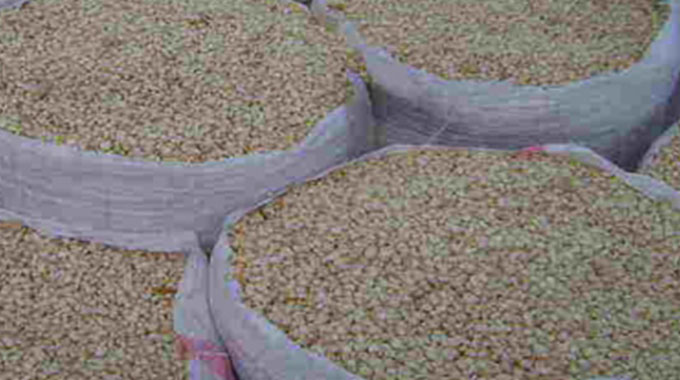
“Government’s primary focus has been to prioritise agriculture and the major and overriding aspect is to ensure perennial food security for the nation. Now that we have attained that, we want to be able to build more of the strategic grain reserves and also get feed security so that we are able to provide enough to grow the livestock sector especially poultry sector which constitutes 70 percent of the feed requirements.
“We also want oil seed security, seeing that we spend US$300 million annually importing crude oil decanting, repackaging and selling in the local market whereas we can produce enough sunflower, enough cotton, enough soya beans, enough groundnuts to be able to do that,” said the Minister.
Zimbabwe’s Second Republic, therefore, continues to demonstrate a strong commitment to achieving food self-sufficiency through strategic agricultural reforms, infrastructure development, and climate-smart practices.
By continually adapting and innovating, the government and its partners aim to ensure a sustainable and resilient agriculture sector that can meet the nutritional needs of all Zimbabweans, paving the way toward a brighter future of food security.
Ends//…



 Online Reporter