admin
admin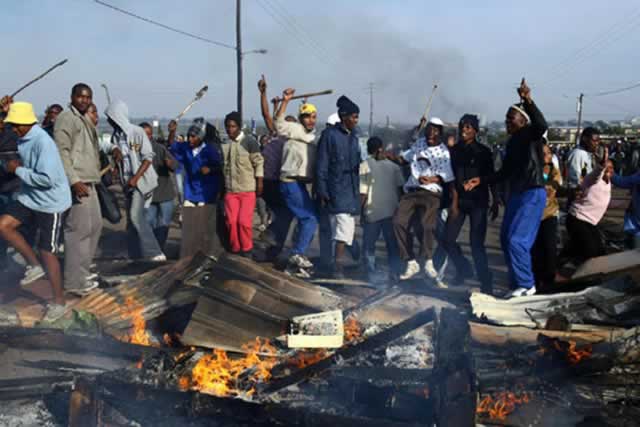
Nicolette V Roman Correspondent
South Africans are frequently reminded of just how violent the country is. Attacks on foreign nationals and the killing of women and children have been prominent in the news.
The latest crime statistics show that between 2018 and 2019, murder, assault and sexual offences rates increased. Our studies of families in the Western Cape province show some links between family life and violence in society. The families in these studies were from urban and rural communities with high rates of violence, crime, gangsterism, poverty, substance abuse, school dropouts and teenage pregnancy.
We looked at how well families are doing, their resilience under difficult circumstances, and the relationship between family conflict and aggression among children aged 10-12. We have also examined why sex offenders re-offend and the relationship between healthy family life and family satisfaction.
The findings overall show that when there is abuse, neglect, conflict, violence, substance abuse, poor relationships and disconnectedness in families, there may be dire consequences for society, and specifically children.
The behaviour of members of these families often ends in violence, crime and incarceration. Family members struggle to show affection for and interest in one another. Family conflict also negatively affects people’s competence, relationships and autonomy, and leads to aggression in preadolescents.
Our research suggests that violence and risk may be transferred across generations, and that interventions need to focus on teaching and enhancing the capacity of family members to understand the implications and consequences of their actions on others and how these are transferred to children. It also shows it’s important for family members to be able to appropriately communicate and express their emotions; respect fellow human beings and the environment; and to especially value women and children in the family so as to prevent all forms of violence.
Our research also points to the need to promote such basic values as respecting others’ rights, as well as the need for social care to be made more accessible to families.
Ideally, the family provides a safety net. It is within the family that people should find stability, share roles, support one another and communicate positively with one another.
But families often don’t live up to this ideal. It is often in families that children might first witness violence, both verbal and physical. It’s also in families that children may suffer neglect and be exposed to ill-treatment of the elderly and animals.
Adults, especially parents, may withdraw their love and be uninvolved in children’s lives. This can result in various behavioural problems in children, such as mental illness or aggression.
Such deviant behaviour can become a way of life for the affected children. In the absence of effective interventions, these behaviours spill into schools, personal relationships, work and the rest of society.
The expectation is that the family protects its members but in our research we found the family to place child wellbeing at risk.
In two separate studies of offenders we found:
Sex offenders who re-offend stated that their families were dysfunctional and characterised by substance abuse and family violence, unemployment, inadequate support or protection, early exposure to lewd sexual acts and relationship problems.
In a retrospective study of family characteristics of sex offenders, the majority of participants had experienced family violence, long term separation of parents, a negative relationship with the mother, alcoholism and being raised by a single mother.
In two separate small sample studies, we studied the potential role of violence and conflict in the family on the child. In a study of preadolescent children (10-12 years) who had problems at school, we found that family conflict frustrated their basic psychological needs (autonomy, relatedness and competence). This was linked to antisocial behaviour and aggression. We also studied families in shelters for women victims of domestic violence to investigate whether childhood exposure to domestic violence could be a predisposing factor for falling victim to violence in adulthood.
We found that exposure to domestic violence occurred before adolescence for the majority of the sample. It was often due to a disagreement between the mother and her partner.
The children often witnessed the mother’s partner shouting at her and insulting her. We found that the participants tended to have similar experiences in their own relationships. Thus, exposure to violence in the family as a child potentially creates a risk for the experience of violence as an adult. This correlation was moderate.
In trying to understand how satisfied people were with the way their families functioned, we found nurturing and supporting one another as well as clearly and equitably assigning tasks to family members, and being able to consistently express warmth and love, resulted in high family satisfaction. Such cohesion makes families more stable and less at risk.
Families play an important role in human development because the family is where children have their first experiences. This is often what is mirrored in society. The family is therefore the key to address violence in society. — GThe Conversation Africa.



 Online Reporter