admin
admin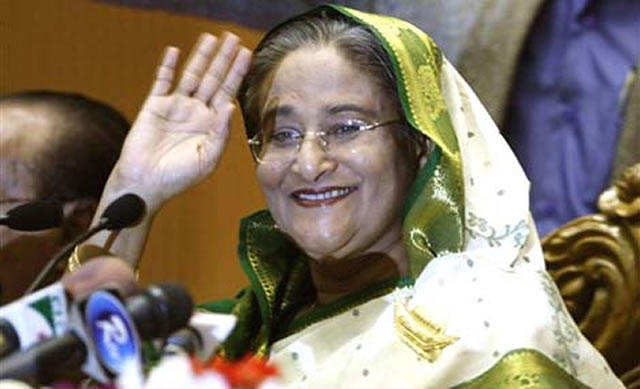

Violence has marred controversial general elections in Bangladesh, leaving at least eleven people dead in clashes between opposition supporters and police.Fear of more attacks had been expected to limit turnout yesterday. Around 150 people were killed in the run-up to the vote and tens of thousands of troops were deployed across the country in advance of the vote.
Police said more than 100 polling stations were attacked since late Saturday into early Sunday, and officers guarding the booths had also been targeted.
Voting was due to remain eight hours on Sunday, starting at 8am local time. A huge security operation involving 50,000 troops has been mounted to oversee the vote.
With fewer than half of the 300 parliamentary seats being contested, the ruling Awami League and Sheikh Hasina Wajed, the prime minister, are poised to sweep to victory.
The vote is boycotted by the opposition Bangladesh Nationalist Party (BNP), which urged voters to stay away from the “farcical” election, and shunned by international observers.
The rivalry between the country’s two dominant parties has led to concerns about economic stagnation and further violence in Bangladesh.
“These elections are in no way going to help resolve the stalemate we have seen in the past few months,” Iftekhar Zaman, executive director of global anti-corruption body Transparency International in Bangladesh, said. “The parliament which will emerge will be one without an opposition, and so there will be a very big legitimacy crisis.”
The BNP is protesting against Hasina’s decision to scrap the practice of having a neutral caretaker government oversee elections.
Turnout was expected to be down amid fears of violence, with more than 120 polling places — mostly in rural areas — reportedly set ablaze since Friday.
More than 100 people have been killed since the opposition launched a campaign against the election last year, while more than 1,000 opposition leaders and activists have been detained in a crackdown denounced by rights groups.
The election commission sent a text message on Saturday to reassure voters, noting: “Please go to cast your vote without any fear and hassle.”
Army troops have been deployed since December 26 to maintain order during the election, while the country’s $22bn garment industry, which accounts for 80 percent of Bangladesh’s exports, has been disrupted by transportation blockades. The European Union has refused to send election observers, as have the US and the Commonwealth. — Al Jazeera



 Online Reporter