

 Chronicle Editor
Michael Makuza, Business Reporter
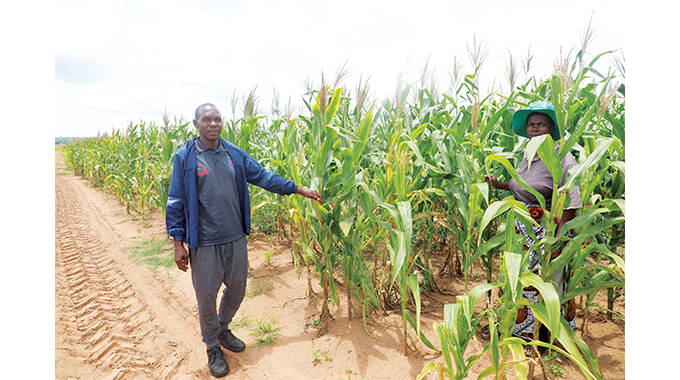
THE Agricultural and Rural Development Authority (Arda) has revived 324 irrigation schemes out of a planned 450 across the country under the ‘Vision 2030 Accelerator Model’.
The ‘Vision 2030 Accelerator Model’ was launched by President Mnangagwa in 2021 to stimulate rural industrialisation as part of the Second Republic’s drive to scale up agricultural transformation.
The programme supports farming growth and is in line with National Development Strategy 1 (NDS1), the country’s five-year economic blueprint that guides implementation of bold strategies aimed at achieving economic transformation by 2030.
In line with the Government’s devolution agenda, which is anchored on ensuring that ‘no one and no place is left behind’ in terms of development, Matabeleland region like the rest of the country, is benefiting from the accelerated irrigation scheme revival programme.
Many irrigation schemes that were lying idle in Matabeleland South province have since been revived under the programme and others that were operational have been expanded to cater for more famlies.
According to the Ministry of Lands, Agriculture, Fisheries, Water and Rural Development, two irrigation schemes in Bulilima district, nine in Gwanda, three in Umzingwane and four in Matobo district, are now operating above 60 percent capacity utilisation which has enhanced food security.
Other schemes that have benefited from the revival and expansion programme are in Beitbridge and Insiza. In Matabeleland North flagship projects that benefited from the programme include the Bubi-Lupane, Jotsholo and Pollards irrigation schemes.
Arda board chairperson, Mr Ivan Craig, said the programme has created massive employment and the second phase involves training of farmers on how to convert cultivation of crops under irrgiation to business enterprises.
“We have revived 324 irrigation schemes under the Vision 2030 Accelerator Model out of a planned 450 across the country and this has created 4 200 direct and indirect jobs across the country. The revival of irrigation schemes has also created employment for 324 middle managers that are assisting farmers to run the schemes,” said Mr Craig.
Mr Craig said at some irrigation schemes farmers are taking home as much as US$1 500 per crop.
“This is a significant milestone as we journey towards achieving our vision of becoming a prosperous and empowered upper middle-income society by 2030.
The Vision 2030 Accelerator model is taking on board 55 000 direct beneficiary households, one million indirect beneficiaries with a combined output of 117 000 tonnes of maize and 130 000 tonnes of wheat annually,” said Mr Craig.
He said under the transformational strategy, Arda is revitalising all its estates and opening up new irrigable land to boost production.
Mr Craig said there will be countless job opportunities as a result of value addition and beneficiation.
The revival of irrigation schemes is credited for the successful implementation of the Government’s Agriculture and Food Systems Transformation Strategy, which has already achieved its target of US$8,2 billion agriculture economy before 2025 which was the target date.
Mr Craig said in addition to reviving irrigation schemes and converting them to business enterprises, Arda was working on a decentralised industrialisation programme that will result in the establishment of rural industries that will process farmers’ produce.
He said Arda on its part is also involved in the enhancement of food security and during the last cropping season it produced 12 400 tonnes of cereals at its estates and various export crops through both its partnership arrangement and own operations.
“Our target going forward is to produce 500 000 tonnes of cereals this year,” said Mr Craig.
The agriculture sector is the mainstay of the country’s economy as it employs thousands of people especially in rural areas.
Mr Craig said Zimbabwe is working on regaining its status of being the bread basket of the region and this has been confirmed by last season’s bumper winter wheat harvest which for the first time in many years, is enough to meet the country’s annual consumption.
It’s important to note that this is the first time that the country has achieved national wheat self-sufficiency. Our rural development initiative took centre stage in the achievement of this success,” said Mr Craig.
To enhance climate proofing of the vulnerable and ensure food and nutrition security, the Government is aggressively implementing the National Accelerated Irrigation Rehabilitation Programme, focusing on the rehabilitation and development as well as maintenance of communal irrigation schemes.
In this regard, Treasury has committed part of the International Monetary Fund (IMF) Special Drawing Rights allocation, amounting to US$20 million, towards irrigation development under the Smallholder Irrigation Infrastructure Development Fund (SIIDF).
The fund is targeting 18 small-holder irrigation schems spread across eight rural provinces.
In addition, the 2023 National Budget has set aside ZWL$27,9 billion, complemented by US$15,4 million from development partner support, towards targeted irrigation projects.



 Online Reporter
 Bongani Ndlovu