Wenslus Murape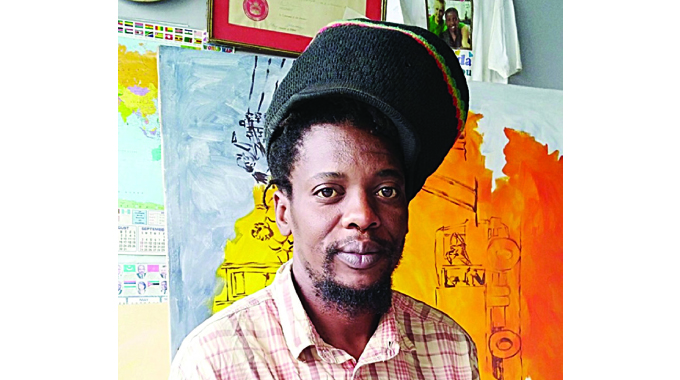
Maria Chiguvari
Visual artist Chavhangaire Tshovutshovu seeks funding for the construction of sculptures for all the country’s provincial heroes’ acres on behalf of National Museum and Monuments of Zimbabwe.
Tshovutshovu uses acrylic paints for his art, and most of his work focuses on social issues.
With his more than 30 years of experience, Tshovutshovu was behind the designs for the Meikles Building in Mutare.
In an interview with H-Metro, Tshovutshovu said for the national monuments he will be using cement.
“I heard about the financial challenges facing National Monuments and Museums in erecting befitting structures at provincial heroes’ acres across the country.
“I then decided to play my part by making sculptures for all the heroes’ acres using cement.
“Now the task at hand is to raise funds for the whole project. My team and I have faith that we will triumph.
“I have more than thirty years’ experience. I was taught stone sculpting by the late Charles Fernando who’s artworks including paintings and sculptures were collected by the queen of England. He was my late father’s friend. That’s where I got inspiration for sculpting.
“With these sculptures for the provincial heroes’ acres it will be an eye opening experience to reproduce a sculpture which is similar to the original.
“The plan is to source funding to buy enough materials and then start working on the sculptures here in Mbare. The sculptures will be transported to the relevant sites,” he said.
Tshovutshovu said most of his artwork is figurative and a better way to tell stories about people.
“We are doing all this because I want to inspire school students and work with emerging artists who might not be comfortable working on a burial site.
“I paint what I see every day. I use acrylic paints because I’m asthmatic and I can’t use oils.
“In my artworks I like music which is a thread that you’ll see in most of my artworks even though I paint about social issues too.
“I use primary colours so I can bring out vibrant bright colours. It’s only now that I’m using secondary and research colours.”


 Online Reporter