

 Chronicle Editor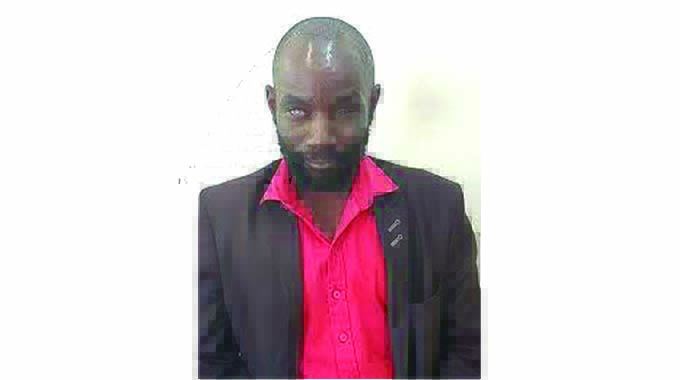
Leonard Ncube, Victoria Falls Reporter
“MY vision as a High Court judge is to actively contribute to the jurisprudence of the High Court and actively participate in the effective and efficient delivery of justice by the High Court.”
These are the words of newly appointed visually impaired Justice Samuel Deme who became the first Zimbabwean with a visual impairment to join the High Court as a judge in September.
He is among the new judges who were in Victoria Falls last week for an orientation exercise conducted by the Judicial Service Commission
Born in 1975 in Gutu, Masvingo province, Justice Deme lost sight as a result of an attack by measles in 1981.
He accepted his condition and learnt to “design” his way around life’s ills such as discrimination.
After doing his primary education at a school for persons with disabilities, Copota Primary School of the Blind in Masvingo which he only started in 1985 because his parents took time to accept his new condition and appreciate the importance of sending him to school, Justice Deme said he decided to go to a conventional secondary school to interact with “the outside world.” He said he strongly believes that keeping people with disabilities in seclusion fuels discrimination.
“My loss of sight was as a result of an attack by measles in 1981. By that time clinics were far away from where we were living in a new resettlement area and no one could take me to the hospital. I only managed to be taken to hospital one-and-a-half months after the attack and I was in a comma and they managed to resuscitate me.
“I was still young and at first I didn’t see the difference but when I grew up I saw there was a major difference and I designed methods of making sure I survive in an environment just like others. For example, when I went to school, I tried to work hard to make sure that I perform better than most of the students,” he said.
“I later on decided that it was not proper for me to continue at a school where only persons with disabilities are accommodated, so I joined Mutendi High School for my secondary to interact with persons without disabilities since this is one of the best ways of encouraging a natural way of living and trying to discourage discriminatory propensities by society. Otherwise, if persons with disabilities continue being tied to special schools discrimination will continue because people will not be able to appreciate that they have capacity and abilities to do certain things.”
After finishing Form Six at Mutendi High School in 1998, Justice Deme enrolled for a Bachelor of Laws Honours Degree at the University of Zimbabwe and completed in 2003. He joined the Ministry of Justice, Legal and Parliamentary Affairs in the Legal Aid Directorate charged with providing legal services to those who are not able to raise legal fees. He furthered his studies and graduated with a Master’s in Women’s Law from the same institution.
He was promoted to be the deputy director of the Legal Aid Directorate in 2013 and held the position until his appointment to the High Court bench on September 27 this year. He said his appointment shows that Zimbabwe has turned the corner in terms of inclusivity.
“I feel honoured because it has never been done before in Zimbabwe. I know it has been done in South Africa but in Zimbabwe it is the first case and it’s a great honour for me but at the same time I feel that I have got extreme pressure to perform under such circumstances. The issue of pressure will always be there whether you are the first or not the first High Court judge with visual impairment,” said the judge.
“The lesson that can be drawn from such an appointment is that Zimbabwe is now moving towards an inclusive society, opening opportunities to all persons whether with or without disability and will continue to improve confidence in the judiciary and all structures of Government itself.”
Since his appointment, Justice Deme said he has been learning the ropes from senior judges and had presided over two matters on his own but with guidance from senior judges. The orientation exercise was meant to equip him and his colleagues, with skills to ethically and efficiently handle matters and all duties expected of a judge.
“The experience has been quite thrilling and at the same time I was impressed to say that I have now moved from the bar to the bench. It’s quite encouraging to wear a jacket from the bench,” he said. Justice Deme said his major challenge is accessibility around the court building and equipment, but he said his determination has made him always work his way out.
He said he is using software and equipment from his previous job while waiting for his new employer to acquire the required gadgets. Justice Deme is married to Ms Manyara Hazvineyi and the couple has a daughter who is doing Form Two. His wife has been doubling up as his personal assistant since 2007.
He said he elected to have her as his personal assistant for convenience knowing there are times he can be called to attend to urgent matters.— @ncubeleon



 Blessing Chizhande
 Online Reporter