

 Chronicle Editor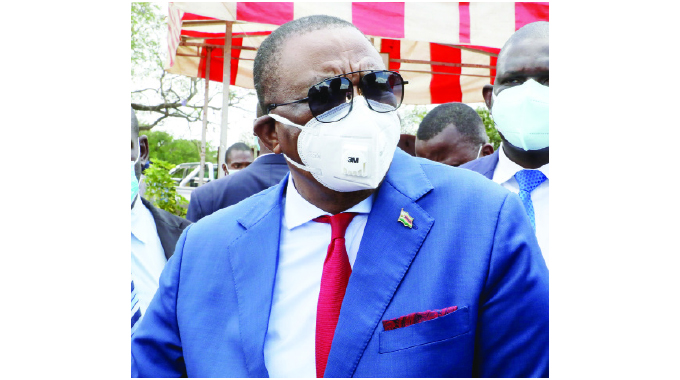
Leonard Ncube, Victoria Falls Reporter
THE Association of Healthcare Funders of Zimbabwe (AHFoZ) held its annual all stakeholders’ conference in Victoria Falls from 6 to 9 October.
It was a well subscribed hybrid gathering with high ranking speakers including Health and Child Care Minister, Dr Constantino Chiwenga, who is also Vice-President of Zimbabwe.
Other speakers were drawn from the industry locally and abroad, with some presenting online. The theme for the conference was “Pandemic, panic, leap-frogging and transformation.”
This was a befitting theme considering that the industry is coming from a tumultuous time characterised by successive Covid-19-induced lockdowns that affected service in the healthcare sector.
AHFoZ chief executive, Mrs Shylet Sanyanga, said this year’s conference was mainly focusing on taking stock of the status of the health sector given the pandemic that ripped the whole world and Zimbabwe. She said Covid-19 had increased the need for adoption of telehealth services as remote consultation and medical attention becomes the new normal.
“We just wanted to see where we are and to map the way forward. We believe that we are almost going towards the end of the storm and we need to think beyond it,” said Mrs Sanyanga. “We are basically regrouping to talk and identify priority areas so that we can all try to get out of the storm.”
Mrs Sanyanga said last year the road was tough in the sense that some employer organisations had to lay off workers or decongest offices. She said medical societies however, continued to give service showing no significant shrinkage in the number of clients covered.
“We suddenly found ourselves having to embrace telehealth as an emergency and we think we probably learnt some lessons from that and also that involves having relevant protocols in place because this is something that is relatively new. This has an effect of ensuring health service providers give healthcare service without exposing them to infection,” she said.
“With regard to pricing for telehealth, at the moment we do not have a separate tariff structure for that but we are copying from other countries. Generally, the fee is less than physical consultation because this is remote consultation. We have learnt from other countries that are using telehealth and have pegged fees as a percentage of the physical consultation.”
Mrs Sanyanga implored the Government to look beyond Covid-19 when planning on telehealth, and craft legislation that capacitates the service. She said with relevant protocols, telehealth is a good development as it takes away the inconvenience of the patient having to physically go to the doctor. About 1,7 million people are covered by medical aid, making about 10 percent of the population.
“What we saw at the beginning of the pandemic is that both health service providers and patients were scared for a while as patients chose to stay at home while service providers deferred non-emergency health needs. Some postponed surgery and some conditions got worse thereby compromising health. Initially there was reduction in the number of people seeking services around the first quarter but rose when conditions were relaxed,” said Mrs Sanyanga.
She commended industry players for partnering Government during roll-out of the vaccination programme. Mrs Sanyanga called for formalisation of the informal sector to grow the health sector and coverage.
The country has a huge informal market and industry fears default by such clients. Formalisation makes it easier for medical aid societies to collect fees. Mrs Sanyanga said there should be lower end packages to cover the least placed citizen on the social hierarchy.
She said investing in health will promote medical tourism.



 Blessing Chizhande
 Online Reporter