Chronicle Editor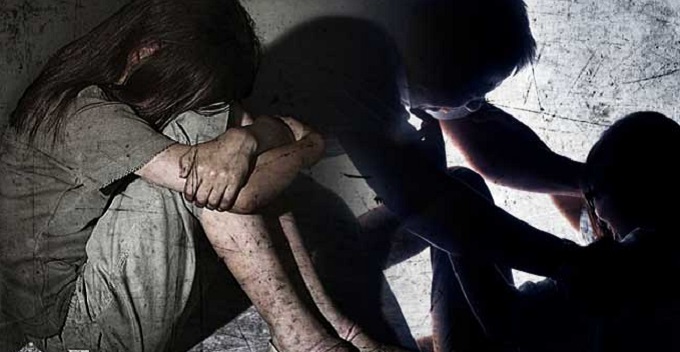
Cuthbert Mavheko
A DEADLY cancer is corroding the moral fabric of our nation in the form of child sexual abuse.
It is not that cases of child sexual abuse were unheard of in the golden past. However, today the trend has assumed blood-chilling dimensions, indicating once again that our moral barometer as a nation is falling rapidly.
When one peruses through some of our newspapers, magazines and social media, he/she is left with no other option but to join the bandwagon of those in the Christian faith who prophesy that the end of the world is imminent.
“Rapist uncle slapped 30 years,” “Pastor convicted of raping minor,” “Headmaster sodomizes boy (10),”
“Father rapes 3 year-old daughter, infects her with HIV/Aids,”…These are some of the imagination-defying news reports that capture the headlines of our newspapers, magazines and the electronic media most of the time.
According to the Zimbabwe Statistical Office’s quarterly digest of statistics for the first quarter of 2018 released in May last year, 7 394 rape cases were reported in 2017. Another report estimated that 24 women are sexually assaulted every day. These figures are conservative because, according to some experts, most cases of rape in the country are not reported.
What is shocking in the extreme is that more than 60 percent of rape cases reported in the country involve minors below the age of 16, according to gender activists and some women’s organisations.
Psychologists the world over are unanimous in their assertion that sexual assault in childhood or adulthood impacts negatively, not only on victims, but also on their families, friends and society as a whole, making sexual abuse a public health problem that affects everyone.
It is insightful to note that sexual assault has numerous potential consequences that can last a lifetime and span generations, with serious adverse ramifications on health, education, employment, and the economic well-being of individuals, communities and societies. It has been noted by some researchers that victims of child sexual abuse face immediate psychological consequences as well as chronic effects that impact negatively on their social well-being.
It has also been established that immediate psychological consequences of child sexual assault are manifold and include shock, fear, anxiety, nervousness, guilt, denial, confusion, withdrawal, isolation, grief, inappropriate sexual behaviour and symptoms of post-traumatic stress disorders.
It is the opinion held by many researchers that pornography and the so-called sexual revolution, which is sweeping across the country like a monstrous tidal wave, have primarily contributed to the proliferation of cases of child sexual abuse in the country. Alas, our society has become so sex-oriented that most people are now obsessed with sex, with the tragic result that some people gravitate towards deviant behaviour.
Due to the fact that the monster of child sexual abuse has spread its hideous tentacles to virtually every part of Zimbabwe, more and more people are now agitating for the imposition of stiffer penalties for sex offenders, with some people inferring that hanging convicted sexual abusers will go a long way in pulling a tight rein on cases of child sexual abuse in the country.
With all due respect, I beg to differ with this school of thought. Mindful of inviting the ire of proponents of capital punishment, may I humbly question the logic and wisdom of sending sexual offenders to the gallows when there is absolutely no shred of evidence that the enforcement of capital punishment on murderers, for example, has reduced the number of murder cases in the country.
As a nation, we need to awaken to the fact that rape or child sexual assault is deeply ingrained in human society and it is foolhardy to imagine a simple solution like legislation will bring a lasting solution to the problem.
Let it be said quite frankly, that in order to exorcise the ghost of child sexual abuse in the country, we need to tackle, head-on, the root cause of the problem, not just its symptoms. In this vein, our morality as a nation needs to undergo a radical metamorphosis. And, as I personally see it, this transformation of moral values and norms must begin in our own homes, where children are born and nurtured. “Charity begins at home,” says an ancient English adage.
The onus is thus upon us, as parents and guardians, to acquire relevant information pertaining to what measures we can employ in our homes and communities to protect our children from sexual assault.
This will help our families to avoid the tragedy wrought by sexual abuse, which is wreaking havoc in many a family.
Dr Ben Hlatshwayo, a psychologist who has counselled sexual abuse victims at Child and Adolescent Psychiatric Institutions in South Africa, said child sexual abuse cuts across all economic, educational, social, religious and ethnic lines, adding that more than 75 percent of abusers were abused as children.
“It is also worth noting that about 85 percent of the time, sexual offenders are not strangers and in 9 out of 10 cases, the abuser is a male. One of the most important responsibilities of parents is to create, in their respective homes, a solid relationship of trust between them and their children. Somehow, parents must teach their off-spring to trust their decisions completely and not dispute them without good reason.
“Parents should teach their children not to be secretive if, for example, someone touches them in an improper manner or shows them something bad like a pornographic magazine or any other erotic literature. One pertinent observation that I have made as a sexual abuse counsellor is that most abused children fear to tell their parents or guardians bad things that happen to them. In some cases, the child has been threatened by the abuser. In other cases, embarrassment overwhelms the child,” said Dr Hlatshwayo.
He urged parents to teach their children not to accept gifts from anyone or to get into anyone’s car without their permission.
“Over and above this, parents should teach their children to confide in them if someone asks them to take their clothes off, take their photographs, or talks about sex to them,” Dr Hlatshwayo said, adding that for the sake of their children, parents should also learn to recognise signs of possible sexual assault.
“There are diverse signs to look for in various age groups. For example, in pre-school, parents should look for significant changes in their children’s sleep or eating habits, bed-wetting, fear of strangers-especially men – precocious questions or overt displays of sexuality such as masturbation and bruises in the genital area.
“In adolescents, parents should be on the look-out for sexually transmitted diseases, pre-occupation with sexuality, depression, alcohol or drug abuse, pregnancy, running away from home and involvement in prostitution,” said Dr Hlatshwayo.


 derick.khumalo