

 admin
admin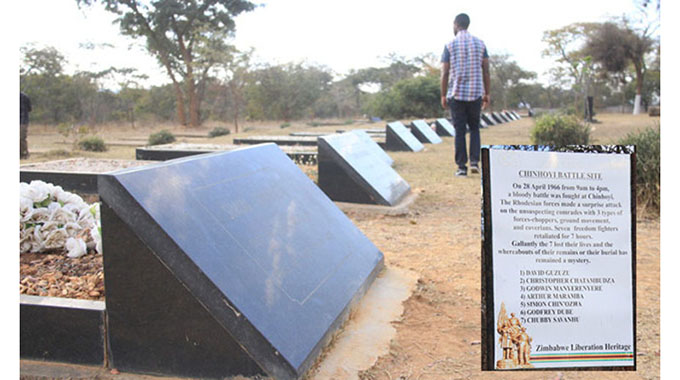
Ranga Mataire
Writing Black
Besides guidance from spirit mediums, songs played a critical role in boosting morale of both freedom fighters and the masses during the struggle for independence.
Bob Marley, the only foreign artist to be invited to celebrate the country’s independence, is said to have once remarked that music was “the biggest gun because the oppressed cannot afford weapons”. When the Union Jack flag was lowered down and the Zimbabwean flag hoisted up, Marley is said to have shed tears, a genuine act of compassion and attachment to the liberation of fellow Africans.
After Marley’s performance, in came Thomas Mapfumo — the Chimurenga music guru. His music resonated with the freedom fighters and the povo that had gathered since morning to commemorate such an unforgettable event.
The word “Chimurenga” comes from the name of Murenga, an early ancestor and warrior of the Shona people and it is this figure who inspired not just Mapfumo but cadres in the liberation struggle who formed choirs to compose and sing Chimurenga songs.
The songs were sung at pungwes or night vigils where the living connected with the inspirational spirit of Murenga and Mbuya Nehanda — another revered leading spirit medium murdered by white colonialists as an attempt to extinguish influence among the indigenes. Although Mapfumo did not participate in the struggle as a combatant, his music became an inspirational emblem to both the povo and freedom fighters. He was arrested and detained several times. What made Mapfumo’s music exceptional was his use of the mbira instrument, that is central in indigenous spiritual communication. By using a traditional instrument, Mapfumo was expressing his affinity to African ancestors and subtle disdain for colonial culture.
Songs like “Muka, Muka!” (“Wake Up, Wake Up!”) and “Tumira Vana KuHondo” (“Mothers Send Your Children to War”) were sung to educate and psyche Zimbabweans about the essence of the war. Chimurenga music remains an inspirational genre but was not the only one that motivated and reminded freedom fighters and the masses about the war. The song “Viva Chinhoyi” by Biggie Tembo is an exceptional tribute to the seven gallant freedom fighters who perished on the banks of the Hunyani River on April 28, 1966 after a day’s fierce fight against massively equipped Rhodesian forces.
The song pithily captures the reverence Zimbabweans have of the freedom fighters. It is probably that Bundu Boys song that also contributed in literally transforming Chinhoyi to a place of prodigious spiritual and historical significance among Zimbabweans. After courageously fending off Rhodesian forces for almost 10 hours, the seven comrades later succumbed to Rhodesia’s well-resourced military force after running out of ammunition.
The battle of Chinhoyi without doubt became an inspirational trigger for a fully-fledged guerrilla war. The seven guerrilla’s exploits soon spread throughout the country like veld fire with leaders that were at the time in prison receiving the news with wild celebrations. Spiritually, the battle was the ultimate fulfilment of Mbuya Nehanda’s prophetic words that her bones will rise again. The attack also coincided with the 68th anniversary of the revered spirit medium.
Unknown to most people, the seven gallant fighters; David Guzuzu, Christopher Chatambudza, Arthur Maramba, Simon C Nyandoro, Godfrey Manyerenyere, Godwin Dube and Chubby Savanhu were part of a 21-member Zanla group that had been trained at Nanking Military Academy in Peking, China. The group sneaked into the country from Zambia and later split into three groups upon reaching Chinhoyi. The three smaller groups had been given specific tasks by Zanla’s Dare ReChimurenga chairman Dr Herbert Chitepo. Their sabotage acts were meant to cause turmoil within the Rhodesian establishment and work as a signal to other groups entering the country through Mozambique to commence the armed struggle. In “The Struggle for Land in Zimbabwe,” by Dr Felix Muchemwa, the “instruction was to precipitate an insurrection in and around Sinoia, and other instructions were to cut down electricity and telephone power lines, and attack European commercial farms”.
However, the plan could not be executed as envisaged, for after staying for a few weeks on the outskirts of Chinhoyi undertaking reconnaissance, the Rhodesian forces were alerted of the group’s presence by a woman who was the guerrillas’ contact with the masses. The plan was also further put into disarray when the other group that had proceeded to Chegutu killed a white commercial farmer, Johannes Viljoen and his wife at Nevada Farm on May 16, 1966 without having waited for a signal from Chinhoyi. The Chinhoyi group’s plan was to blow up the pylon from Kariba that supplied electricity to the whole country but this task was not executed to their expectations as the damage only caused minor darkness in Chinhoyi. The idea was to plunge the whole country into darkness and this was to work as a signal to other groups to launch other sabotage acts.
However, news had already spread of the guerrillas’ presence in Chinhoyi and their planned sabotage acts. Backed by helicopter gunships, the Rhodesian forces made a surprise attack on the Zanla guerrilla positions and in the ensuing fierce running battle the entire group of seven perished after running out of ammunition. Some Rhodesian black collaborators in the town were tasked with burying the seven freedom fighters at the site of the battlefield. All their belongings were also buried with them as the Rhodesians made sure to erase anything that would work as some kind of inspirational souvenir.
Immediately after the battle, Chinhoyi was flooded with Rhodesian police and there were indiscriminate arrests of anyone suspected to have collaborated with the freedom fighters. Many were given long sentences in jail while others were never seen again.
In a befitting tribute to the gallant fighters, the new majority Government has since turned the battle site into a Provincial Heroes Acre. Sadly, the seven have never been nationally acknowledged as national heroes.


 Online Reporter
 dyton mupawaenda