Online Reporter
Remember Deketeke-Herald Correspondent
VOCATIONAL institutions must urgently shift from knowledge generation to commercialisation to drive Zimbabwe’s industrialisation, Higher and Tertiary Education, Innovation, Science and Technology Development Minister Ambassador Dr Frederick Shava has said.
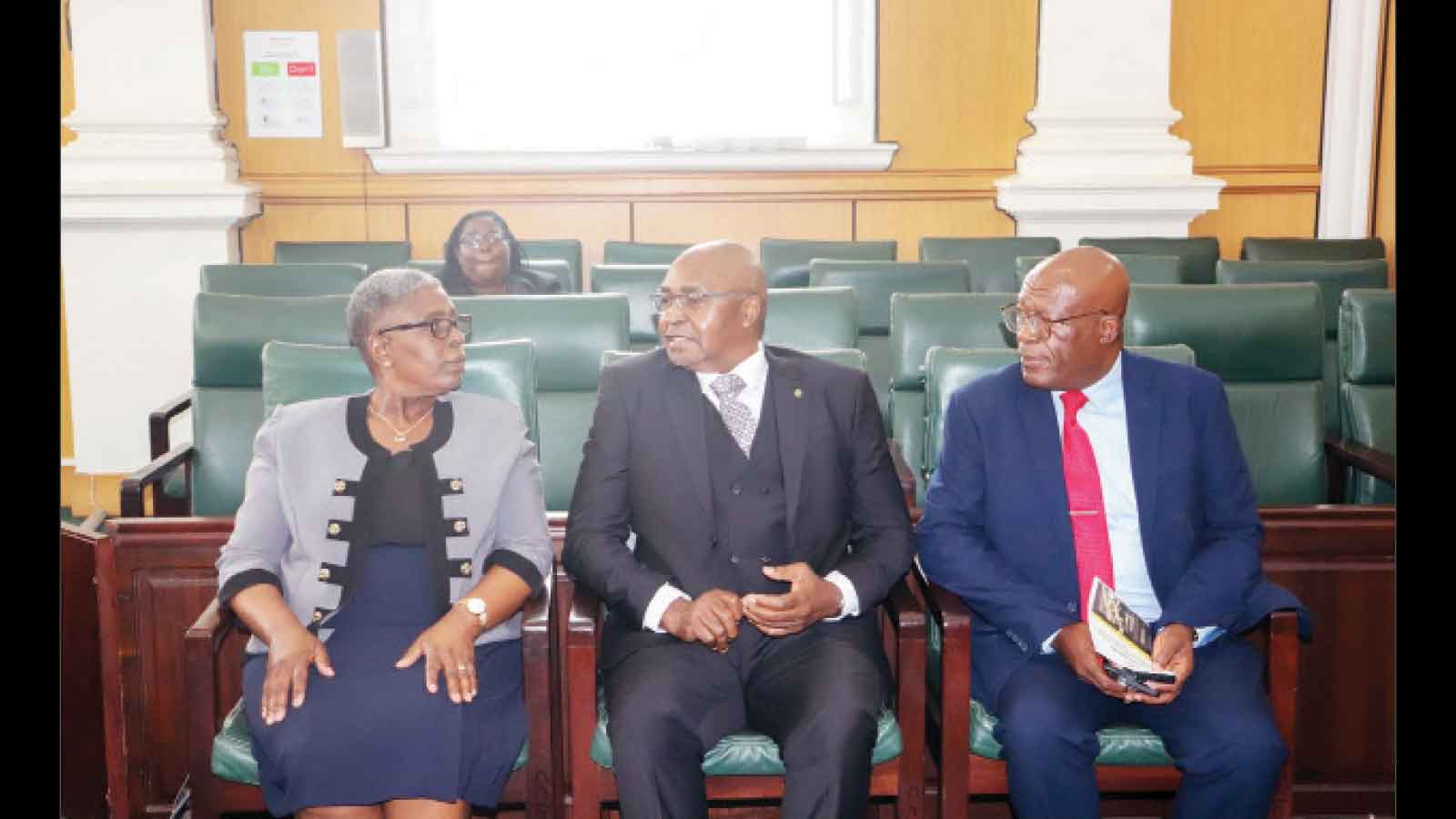
This, he said, will help the country achieve Vision 2030, promoting the transformation of skills into tangible goods and services. Ambassador Shava, who was represented by his deputy Simelisizwe Sibanda, said this at the 18th Msasa Industrial Training College graduation ceremony.
The ceremony, where 450 students graduated, ran under the theme “Celebrating Vocational Excellence through Innovation, Industrialisation and Entrepreneurship Training towards Vision 2030”.
Dr Shava urged colleges to convert innovation outputs into market-ready products. “At the heart of our strategy lies a fundamental principle: knowledge must be translated into tangible goods and services to truly advance Zimbabwe’s vision of becoming a competitive, industrialised, and modernised nation by 2030,” he said.
“It is imperative to align our reflections with the national priorities set by President Mnangagwa, who has declared 2025 as the Year of Commercialisation of Innovation Outputs. This declaration underscores the urgent need for our institutions to shift from knowledge generation to knowledge application and monetisation.”
Of the 450 graduates, 378 were male and 72 female. The ceremony was marked by two major milestones: the official commissioning of Msasa ITC’s state-of-the-art hall and the symbolic handover of a vehicle set to enhance practical training at the institution.
Dr Shava commended the institution’s dedication and resilience in completing technical training, adding that the Government would continue scaling up youth entrepreneurship support.
“We are recognising the role of young people in nation-building, the ministry is scaling up support for business start-ups driven by our graduates, providing incubation, mentorship, and seed funding opportunities where possible,” he said.
“This multi-pronged approach aims to foster a generation that is not only employable but also self-sufficient and wealth-creating.”
Dr Shava also applauded Msasa ITC’s outreach initiatives and its implementation of the Work for Fees programme.
“No one and no place should be left behind. Msasa is leading in ensuring disadvantaged students access education through work-based learning,” he said.
In line with the ministry’s rural industrialisation thrust, Msasa recently trained 120 Bindura youths in various trades.
The college, founded in 1984, offers programmes in automotive, mechanical, electrical and construction engineering, among others. “The ministry will continue supporting Msasa ITC through infrastructure upgrades, including new student hostels and refurbished workshops,” Dr Shava confirmed.
Msasa ITC Principal Mrs Ringisai Muzongondi said institutions must equip students with information literacy and technology.
“Msasa Industrial Training College has taken it upon itself like other technical and vocational education and training institutions; the need to equip its students with information literacy and information technology skills and fluency which is the ability to recognise when information is needed and being able to efficiently locate, accurately evaluate, effectively use and clearly communicate information,” she said.
Motor vehicle mechanics graduate, Mr Govha Tapiwa, said Msasa ITC has given students skills that go beyond a certificate.
“Our skills of the future are now going beyond an ordinary certificate, critical thinking, leadership and problem-solving skills. Thus, the need for other institutions to invest more in Higher and Tertiary Education Institutions (HTEIs),” he said.
“There is a need for institutions to start implementing Education 5.0 in full force, which will enable other students to make things more practical, producing someone relevant to the marketplace beyond someone who writes an exam.”