admin
admin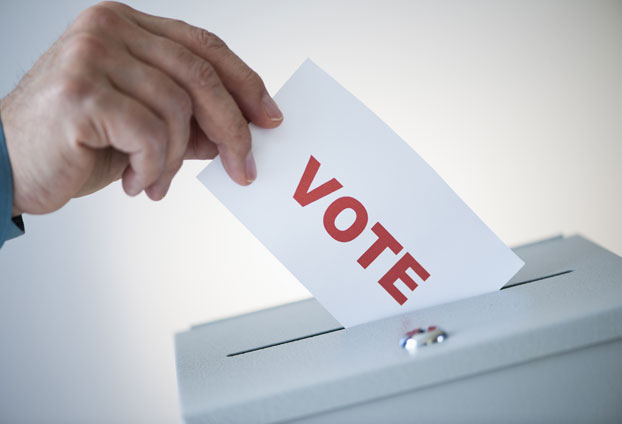
Bangui – Two weeks after Pope Francis appealed to Muslims and Christians in the Central African Republic to live as “brothers and sisters”, the volatile nation braces for a referendum tomorrow aimed at ending its bloody sectarian strife. After more than two years of fighting that forced one out of 10 people to flee the country, the December 13 vote on a new constitution is seen as a test run for presidential and parliamentary polls scheduled two weeks later.
But despite the presence of 11,000 UN and French peacekeepers, part of the impoverished country remains out of bounds, either under the control of rebel chieftains or bandits. The widespread chaos has hampered organisation of the ballot by CAR’s interim authorities, with few election posters visible on the streets just 48 hours beforehand.
More significantly, only 15,000 copies of the new constitution have been printed, meaning few voters are fully aware of its contents. Yet almost two million Central Africans have registered to vote in a population of 4.8 million, highlighting hopes the election will be the first step in a return to peace and normalcy.
“I still don’t have my voter card, so I don’t know if I’ll be able to vote simply by showing my ID card or a record that I registered,” said a schoolteacher who gave her name only as Natacha and has been living in a refugee camp in the last weeks.
And of the 460,000 people living in camps across CAR’s borders, many of them Muslims only 26 percent have been able to register. In the volatile capital Bangui, which has been far quieter since the pope’s bold 24-hour visit, peacekeepers are on edge. “Here things can blow up very quickly,” said a security source who declined to be identified.
“The conditions are not right for an election,” said Maxime Mokom, a leader of the Christian militia known as the “anti-balaka” set up to battle the mainly Muslim Seleka rebel force. “Christians and Muslims are brothers and sisters,” Pope Francis told Central Africans in a message of peace.
The former French colony plunged into its worst crisis since independence after longtime Christian leader Francois Bozize was ousted by rebels from the Seleka force in March 2013, triggering a wave of violence with “anti-balaka” militias.
“Together, we must say no to hatred, to revenge and to violence, particularly that violence which is perpetrated in the name of a religion or of God himself,” the pope said. But senior rebel figure Nourredine Adam has threatened to block elections in areas under his control.
His Patriotic Front for the Renaissance of Central Africa (FPRC), a splinter faction of the former Seleka rebel group that staged a coup in 2013, is staging an armed revolt in northern Kaga Bandoro.
“The elections might be difficult in Kaga Bandoro and one or two other places,” said an EU diplomat, who added, however, that the stakes would be highest in the country’s most densely populated regions in Bangui and the west. The international community, which has been pouring aid into the country for over two years, is keen for the referendum as well as the follow-up elections to take place.
“These are make-or-break elections,” said the International Crisis Group’s Thierry Vircoulon. Meanwhile, four French soldiers were questioned on Tuesday in Paris as part of the investigation into the rape of children in the Central African Republic, a source close to the investigation said.
It was not immediately known whether the four men, the first to be interviewed in the investigation were acting as witnesses or were suspected of involvement.
Fourteen French soldiers are under investigation after a group of children alleged that troops sexually abused them at a centre for displaced people in CAR’s capital Bangui between December 2013 and June 2014. The children, some as young as nine claimed the soldiers sexually abused children at the camp in exchange for food.
Although France sent police to investigate the claims after receiving an internal United Nations report in August 2014, no children or soldiers were questioned and the information was not made public.
It was only after Britain’s The Guardian newspaper reported on the affair that a full, public investigation was launched earlier this year. Both France and the UN have denied there was a cover-up, but a UN official who leaked the report to the French government in mid-2014 was temporarily suspended for disclosing the information.
French and UN peacekeepers were sent to CAR in late 2013 after the country descended into sectarian violence, leaving thousands dead and some 900,000 displaced. The UN mission has been hit by 13 cases of alleged sexual abuse by its peacekeepers, including nine that involve underage victims as young as 11, an official said in August.
Another sexual assault case emerged the following month when a teenage girl accused a French soldier of raping and impregnating her. – AFP


 Online Reporter