Online Reporter
Thupeyo Muleya in Zezani, Beitbridge
VICE President Constantino Chiwenga has arrived in Beitbridge, where he is set to officiate at the lighting of the Independence Flame at Juliet (Zezani) Assembly Point.
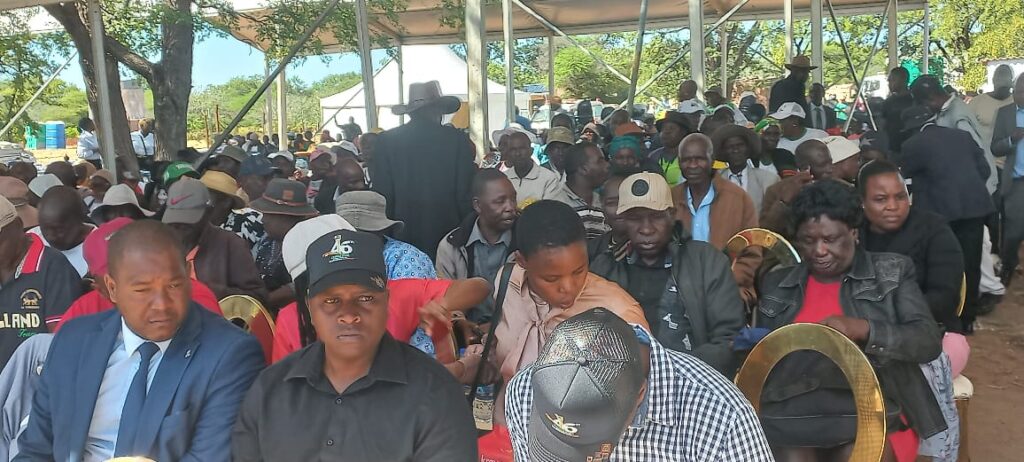
A large crowd of community members drawn from across Matabeleland South Province has gathered at the venue.
The lighting ceremony marks the beginning of the Independence Flame roadshow, which will traverse the province’s seven districts before culminating at the national celebrations in Maphisa Growth Point, Matobo District.

Lighting the flame symbolises freedom and unity, igniting a sense of national pride.
The Vice President was welcomed by Home Affairs and Cultural Heritage Minister Kazembe Kazembe, Matabeleland South Minister for Provincial Affairs and Devolution Albert Nguluvhe, and Information, Publicity and Broadcasting Services Minister Zhemu Soda, among other senior Government officials.
Chairperson of the Beitbridge State Functions Committee, Mrs Sikhangezile Mafu, who is also the District Development Co-ordinator, said all logistical arrangements at the venue had been finalised.
Officially known as Juliet Assembly Point, the historic site played a crucial role during Zimbabwe’s liberation struggle, serving as a gathering point for ZIPRA and ZANLA forces under Commonwealth supervision.
The site, which is the only assembly point in the province and one of 16 such centres countrywide, is located at the former Rural Infrastructure Development Agency (RIDA) campsite and is now being developed by the National Museums and Monuments of Zimbabwe (NMMZ).
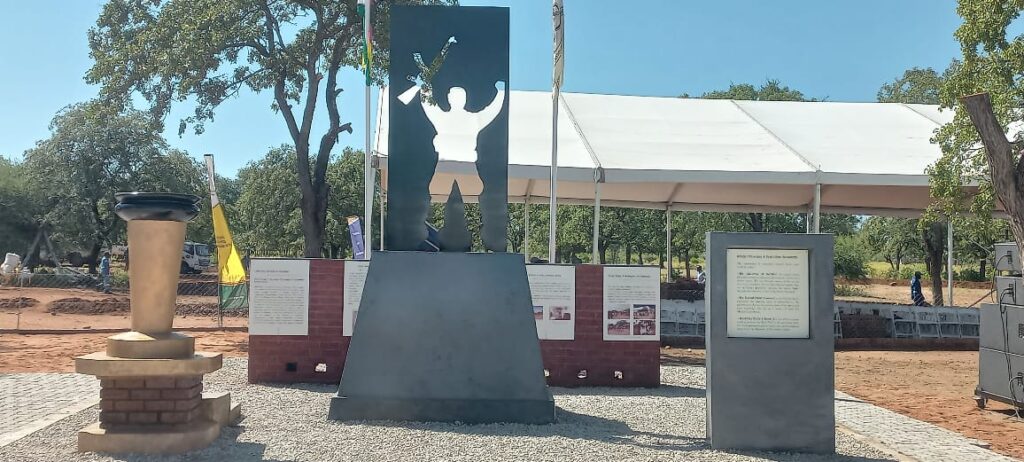
Work on the monument, which features an Independence Flame stand, flagpoles, a metal silhouette of a soldier, an interpretive house and an interpretive board, has since been completed.
Zimbabwe’s final chapter of the liberation struggle was negotiated at the Lancaster House Conference, held between September 10 and December 15, 1979.
Described by many historians as the “Last Funeral Parlour” of the British Empire, the conference resolved that assembly points would be established.
These assembly points served as rendezvous centres to facilitate the demobilisation of thousands of freedom fighters.
The purpose was to ensure that freedom fighters registered their names, surrendered their weapons and recorded the serial numbers of those weapons, with periodic checks conducted by commanders of the Patriotic Front, composed of ZANLA and ZIPRA forces.
At the time, Commonwealth forces deployed 1 500 peacekeepers, including 150 Australians, 22 Fijians, 50 Kenyans and 75 New Zealanders.
Britain provided 800 soldiers, including 300 from the Royal Air Force, with a small contingent drawn from the Royal Navy and Royal Marines.