

 malvernmugadzikwa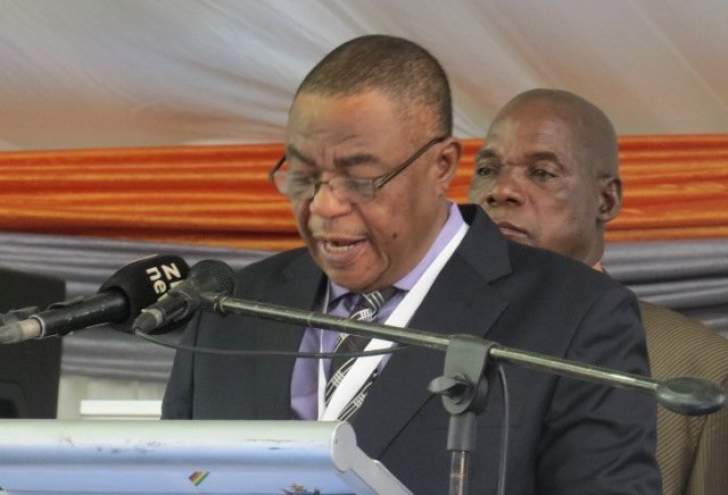
Business Writers
Vice President Constantino Chiwenga on Wednesday came out guns blazing, accusing businesses of engaging in unethical conduct that he argues is responsible for a wave of price increases being witnessed in all sectors of the economy.
He said this while officially opening this year’s International Business Conference at the Zimbabwe International Trade Fair Company exhibition grounds in Bulawayo on Wednesday.
The conference ran on the sidelines of the ongoing ZITF expo, and shares the same theme as the 62nd edition of the country’s mega trade showcase, which is: ‘Re-think, Re-imagine, Re-invent Value Chains for Economic Development’.
He said: “Similarly, I want to implore the business community to complement government efforts by practising ethical business practice and desist from unjustified price increases. Let’s act in the proper manner when we do business,” he said.
VP Chiwenga’s comments came amid a massive surge of both month -on -month year -on -year inflation. According to Zimbabwe Statistics Agency (ZimStats) the month-on-month food and non-alcoholic beverages inflation rate stood at 18,5 percent in April 2022, gaining 12,5 percentage points on the March 2022 rate of 6,0 percent. The month-on-month non-food inflation rate stood at 13,3 percent, gaining 6,8 percent points on the March 2022 rate of 6,5 percent.
In the same month the year-on-year inflation rate stood at 96,4 percent up from 72 percent the previous month and as a result interest rates turned negative once more.
“The Reserve Bank of Zimbabwe has moved to curtail the recent price increases in the economy and stabilise the volatile parallel market exchange rate through increasing interest rates and further cutting down targets for money supply growth meant to deal with speculative borrowing.
“ . . . After years of industrial stagnation, I wish to underscore that the achievement of vision 2030 hinges on successful re-industrialisation driven by re-tooling and innovation to promote competitiveness of our products in both regional and international markets. This will be driven by accelerated value chain improvements particularly in agriculture.”
However, industrial bodies feel a combination of factors were currently driving inflation and prices up and notable among them were inconsistent government policies.
Speaking at the same function, ZITF chairperson and United Refineries chief executive, Busisa Moyo, said despite some green shoots, there are several “red flags” in the economy.
Probably taking a dig at the foreign currency auction system, Moyo, who is also the chairperson of Zimbabwe Investment Development Agency and sits on the RBZ board, said the country is “still yet to succeed in designing a framework that allows for a single reference exchange rate that allows stability in pricing and incomes.”
“We are still tackling issues of multiple exchange rates which lead to distortions, arbitrage and informalisation of currency markets.
“A single reference exchange rate allows us to attract foreign direct investments, long term financing and ultimately improve social indicators to support a stable consumer class for business growth.”
CZI president, Kurai Matsheza, took the same stance and said value chain transformation in the country was not happening naturally because of “lack of a conducive macroeconomic environment.”
According to Matsheza, unresolved currency challenges, policy inconsistencies, multiplicity of licenses, multiplicity of regulators, cost of regulation, cost of utilities as well as infrastructure bottlenecks are making it difficult for businesses to run.
Ironically all these challenges are under the purview of the Government and its institutions such as the RBZ.
Matsheza thus called on authorities to “fix market failures that preclude the emergence of domestic producers in sophisticated industries beyond the initial comparative advantage”.
Moyo said there is need to draw lessons from how the nation dealt with Covid-19 when experts from stakeholders from across sectors were brought in to come up with solutions.


 Online Reporter