Vusumuzi Dube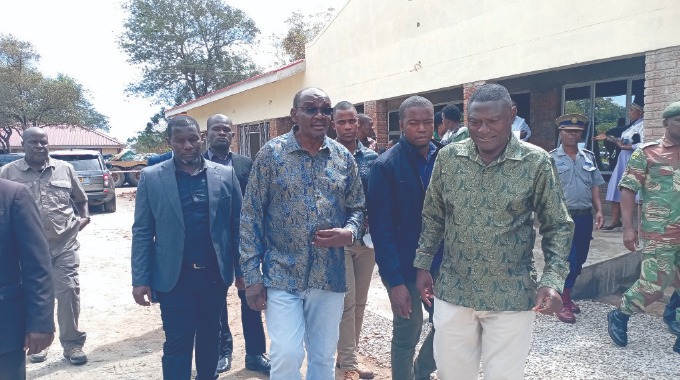
Peter Matika, [email protected]
THE near completion of the Insiza District Registry Building marks a significant milestone in Government’s drive to decentralise critical services and improve access to civil registration in rural communities.
Vice-President Kembo Mohadi said this yesterday during a visit to the site of the project, which had stalled for years after its inception in 2001.
Construction works resumed under the Second Republic, with works accelerating from 2023. VP Mohadi described the development as a “project of immense national importance” that reflects Government’s commitment to inclusive growth and improved service delivery.
“The near completion of this facility is not merely a construction milestone, it is a bold statement of intent. It affirms that under the Second Republic, we are delivering on our promises,” said VP Mohadi.
He said once complete, the registry office, now set to be the largest in Matabeleland South Province is expected to significantly ease access to essential documentation such as birth certificates, national identity cards and death certificates.
VP Mohadi said improved access to such services will enhance citizens’ participation in economic and social activities, particularly in previously underserved rural areas.
“By bringing these services closer to the people, we are dismantling barriers, empowering communities, and unlocking economic opportunities at the grassroots level,” said VP Mohadi.
The project is also expected to strengthen governance systems through improved management of vital records and better policy planning.
VP Mohadi noted that the development aligns with the country’s Vision 2030 agenda, which seeks to attain upper middle-income status through infrastructure development, decentralisation and efficient institutions.
It also supports the National Development Strategy 2 (NDS2), which prioritises improved service delivery and inclusive economic transformation.
The completion of the Insiza District Registry Building is one of several infrastructure projects being rolled out across the country as part of efforts to ensure that development reaches all communities, not just urban centres.
“This project is not an isolated development. It is firmly anchored within our national and continental development agenda,” he added.
“It speaks directly to our Vision 2030, through which we are building an upper middle-income Zimbabwe characterised by modern infrastructure, efficient institutions, and inclusive growth. What we see here today is Vision 2030 in action,” said VP Mohadi.
He said the project also advances the priorities of the National Development Strategy, NDS2, which places infrastructure development, decentralisation, and improved service delivery at the centre of economic transformation.
“Through projects such as this, we are ensuring that development is not confined to urban centres, but reaches every district and every community.
“At continental level, this initiative aligns with Africa’s Agenda 2063, which calls for inclusive growth, good governance, and sustainable development,” VP Mohadi said.
He said by strengthening civil registration systems, the country is reinforcing accountability, enhancing service delivery, and deepening citizen inclusion.
“Above all, this project embodies our guiding principle of leaving no one and no place behind. We are deliberately closing the development gap between rural and urban areas, ensuring that every Zimbabwean, wherever they may be, has access to quality public services, he said.
“However, as leadership, we must be clear: near completion is not completion. I, therefore, urge all responsible authorities to expedite the remaining works with urgency, discipline, and the highest standards of quality. The people of Insiza cannot wait any longer, they deserve timely delivery,” said VP Mohadi.
Registrar- General in the Civil Registry Department, Mr Henry Tawona Machiri, said the building underscores the tangible impact of the Government’s decentralisation and infrastructure development agenda under the Second Republic.
He said the establishment of a Civil Registry office in Insiza is not merely an administrative expansion, but a critical step towards inclusive service delivery that brings essential documentation services closer to the people.
“For years, communities in outlying districts have faced significant financial and logistical burdens in travelling to distant urban centres to obtain vital documents such as birth certificates, national identity cards and death certificates.
“By situating these services within reach, the government has effectively reduced these barriers, enhanced efficiency, and affirmed the principle that no citizen should be left behind in accessing fundamental public services,” said Mr Machiri.
He said responsive governance is measured not only by policy pronouncements, but by practical interventions that improve everyday life.
“The Insiza Civil Registry office stands as a clear example of people-centred development, where infrastructure investment directly translates into dignity, convenience and improved socio-economic participation for local communities.
“Such initiatives are likely to strengthen public confidence in State institutions while promoting greater compliance with civil registration processes, which are essential for national planning and individual empowerment,” said Mr Machiri.



 Online Reporter