Online Reporter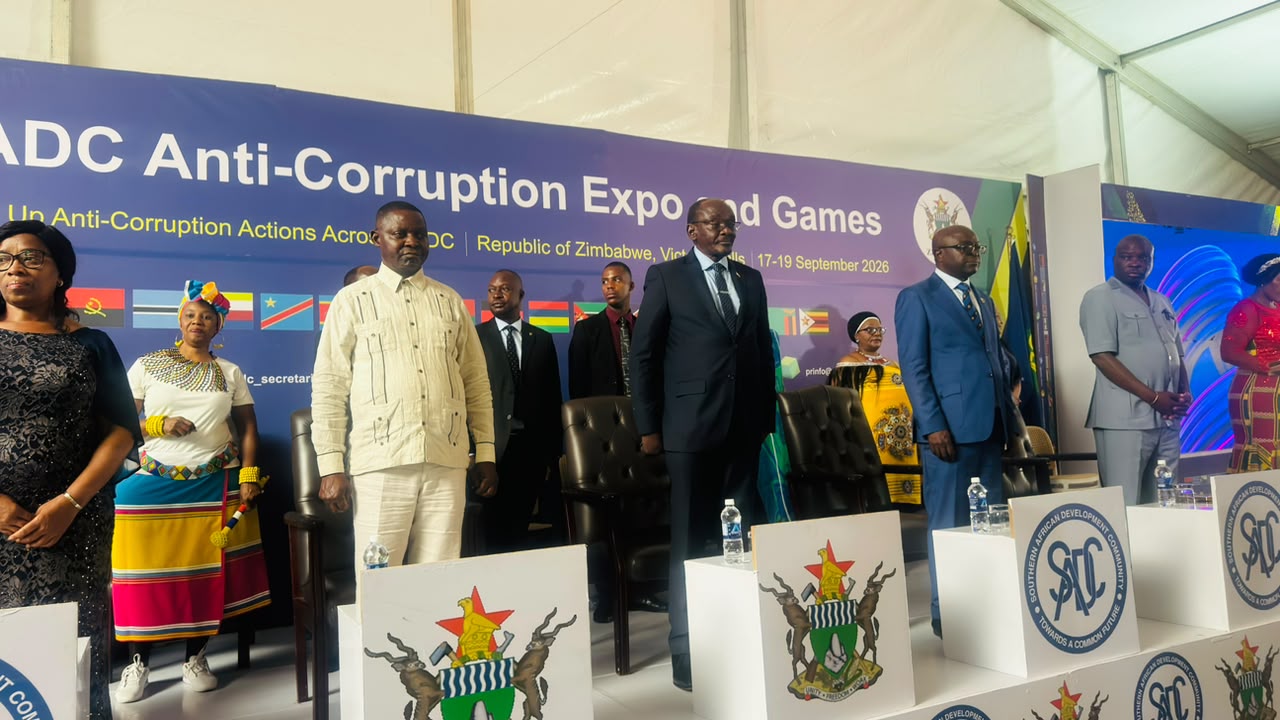
Rutendo Nyeve [email protected]
THE fight against corruption in Southern Africa must go beyond arrests and convictions to tracking, recovering and returning stolen assets to productive use, Vice-President Col (Rtd) Kembo Mohadi has said.

VP Mohadi challenged SADC member states to domesticate the African Union Common African Position on Asset Recovery (CAPAR), saying corruption would remain profitable unless illicit proceeds were traced and recovered.
Speaking at the official opening of the 2026 SADC Anti-Corruption Expo and Games in Victoria Falls, VP Mohadi said corruption was not merely a legal or ethical problem but fundamentally a developmental challenge.
“Every resource lost to corruption could have been invested in schools, hospitals, roads, water infrastructure, agriculture, industry, social protection and employment creation,” he said.

“We must follow the money and ensure that the proceeds of corruption are recovered and returned to productive use. Corruption must not be allowed to remain profitable.”
More than 800 delegates from eight SADC member states are attending the event hosted by the Zimbabwe Anti-Corruption Commission (ZACC) under the theme: Scaling Up Anti-Corruption Actions Across SADC.

VP Mohadi described the gathering as historically significant, noting that Victoria Falls hosted the Third Regional Roundtable on Ethics and Governance in 2000, which laid the foundation for the SADC Protocol Against Corruption signed in Blantyre, Malawi, in 2001.
“More than two decades later, we have returned to Victoria Falls to continue that legacy. Our gathering represents the renewal of our collective regional commitment to combating corruption as a threat to development, public trust, democracy and the welfare of our people,” he said.

He said the fight must be anchored in the African Union Agenda 2063 and the SADC Regional Indicative Strategic Development Plan, adding that for Zimbabwe, good governance, accountability and transparency were central to Vision 2030 and the National Development Strategy 2.
VP Mohadi called on member states to prioritise the SADC Strategic Anti-Corruption Action Plan 2023-2027, saying its success depends on sustained political will, institutional capacity, adequate resources and effective regional cooperation.
He commended the SADC Anti-Corruption Committee for developing the regional Anti-Corruption Effort Index, piloted by Mauritius and Tanzania.

Turning to Zimbabwe’s national architecture, he said Government had introduced specialised Anti-Corruption Courts and the Fast-Track Courts System to expedite corruption and economic crime cases. More than 300 public institutions have established functional Integrity Committees, while Integrity Pledges continue to be signed across sectors.
He also highlighted the proposed Whistleblowers and Witness Protection Bill, which provides for a Witness Protection Unit within the National Prosecuting Authority, saying citizens who expose corruption must not be left behind.
VP Mohadi urged the SADC Anti-Corruption Committee to urgently review the SADC Protocol Against Corruption to address emerging threats such as cyber-enabled crime, virtual assets, artificial intelligence and complex financial structures, while strengthening digital forensics and cross-border cooperation.
He said the fight could not be left to Governments and law-enforcement agencies alone, calling for the participation of Parliaments, the judiciary, the private sector, civil society, academia, the media, traditional leaders, young people and ordinary citizens.

Zimbabwe is the first country to host the Expo and Games under new rules approved in July 2025 by the SADC Ministerial Committee of the Organ on Politics, Defence and Security Cooperation.