admin
admin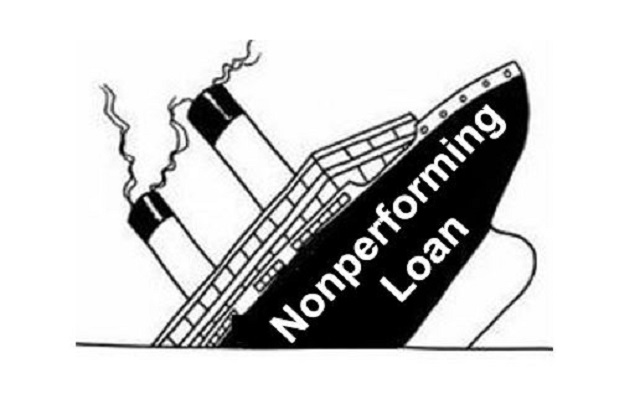

Butler Tambo
THE extended period of economic crisis characterised by hyperinflation and loss of Zimbabwe dollar savings following dollarisation sapped depositor confidence. The frequent collapse of a number of domestic banks since 2003 further dented the confidence. In just one decade the banking sector had experienced 20 failures. Four of them occurred in the first half of 2012. The major causes of bank failures in Zimbabwe were inadequate risk management systems, poor corporate governance, inadequate capitalisation, diversion from core business to speculative activities, rapid expansion, creative accounting, overstatement of capital, high levels of non-performing insider loans, unsustainable earnings and chronic liquidity challenges.
Comparative Analysis of Foreign versus Indigenous banks’ lending practices in Zimbabwe
Banking fragility is also being exacerbated by the inability by banks to have a proper balance in matching risks and tenures between loans and advances and funding sources. While foreign banks have adopted a conservative approach to lending, domestic banks have adopted a very risk aggressive lending approach. This model is backfiring as most banks are encountering challenges in recovering loans and in meeting depositors’ withdrawal demands and this led an increase of Non-Performing Loans from two percent in 2009 to 21 percent by September 2014.
In 2011, banking sector short-term deposits constituted 89,3 percent meaning that the deposit base mainly comprised short-term deposits. In the monetary policy statement of August 2017 the RBZ noted that total deposits increased by 6,71 percent, from $US6,55billion as at 31 March 2017 to US$6,99 billion as at 30 June 2017 with loans standing at US$3,59 billion and US$3,64 billion respectively.
Interest rates and liquidity crunch in Zimbabwe
There is a negative relationship between the interest rate spread and banking sector development. High spreads (especially those that are double digit) are indicative of an inefficient banking system whose costs are passed on to customers. This may explain high bank charges being levied being excessive to the extent of being the second largest source of revenue for banks. For the depositor, it is not worthwhile to keep money in the bank as it loses value rather than gain. In fact, deposits currently taking place are forced since employers pay directly into the bank accounts of people rather than giving out cash.
The liquidity squeeze has been compounded by little foreign capital flows trickling into the economy. Few banks manage to secure external lines of credit due to the high risk tag attached to the country.
It is not that multi-national banks cannot fail but that such failure has first to occur in their home country before being transmitted to the host country. However, the contagion effect is often mitigated by the dual regulatory structure these global banks have, whereby they have to satisfy regulatory and supervisory requirements of two jurisdictions, their home country and that of the host country.
Challenges posed by dollarisation
The immediate impact of dollarisation in 2009 was that the supply of money became a function of the performance of the export sector, international capital inflows, diaspora remittances and donor funds. The RBZ could no longer create money and lost control of money supply.
Fiscally, in a dollarised environment, the RBZ cannot finance budget deficits through money creation; they can only be financed from external loans (subject to favourable credit rating), aid flows and diaspora remittances. The RBZ’s stated goal of price stability can only be achieved through fiscal adjustments (over which it has no control), and the soundness of the banks. If the latter are not sound, the public would operate informally, a practice which increases the velocity of cash in circulation and hence distorts prices.
The process of dollarisation in Zimbabwe was peculiar in that it was not backed by international reserves as is normally the case with other countries. Besides having been unable to convert domestic money balances of the banking system, the RBZ could not provide the lender of last resort function. As then RBZ Governor Dr Gideon Gono observed, international best practice requires that lender of last resort fund in a dollarised economy constitute between 50-150 percent of banking sector capitalisation or five to 15 percent of banking sector deposits.
Therefore, on the basis a deposit base of US$3 billion, the lender of last resort fund should be between US$150-US$450 million. In this regard, the establishment of a US$150 million LOLR (Lender Of Last Resort) fund by the Minister of Finance in 2012 Mid-Year Fiscal Statement was inadequate and not forward looking. It was based on a historical deposit base of US$3 billion obtaining in December 2011. In fact by June 2012 the deposit base had risen by 31,8 percent to US$4,02 billion and to nearly double to US$5,6 billion by 31 December 2015. The forward looking approach would require the LOLR be set at the median of five percent to 15 percent of banking sector deposits.
Ideally, LOLR should complement an active interbank market through which banks can provide overnight lending to one another. In fact, the interbank market should be the first line of defence for banks facing temporary shortage of funds rather than the LOLR. The development of an interbank market can be facilitated if the RBZ issues Treasury Bills (TBs) that banks would then use as collateral when they lend to each other. The interbank market would facilitate the efficient allocation of money from surplus units to deficit units and minimise the liquidity challenges being faced in the economy. The interbank market would align interest rates and result in their decline from the current relatively high levels. However, in a dollarised economy the inability of RBZ to print money creates some risk to any TBs that can be issued to facilitate the functioning of the interbank market. First, there is a risk that the RBZ may issue out TBs with a value much higher than the reserves it has. Second, the proceeds from such issues may be used to fund long-term Government projects so that the bearer of the bill may not be 100 percent certain to receive the full amount of the face value on the bill on maturity.
In the absence of adequate reserves, perhaps Zimbabwe should take a cue from other dollarised economies where foreign banks have instead played the role of LOLR. For instance, dollarised Panama has no domestic LOLR. Domestic banks have negotiated lines of credit with mainly US banks, with branches in Panama from which they have been able to draw on during liquidity crises. This was possible because from 1970 Panama liberalised its financial markets and allowed entry of foreign banks. Today its capital account is entirely open, enabling banks to freely invest excess funds in Panama or abroad. For Panama, the ability of banks to freely adjust their portfolios between domestic and foreign assets has prevented the booms and busts in bank lending.
The experience of dollarised Panama has important lessons for Zimbabwe. The foremost lesson is that as a result of dollarisation the mobilisation of savings for investment by the financial sector is effectively dependent on attracting FDI, export proceeds, foreign portfolio flows, diaspora remittances and donor funds. Therefore, the limited participation of foreign investors does not only place constraints on attracting external capital sources but actually leads to an outflow of the scarce capital resources as foreign shareholders have to be paid out in hard currency. On the other hand, domestic investors would be hard pressed to raise capital in foreign currency because to have it they have to earn from either exports or remittances.
-Butler Tambo is a Policy Analyst who works for the Centre for Public Engagement and can be contacted on [email protected]



 derick.khumalo