Online Reporter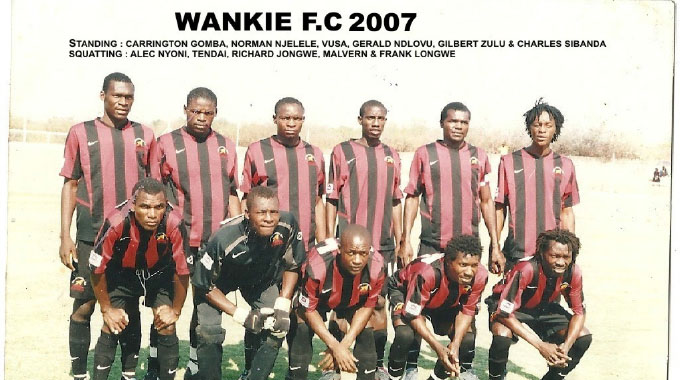
VUSUMUZI Ndlovu’s football story reads from Khanye Primary School in Silobela to debuting in the Premier Soccer League against Dynamos and scoring the winner.
Not many would have wanted to make their debut in the Zimbabwe elite league against Dynamos in 2002.
It had a fanatical crowd behind it at Rufaro Stadium that would make any player crack but Ndlovu held his nerve and earned his teammates winning bonuses.
Ndlovu, who was a Midlands State University student in October 2002, was invited to Zimbabwe Saints by Bongani Mafu.
Sadly the week Ndlovu availed himself for a trial, Mafu left for Botswana and Zimbabwe Saints was left in the hands of the late Max Tshuma, Lazarus Zimangi and Andrew Kadengu.
“We were coached by Max Tshuma, Lazarus Zimangi and Andrew Kadengu. We used to train at Trade Fair and the team that was to play Mighty Dynamos in Harare was selected and I was part of the team,” said Ndlovu.
Ndlovu said his selection drew mixed reactions from teammates.
Many did not think it was right to carry an untested rookie to such a big team in a season where Saints had also started well among Highlanders, Dynamos, AmaZulu and Caps United.
“An incident happened just before our departure to the capital.
Since it was my first-ever selection in the Premier Soccer League, one senior player queried my inclusion in the team as I had never played in the PSL ahead of Saidi Saidi (RIP).
“Some senior players had to intervene and vouch for me, among them Matambanashe Sibanda who conceded that I was giving them hell at training,” said Ndlovu.
As someone used to high school and university football, Ndlovu in his luggage for the trip to Harare carried the popular two-in-one blanket for use, unaware that PSL teams camp in hotels where everything including food is provided,” said Ndlovu who was nicknamed Mbesuma after the big Kaizer Chiefs and Zambia striker.
“I didn’t know that teams in the PSL camp in hotels, so I brought a two-in-one blanket and you can imagine the embarrassment when other players learnt of my blanket . . . I will never forget that day, guys had a field day laughing over the incident,” said Ndlovu.
After disembarking from the team bus, with the blanket a laughing matter, his woes were not over.
Ndlovu was made to share a room with former Under-20 international Mtshumayeli Moyo and Batsirayi Dliwayo.
“I remember vividly that I shared the hotel suite with Batsirai Dliwayo and Mtshumayeli Moyo. I recall Mtshumayeli teasing me saying life is good for me, an uncapped player sharing a hotel with national team material,” said Ndlovu.
At Zimbabwe Saints the starting Eleven was announced an hour before kick-off.
“I never expected to be in the starting line-up for that match since it was my first ever PSL match. When the coaches announced the starting 11, my name was there, can you imagine, your debut at Rufaro Stadium in a match versus DeMbare,” said Ndlovu of the match he received a seal of approval of his arrival at Chikwata.
He was fielded as an attacking midfielder with a young Nyasha Chazika his opponent.
“I started the match as a left attacking midfielder pitted against Nyasha Chazika. As marauding as he (Chazika) was, my sole task was to limit his attacks and crosses and I did a perfect job because he spent the afternoon trying to contain my sporadic attacks,” said the former big striker.
The match was live on television, his family and adoring Midlands State University fans were watching their own hero.
“In the second-half, a technical switch was initiated by the coaches and I was moved to partner Malcolm Mheuka with the teams tied at a goal apiece and guess who broke the dead lock in the 82nd minute.
“Your guess is as good as mine. I remember receiving a throw-in from Richard March of which I sold Lenny Gwata (MHSRIP) a dummy and slotted the ball into the net past Tendai Tanyanyiwa. We won the match 2-1 and that’s when my journey as a professional footballer started,” Ndlovu said.
However in-house squabbles took the better of the side at the end of the season leading to poor performances which saw Zimbabwe Saints relegated.
“As I was studying at Midlands State, the following year I decided to concentrate on my studies and just take a break from soccer,” said Ndlovu.
While he was keen on his books, soccer and his former Saints teammates had other ideas for him.
“Most of my teammates at Saints joined other teams and a number went to Railstars that had also been relegated and was competing in the Zifa Southern Region Division League,” said the former hitman.
His former roommate at Zimbabwe Saints, Dliwayo upon hearing that Ndlovu had quit the game, convinced him to join Railstars.
“He convinced me to join Railstars as most of the guys had joined and gotten nice signing-on fees. After a few deliberations I ended up going for training at Raylton Sports Club.
The season had already started and they were three games into the season,” said Ndlovu.
Getting accepted to train and acclimatising and settling in had something else to follow.
“My first day at training was a nightmare as I got a nasty reception from the coach, the late Lindile Dube.
He took me to task for joining after the season had started and he accused me of behaving like a star,” Ndlovu said.
But that may have strengthened Ndlovu’s resolve.
“I trained the whole week and luckily there were no games over that weekend and a friendly match was organised versus Njube Sundowns at Luveve Stadium.
Railstars used to pay winning bonuses even for friendly matches. We played Sundowns on Saturday and I was on the bench,” he said.
At half-time, the teams were tied 0-0 and coach Dube asked him to replace another striker.
“Hambodlisa lawe njengabanye (Go inside and be a liability like others). I went in and scored two goals and we won that friendly match and we got our winning bonuses,” said Ndlovu.
That marked his successful season at Railstars as he was included in the first match of the Division One campaign in 2002 a 3-1 win over Tiger Reef.
He scored one of the goals.
Ndlovu was a regular starter partnering Njabulo Ncube and were able to bring Railstars back into the Premiership.
Ncube and Ndlovu were joint First Division top goal scorers with 21 goals apiece.
“Even though we started on a sour note with coach Dube I became one of his most trusted players and mid-year through the season I had to concentrate on my final year studies.
“As I was banging goals, the board decided that I be transported from Gweru every Thursday to attend training with the team, I enjoyed my football at Railstars,” said Ndlovu who now works in the hospitality industry in the Middle East.
After two years with Railstars, Ndlovu went on to play for AmaZulu and in 2006 he moved to Hwange and found a place to teach English at Wankie Secondary School.
He doubled up as a player.
In the Premiership, Ndlovu averaged 10 goals and feels if he had all the time to commit to football, he could have done better.
“Back then only those playing outside the country were making money from football. I had to juggle between classes and my passion football, I could have scored more goals if I was a professional footballer. The sport was not paying. I averaged 10 goals per season,” said Ndlovu.
Ndlovu’s football journey started at Lower Gweru Mission and had his first taste of Division One football in 2000 when he joined Batanai of Gweru after being spotted by Themba Chingwena and the late William Sibanda, a Zimbabwe Saints legend.
In 2002, Sibanda recommended Ndlovu to Mafu and the striker would make his debut in the PSL on 13 October 2002 against Dynamos.
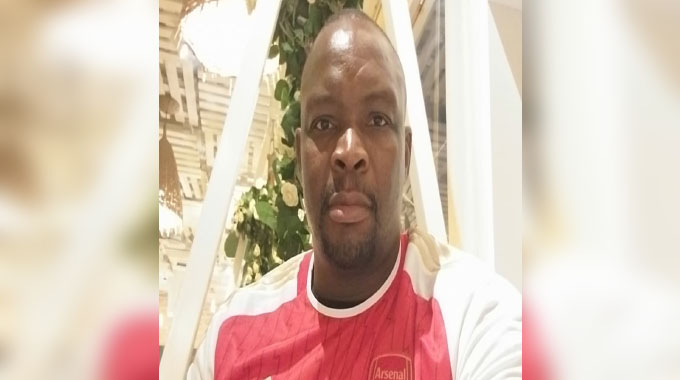
The 44-year-old says the late Epoch Mine (Zimbabwe), Moyale Barracks (Malawi), Mohan Bagan (India), Pretoria University (South Africa), Maritzburg United and Afro-Asia 2003 Games bronze medallist, David Mkandawire and fellow imposing centreback Zvenyika Makonese were the toughest defenders he faced.
He speaks of the combinations with Njabulo Ncube at Railstars and one with Malcom Mheuka at Zimbabwe Saints as having been among the most productive he was involved with.
The Midlands State University BA Honours in Languages and Culture graduate was forced to retire in 2008 and relocate to South Africa in pursuit of greener pastures in the teaching profession.