

 admin
admin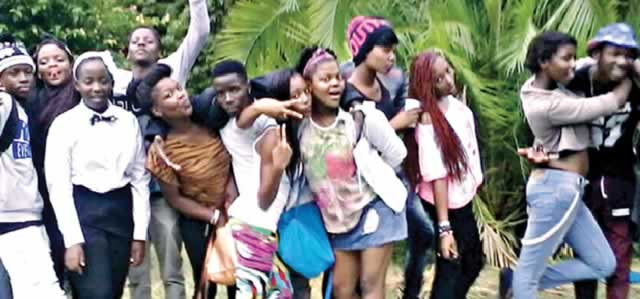

Despina Madonko Opinion
Last week Contact Family Counselling Centre hosted teachers and parents’ representatives from two Bulawayo schools. This followed the arrest of 16 students alleged to have been illegally drinking beer, taking drugs and to have been indulging in sexual activities in Centenary Park. The Ministry of Education suggested that we counsel the students because they were very much concerned about their behaviour.
Following some individual counselling sessions with the pupils involved and their parents/caregivers, we felt the need to address the schools since they were mentioned very vividly in the media.
The purpose of the meeting was to encourage the school teachers to air their views on the incident and then share with them our findings during the counselling sessions and discuss the way forward.
The teachers told us that many times they feel helpless because the children are not disciplined and they emphasise that they have rights that can’t be violated. Some teachers felt that they failed their pupils by being unable to reason with them and show them the correct behaviour. Others complained about the lack of discipline and supervision from the family environment.
We were impressed by the interest all the teachers showed in the well-being of their pupils and how well they had reacted by trying to be in contact with the family environment in order to understand the motives of the children’s behaviour.
On our part, we told them that our experience from counselling sessions shows that most children who are involved in such activities come from a completely problematic environment:
l In a city where unemployment is now endemic and almost “immeasurable”, people are forced to seek employment in other countries so that they can pay school fees and maintenance for their children. Parents in the diaspora leave children in the care of domestic workers, elderly relatives, neighbours or completely alone in child-headed households without adequate supervision and somehow neglecting their psychological support and guidance at that critical period of adolescence which is characterised by the rejection of parental and societal norms and values.
l The death of both parents results in children being left in the care of their grandparents or other relatives who have no capacity to look after them, resulting in similar conditions as above. Everyone remembers the time when we had 3,000 deaths a week due to Aids some years ago according to UNAIDS data. Now we see the consequences. Orphans unfortunately are not cared for enough regarding supervision and guidance.
l We often see broken families, parents divorced or separated or never married and fighting over custody and maintenance fees.
l The children/adolescents have access to money either by receiving it from their parents in the diaspora or stealing it from their caregivers in order to get access to drugs, alcohol and other illicit activities.
l There is a lot of peer pressure to participate in the parties.
l Members of the group have different tasks, not necessarily contributing money, but recruiting other members, make transport arrangements and so on.
l There are no reliable, positive role models in their lives. Most adults in their lives have drinking and careless behaviour.
What does international literature say about adolescents? What do we know about how adolescents feel and behave? Most of us, now adults, should remember the “difficult and exciting years” we all have been through. But just in case those years do not seem to come easily to mind this is what the US International Library of Medicine mentions: “The age between 12 and 18 is a distinctive period in human development characterised by physical and behavioural patterns”.
We will examine here the behavioural patterns that can lead to problematic situations:
The sudden and rapid physical changes that adolescents go through make adolescents very self-conscious, sensitive, and worried about their own body changes. They may make painful comparisons about themselves with their peers. Because physical changes may not occur in a smooth, regular schedule, adolescents may go through awkward stages, both about their appearance and physical coordination. Girls may be anxious if they are not ready for the beginning of their menstrual periods. Boys may worry if they do not know about nocturnal emissions.
During adolescence, it is normal for young people to begin to separate from their parents and establish their own identity. In some cases, this may occur without a problem from their parents and other family members. However, in some families, the adolescent’s rebellion may lead to conflict as the parents try to keep control.
As adolescents pull away from their parents in a search for their own identity, their friends become more important.
Their peer group may become a safe haven, in which the adolescent can test new ideas. In early adolescence, the peer group usually consists of non-romantic friendships, often including “cliques,” gangs, or clubs. Members of the peer group often try to act alike, dress alike, have secret codes or rituals, and participate in the same activities.
As the youth moves into mid-adolescence (14 to 16 years) and beyond, the peer group expands to include romantic friendships.
In mid to late adolescence, young people often feel the need to establish their sexual identity by becoming comfortable with their body and sexual feelings. Through romantic friendships, dating, and experimenting, adolescents learn to express and receive intimate or sexual advances. Young people who do not have the opportunity for such experiences may have more difficulty with intimate relationships when they are adults.
Adolescents usually have behaviours that are consistent with several myths of adolescence.
The first myth is that they are “on stage” and other people’s attention is constantly centred on their appearance or actions. This normal self-centredness may appear (especially to adults) to border on paranoia, self-love (narcissism), or even hysteria.
Another myth of adolescence is the idea that “it will never happen to me, only the other person.” “It” may represent becoming pregnant or catching a sexually-transmitted disease after having unprotected sex, causing a car crash while driving under the influence of alcohol or drugs, or any of the many other negative effects of risk-taking behaviours.
To these we can add:
— Adolescents are curious and adventurous, they like to taste new things and experiment as a process of growing up.
— Adolescents imitate the behaviour they see in their environment.
— They organise in groups and like to accomplish a goal and sometimes like to provoke the adults to check their power.
— Adolescents have a lot of energy that needs to be channelled constructively.
In view of the above knowledge where do we stand as a society in responding to the developmental needs of our adolescents? What do we do for channelling the energy and the curiosity drive? What type of role models do we provide for them?
During our meeting, we heard with compassion the representatives of the parents confessing that in this severely stricken city of no financial activity, they spend most of their time trying to make a living.
They are emotionally and physically exhausted and entrust the school teachers with most of the discipline and behavioural issues that would normally be the responsibility of the parents. We can confirm from our counselling sessions the desperation of men who are traditionally the providers when they go home at the end of the day empty handed because there are no jobs. We can confirm the humiliation of many men who, when you ask them what job they do they reply “my wife is a vendor”.
And then very sadly, we witness those lots of men who instead of facing the desperation and humiliation they resort to drinking some cheap alcohol that can make them forget that they have not provided enough for their families. The destructive consequences of alcoholism and substance abuse we do not need to analyse further here.
Here we need to give some explanations of why our children misbehave and instead of studying and be disciplined they are “mischievous and immoral”.
In order to give answers we need to examine our behaviour and the type of role models we present for our youth. How close are we to them? When was the last time we discussed with our children their fears and worries, their successes and happiness? When was the last time we went to the school to consult with the teachers not only about their marks but about their behaviour?
When was the last time that we had a family gathering where young and adults could eat, dance and laugh together? When was the last time we discussed with our youngsters about the changes in their body, the changes in their mind?
How can we inspire young girls to continue with their education when they are surrounded by “sugar daddies” ready to buy goodies for them that their parents can’t? Girls end up abandoning their education and becoming the “small house” of an elderly man who has money. What kind of morality do we teach our young people when prominent people in our society break their marriages and neglect their responsibilities for a young girl who thinks she solves her financial problem by “grabbing” somebody with money without thinking of the consequences for his family or her own future?
Unfortunately the difficult economic situation in the country and the lack of guidance and support have stripped our children of any moral consideration when they only value the acquisition of material goods such as cell phones, iPods, clothes, make-up material etc as a sign of success and happiness.
To raise children is not an easy task. We, Africans, know it: “it takes a whole village to raise a child”. Let’s practise it. Let’s become again the village that assumes collective responsibility for raising our children. Let’s become the role models that our children would like to imitate. Let’s organise functions that our children together with the adults will taste the relaxation of entertainment. Let’s encourage our children to be productive and enjoy the pleasures of creativity. And finally, even when things go wrong, let’s have a sympathetic ear, a word of understanding, positive advice, an opening of a communication channel.
Children, especially adolescents need support and protection. They need to be protected from evil elements in society. They need to be protected from adverse social situations not only through prohibition but through active participation in their lives. Despite what is commonly believed, children/adolescents need to know their limits, need to know how far they can go. This knowledge gives them a sense of security and a sense of being loved and cared for. But limits and barriers must come with adequate reasoning and affection.
We will continue counselling the students who found themselves in the park trying to “meet” adulthood and we hope we will eventually understand their motives and aspirations in life. We hope we will help them understand that entertainment must be relevant to the age, the time and the space. We hope we will help them to realise that sex is beautiful when it is done at the right time with the right person and it is an action of conscious decision and not an “accident” at the park. We hope we will help them to see that substance abuse can make you sharp and high for a while but it burns your brain and can lead to mental illness. We will make all efforts to show them that there is nothing heroic in imitating destructive behaviour that can jeopardise their future. But above all we will try to make them realise that life is beautiful when creativity and emotions are appreciated and lived to the full.
Counselling on its own can’t bury results as life, mistakes, failures or successes are not achieved on their own. Counselling is taking into consideration all the systems involved in creating or solving a problem being the family, school or general social environment. Counselling can be successful when all involved parties cooperate and complement each other. In this case where children and their future are involved the whole society must play their role: the family environment by providing love, care, understanding and clear moral guidelines, the school environment by reinforcing a proper behaviour and above all the society, all of us, by providing role models that our children would be proud to imitate.
We wish to acknowledge the constructive contributions of the two schools involved in the discussions and the parents who voluntarily participated in the meeting. Finally, we want to commend the Ministry of Education (School Psychological Services and Guidance and Counselling Department) for their participation and for initiating a constructive dialogue on the issue.
- Despina Madonko is the director of Contact Family Counselling Centre.
- Email: [email protected] Website: www.contactfcc.co.zw


 Blessing Chizhande
 Online Reporter