admin
admin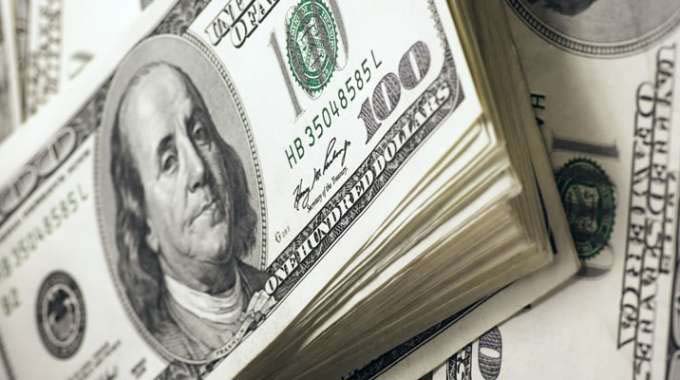
Gibson Nyikadzino Correspondent
In 1971, John Connally Jr, the US Treasury secretary in Richard Nixon’s administration said “the dollar is our currency, but your problem.”
The sentiments were made when the link between the dollar and gold ended in the 1971 Nixon shock, allowing America to control the supply of their currency.
By imagination, it sounds good and plausible to speculate that the American currency is an antidote to ailing economies, but problems that emerge afterwards neither face the US government nor its citizens, but those without monetary sovereignty.
Zimbabweans have had an extensive familiarity with the US currency, innocently thinking its use is doing the nation a good service while it in fact automated a drift of the country’s financial and monetary sovereignty.
To understand the restoration of the value of the local currency it needs a citizenry that has an intellectual resilience in understanding how the modern economy works in relation to the international political economy.
Also, it is at this moment that issues of financial literacy and economic management need to be emphasised through basic elements.
Zimbabweans need to follow the logic of things from the end, which are the modern times.
Quick economic changes occurring at alarming speeds in the world are leaving ‘experts’ not only as experts, but ignorant about the empirical macroeconomic reality that is being dealt with.
Of late there have been calls by ‘financial experts’ to adopt the US dollar without providing any educated speculation on what they think is good for Zimbabwe’s economy.
Adopting the US dollar, or the dollarisation of the economy, is not only bad for Zimbabwe’s economic sovereignty, but it is a continued weaponisation of the US dollar to preserve its global economic and geopolitical position.
Solely encouraging its use is such an admission of financial and monetary subjugation.
Did you know that monetary sovereignty is still relevant today as a legal concept for evaluating the contemporary exercise of sovereign powers by a sovereign state?
Also, are you aware states can surrender their monetary sovereignty directly by adopting another currency?
These are some of the simple but pertinent questions neo-liberal minded and western compassed Zimbabweans want to overlook to justify advancing the Western agenda by pushing for the dollarisation of the economy.
However, to some extent, using the dollar to settle cross-border trade, or using it as an investment currency, makes good economic sense.
On the contrary, the disadvantages of dollarisation outweigh the advantages.
Dollarisation means Zimbabwe loses a vital national symbol and has greater vulnerability to foreign influence.
It also means its monetary autonomy is lost while the United States as a country gains political authority, prestige and seigniorage.
Seigniorage is the profit generated from money creation and is a way for governments to generate revenue without levying conventional taxes.
This means for every US dollar circulating in Zimbabwe, the profits are imaginatively in the pockets of the Zimbabweans but empirically strengthening the US economy.
Therefore, for a country like Zimbabwe reeling under unjustified economic sanctions for more than two decades now, dollarisation is not a good economic idea for the broader economy as the Federal Reserve has the power to expand and contract money supply.
This adversely affects economic operations anchored on the greenback in rising but sanctioned economies like Zimbabwe.
To understand the harsh realities of the US currency, there are apparent examples coming from how the Office of Foreign Assets Control (OFAC) can directly order a stop on all payments that are to be made for Zimbabwe. In 2002, a few months after ZIDERA enactment the US diverted fuel Zimbabwe had imported from Taiwan, and the former put a higher bid for it, not because the USA wanted to use the fuel, but it was imposing the dominance of its currency on world trade.
It is in circumstances like these that Zimbabweans can evidently see that the real power of the dollar is its relationship with sanctions programs.
US legislation ranging from the International Emergency Economic Powers Act, the Trading With the Enemy Act and the Patriot Act have over the years allowed Washington to weaponise payment flows mostly to the disadvantage of countries that depend on this reserve currency.
Latest International Monetary Fund (IMF) data shows that the United States dollar accounts for about ninety percent of the world’s foreign currency and about 62 percent of foreign reserves. This emanates from the 1944 Bretton Woods Conference which declared it a world’s key reserve currency.
Even in trade, it is called the petrodollar because almost all oil trade the world over is done using US currency while it also accounts for two thirds of international debt.
By maintaining this dominance, the world has seen the US continue use its currency to help further its trade, geopolitical and financial aims, largely outside the strictures of international economic laws and institutions, even without going for military campaigns.
Stumbling is not falling
Pragmatic adjustments taken by government are so far expected to abate any continued misfortunes from happening, but the bigger picture, one of microeconomic stability remains a target ahead of Vision 2030.
From a macroeconomic point of view, the Zimbabwean economy, in the middle of the fifth year of reforms as informed by the Transitional Stabilisation Programme (TSP) and the National Development Strategy (NDS1), looks distinctly healthier than it used to.
The currency volatility that the government is currently managing is largely a result of imported inflation, manipulation of the stock market by saboteurs and the US pieces of legislation that disrupt and slow economic performance through long distance engineering.
Advocates of dollarisation are the same players who have been anti-land reform in Zimbabwe.
There is little to expect from them as Zimbabwe is on a path to prove that states should protect their own and respect other state’s monetary sovereignty.
If political and economic sovereignty were attained through the liberation struggle and land reform, monetary and financial sovereignty also need to be achieved using the same resilience and application of the mind.
Maintaining a dual currency is appropriate, but in the long run, monetary independence will be crucial.
By all levels of admission, Zimbabwe has stumbled. It has not fallen! Stumbling is not falling.
Unlike the US dollar which is not backed by any mineral, except scarcity in the market, government also need to increase production levels in the gold sector which of late has performed better on the international market.
Gold deliveries should be increased and government should continue incentivising miners in order to plug holes of illicit financial flows for all minerals and metals.
China and Russia, both under sanctions, successfully de-dollarised their economies in pursuit of use of local currencies.
This led the IMF in 2015 to list the Chinese yuan as a global currency that states can use to transact. Currently is only holds two percent of global reserves.
The Russian rouble has also strengthened after a successful de-dollarisation of the economy years ago.
For countries under US sanctions, the continued reliance on the greenback will not give an independent path to growth by will aid the US to use the dollar as a weapon in economic wars.
If in 1971 Connally Jr was confident to say “the dollar is our currency, but your problem,” fifty years later there should be ways to avoid the US currency and its problems.
Do not dollarise the economy!


 Online Reporter