Online Reporter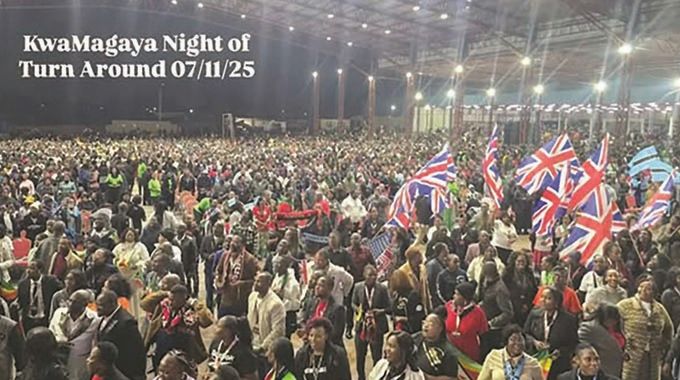
Fidelis Munyoro, [email protected]
THE name Walter Magaya, once synonymous with miracles, healing and snaking queues of congregants desperate for deliverance, now reverberates not through prayer halls but through courtrooms and auction floors. The celebrated leader of Prophetic Healing and Deliverance Ministries stands in the harsh glare of mounting civil and criminal battles that threaten to dismantle not only his carefully curated public image but the very foundations of his sprawling empire.
In a turn of events as dramatic as one of his fiery sermons, Magaya and his wife now stand on the brink of losing their expansive Waterfalls property in Harare. The Sheriff of the High Court has scheduled the auction for Friday, February 27, 2026 — a decisive moment in Magaya’s protracted legal wrangle with GetBucks Microfinance Bank. The debt, which has reportedly ballooned beyond US$500 000, now imperils a prime 3,2-hectare estate along Smuts Road.
The property — luxurious, imposing, and once a symbol of Magaya’s meteoric rise — boasts a six-bedroom mansion, staff quarters and heavily fortified boundaries beside Yadah Hotel. It is a far cry from the humble beginnings of his ministry, yet it now stands as collateral in a bitter financial struggle that could strip the Magayas of one of their most treasured assets.
But this is merely one chapter in a saga thick with conflict. In another courtroom, an entirely different storm brews — a US$3 million civil claim brought by Israeli businessman Mr Ronny Aharon Musan Levi. He accuses Magaya of reneging on a mining deal forged in May 2022, a deal in which Magaya allegedly promised to secure the loan with a first-ranking mortgage over Yadah Hotel Properties.
The High Court, however, was unmoved by Magaya’s defences. Justice Maxwell Takuva dismissed Magaya’s argument that the agreement was illegal under Zimbabwe’s Exchange Control Regulations, delivering a stinging rhetorical blow.
“The defendant cannot now use his potential or actual breach as a shield to invalidate the entire agreement,” the judge ruled, cutting sharply through Magaya’s legal reasoning.
Justice Takuva went further, delivering a rebuke that echoed far beyond legal circles.
“The defendant’s conduct in this matter stands in stark and troubling contrast to the very scriptures he professes to hold as a man of God, pastor, and leader of a Christian Ministry.”
His words painted a picture of hypocrisy, accusing Magaya of attempting to manipulate the law to escape his obligations — a tactic the court likened to “using the law as an engine of fraud.”
The consequences of this ruling are dire. By refusing to repay the funds or honour the promised mortgage, Magaya faces the dual threat of financial collapse and public humiliation. Advocate Tazorora Musarurwa, representing Levi, made it clear that justice should not be twisted into a tool of personal enrichment, a sentiment Justice Takuva endorsed fully. Costs were awarded against Magaya on a higher scale — a judicial punctuation mark signalling the court’s profound disapproval.
Yet if financial troubles shake the pillars of his empire, it is the criminal charges shadowing him that pose the gravest danger. Four rape allegations hang heavily over the prophet, each accusation threatening to dismantle the image of a man once revered by multitudes. The trial, already underway, unfolds beneath a cloud of legal manoeuvres and emotional tension. The State seeks to move proceedings to a victim-friendly court in an effort to protect the psychological well-being of the complainants.
Magaya’s defence team, led by Admire Rubaya, is vigorously resisting the move, insisting that the matter be heard publicly. Rubaya has demanded clear evidence to substantiate claims of emotional vulnerability, accusing the State of attempting to “shroud the proceedings in secrecy.”
The allegations are grim. Four women accuse the prophet of violating them at his Yadah Hotel — a place meant to symbolise hospitality and refuge. The tension inside the courtroom mirrors the magnitude of what is at stake. For the complainants, it is a desperate quest for justice. For Magaya, it is a fight for freedom, legacy and redemption.
Justice Takuva’s earlier admonition in the civil case — “The defendant’s conduct stands in stark and troubling contrast to the very scriptures he professes to hold” — lingers hauntingly over the criminal proceedings, as though echoing through every corridor of the courthouse.
The man who once preached hope, healing and divine rescue now finds himself clinging to the edges of an empire under siege. His finances are in upheaval, his reputation fractured, and his future uncertain.
While the faithful may still chant his name in the hope of one more miracle, the courts are calling louder — demanding explanations, accountability and truth. For Walter Magaya, the need for a miracle has never been more urgent.