admin
admin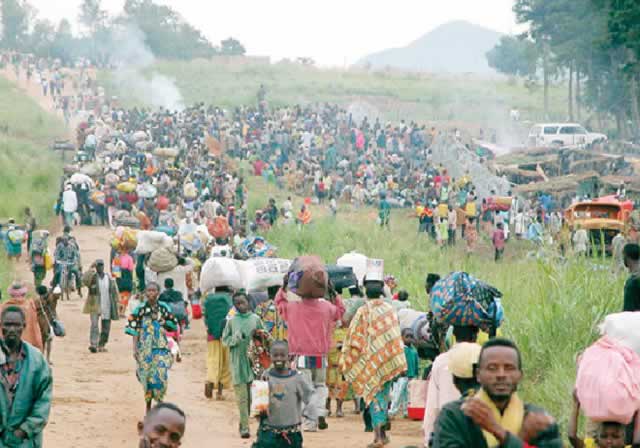

Morrison Rwakakamba
The Democratic Republic of Congo (DRC) is rich and for some, war is a means to wealth. For example, the coltan reserves in Congo constitute 80 percent of the world’s coltan. Sixty percent of DR Congo’s cobalt provides higher grade copper to the world. Many sources have graded DRC’s mineral net worth at around $15 trillion – $1 trillion bigger than the Gross Domestic Product of the United States of America.
The war in Congo is cooked in the backyards of global war entrepreneurs – and these entrepreneurs must be reined in if we are to ever have a peaceful Congo and a prosperous Africa.
Therefore, to accuse, isolate, mudsling and sanction some African countries is to really miss the point.
But we must begin by identifying, speaking out and reprimanding the war entrepreneurs who are safely decked in global capitals like New York, London, Brussels, and Beijing and so on.
These war merchants are in the form of countries, companies, aid groups, warlords and individuals. They are beneficiaries of chaos and can only harvest gold, uranium, timber and other resources in situations of war. Because of war, they dig minerals free of charge and continue to facilitate black market and kangaroo economies around the world.
Various reports by United Nations panel of experts found that 85 global companies had violated international norms, including the Guidelines for Multinational Enterprises promulgated by the Paris-based Organisation for Economic Cooperation and Development (OECD) in connection with their purchase of key natural resources from parties engaged in fighting in the DRC.
The reports called on governments to place financial restrictions on 29 of the companies and impose travel restrictions and other sanctions against more than 50 specific individuals.
Of the 85 companies named in the October 2002 report of UN experts, eight, including Cabot Corporation, Eagle Wings Resources International, Trinitech International, Kemet Electronics Corporation, OM Group (OMG); and Vishay Sprague, are United States of America owned.
But nay, no action has ever been taken by countries where most of these companies come from. What happened to the January, 2003 Security Council resolution that strongly condemned the illegal exploitation of natural resources in the DRC and demanded that all governments act immediately to end business engineered abuses?
Because of the foregoing, by 2012, over 7,4 million people had died since 2008 in DRC. The Human Security Report Project of Simon Fraser University has contested the foregoing toll of war-related deaths but the consensus is that Congo remains a never-ending menace, one of the bloodiest conflicts since World War Two.
The story of DRC remains a story of pain, agony, squander, squalid livelihoods, warlordism and huge external debt. Why should the people of Congo and entire Africa accept this?
It’s time for a concept of Africa that underpins autonomy in management of its own affairs. The issue of an African-organised and financed standby army/force is now.
The time for trans-boundary infrastructure projects that link the continent and deepen social economic integration is now. The time for an African joint stock market is now. From the example of African Development Bank, we have seen the waning influence of the World Bank and the International Monetary Fund on the continent.
Therefore, we can do this.
President Joseph Kabila should therefore disentangle his country from the jungle of global mineral vendors, savvy mercantilists and Eurocentric diplomacy and embrace efforts of African Union and the International Conference on the Great Lakes Region (ICGLR) to find a lasting solution for peace in his country. African countries have continued to show goodwill and brotherhood to DRC and its people. Millions of refugees are scattered across the African continent. It is the African continent that has honest vested interests in the Democratic Republic of Congo – period.
*Morrison Rwakakamba, a graduate from highly-regarded Makerere UIniversity, is the chief executive officer for Agency for Transformation, Uganda.


 Online Reporter