Online Reporter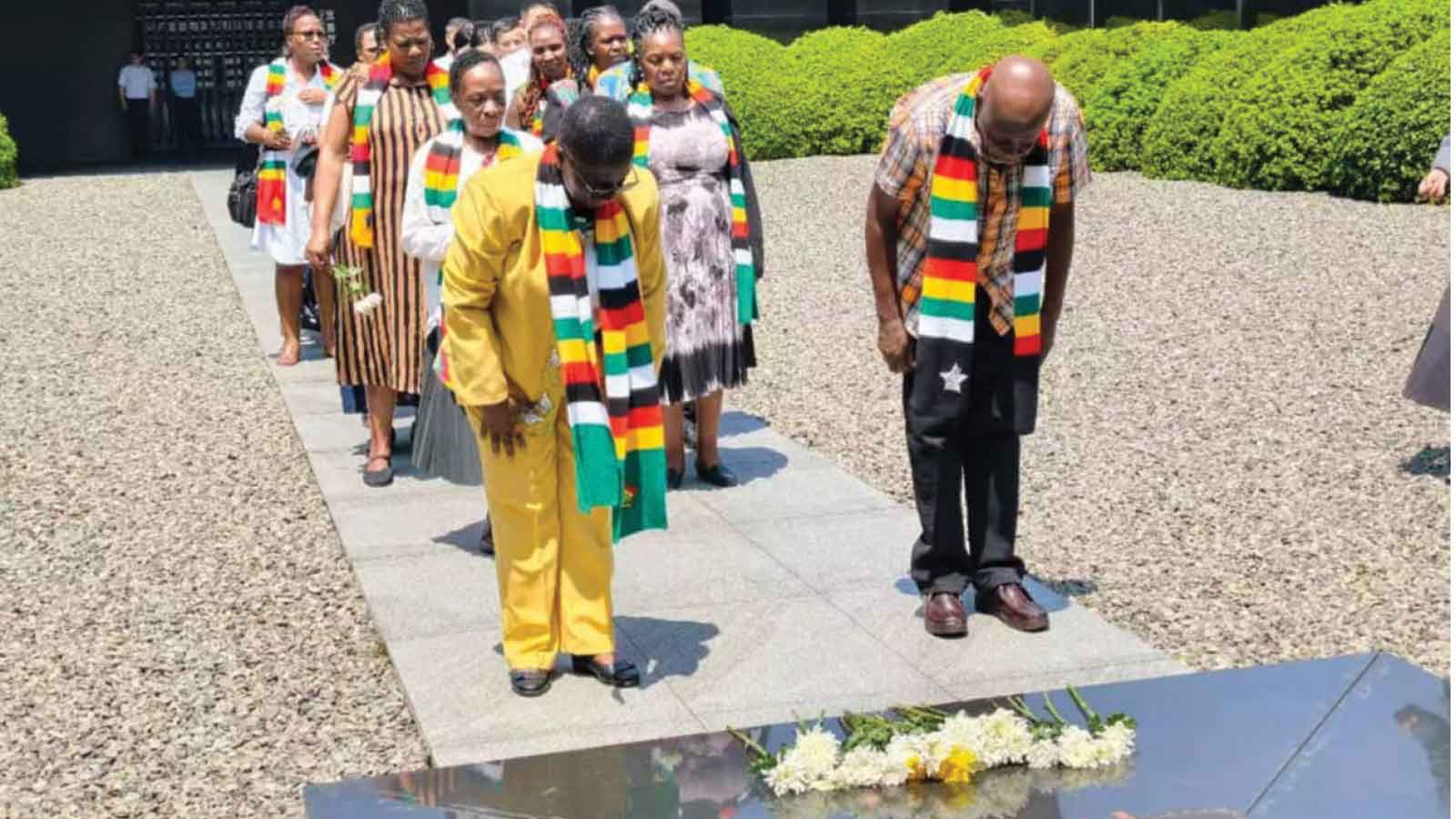
Kuda Bwititi
Zimpapers Politics Hub
WHEN Zimbabwean liberation war veterans walked through the doors of the Museum of the Communist Party of China in Beijing last week, they were not merely visiting another historical landmark. They were retracing a revolutionary journey intertwined with Zimbabwe’s own struggle for independence.
For some members of the delegation led by Veterans of the Liberation Struggle Affairs Minister Monica Mavhunga, the visit was deeply personal. The veterans received military training in China or from Chinese instructors during the 1960s and 1970s before returning home to wage the armed struggle against colonial rule.
Decades later, they returned not as trainees, but as honoured veterans, witnessing how a nation that once supported Zimbabwe’s liberation has transformed itself into one of the world’s leading economies while remaining rooted in the ideals that shaped its revolution.
The official visit, which ran from July 6 to July 10, served as a reminder that relations between Zimbabwe and China were forged long before the establishment of formal diplomatic ties in 1980. They were cemented in the trenches of the liberation struggle through shared sacrifice, political solidarity and a common vision of self-determination.
The delegation’s first engagement was with China’s Minister of Veterans Affairs, Mr Pei Jinjia. Discussions centred on strengthening cooperation in veterans’ affairs, reflecting the growing importance both countries attach to the welfare of those who fought for national liberation.
Zimbabwe’s Second Republic has consistently prioritised improving the welfare of liberation war veterans. China has similarly developed comprehensive systems that preserve the dignity of former servicemen and women long after active service.
This shared commitment was evident during the delegation’s visit to Beijing’s Shijingshan Community Military Retirees University.
Far from being a conventional retirement institution, the university offers educational opportunities, health programmes, cultural activities and community services tailored specifically for retired military personnel.
The model demonstrates how veterans can continue contributing to national development while enjoying active and fulfilling retirement.
For Zimbabwe, where Government continues implementing programmes to improve veterans’ welfare, the Chinese experience offers practical lessons on institutional support, skills development and social inclusion.
Yet the emotional highlight of the visit came at the Museum of the Communist Party of China.
Inside its galleries, the veterans followed China’s revolutionary journey from the founding of the CPC in 1921 through decades of struggle, liberation, nation-building and modernisation.
Historical artefacts, archival footage and immersive exhibitions illustrate how the Party transformed China from a largely agrarian nation into a global economic powerhouse.
For the Zimbabwean veterans, the museum echoed familiar experiences.
Both countries endured protracted liberation struggles. Both fought against foreign domination. Both viewed national independence not as an end in itself but as the beginning of economic emancipation and improved livelihoods for ordinary citizens.
Perhaps no moment better symbolised this shared history than when the Zimbabwean delegation sang the “Three Main Rules of Discipline and Eight Points for Attention” in Shona.
The revolutionary code, long associated with the Chinese People’s Liberation Army, emphasises discipline, respect for civilians and service to the people.
Its rendition in Shona illustrated how revolutionary values can transcend language, geography and generations.
Adding to the occasion, veteran Stephania Mukusha performed the classic Chinese song I Love Beijing Tiananmen in fluent Mandarin, drawing admiration from Chinese hosts.
Such cultural exchanges reflected a friendship that has evolved beyond Government-to-Government cooperation into genuine people-to-people engagement.
Another meaningful stop was the Temple of Heaven, one of China’s most treasured cultural landmarks and a UNESCO World Heritage Site.
Historically associated with prayers for peace and abundant harvests, the temple symbolises aspirations that resonate strongly with Zimbabwe’s own national priorities of peace, food security and rural development.
For veterans who sacrificed their youth to secure national independence, the symbolism was unmistakable.
Liberation was never solely about replacing one political system with another.
It was about creating conditions in which future generations could enjoy prosperity, dignity and opportunity.
That aspiration continues to shape Zimbabwe’s national development agenda under Vision 2030.
The delegation’s interaction with young Chinese students further illustrated another important dimension of Zimbabwe-China relations.
Warm conversations, shared songs and laughter bridged differences in language, age and culture.
They demonstrated that the friendship established during the liberation struggle is now being carried forward by younger generations with no direct experience of war.
People-to-people exchanges remain one of the strongest pillars of Zimbabwe-China cooperation.
They complement expanding collaboration in infrastructure, mining, agriculture, health, education and technology.
The delegation also toured the Nanjing Army Command Academy, an institution with deep historical significance in China’s military development.
For veterans who once underwent military training in China, the visit underscored the enduring military ties that date back more than half a century.
Many Zimbabwean freedom fighters acquired military knowledge and revolutionary ideology in Chinese training camps before returning home to join the liberation struggle.
Those experiences shaped not only battlefield tactics but also broader principles of discipline, patriotism and serving the people.
Today, Zimbabwe-China relations have evolved well beyond military cooperation.
The partnership now encompasses trade, investment, industrialisation, agriculture, infrastructure development, energy, education and cultural exchanges.
Yet history remains the foundation upon which this broad relationship continues to grow.
Unlike relationships driven purely by commercial interests, Zimbabwe-China cooperation has been strengthened by decades of mutual trust built during difficult periods in both countries’ histories.
As global geopolitical dynamics continue to evolve, historical friendships are increasingly becoming valuable strategic assets.
The visit by the war vets proved that preserving the liberation heritage shared with China is not simply about commemorating the past.
It is also about understanding how historical solidarity can inform future cooperation in economic development, technology transfer, education and social transformation.
The veterans’ visit also reaffirmed that liberation history remains a living force shaping contemporary relations between the two nations.
As Zimbabwe pursues its national development aspirations, the experiences of a country that combined revolutionary ideals with rapid economic transformation provide valuable lessons.
Equally, China’s continued recognition of Zimbabwe’s liberation legacy demonstrates that friendships forged through shared sacrifice possess a resilience that transcends changing global circumstances.
More than four decades after Zimbabwe attained independence, the revolutionary bridge between Harare and Beijing remains firmly intact.
It continues to connect not only governments, but also veterans, students and ordinary citizens, ensuring that the shared ideals of independence, sovereignty and people-centred development continue to guide one of Africa’s oldest and most enduring bilateral partnerships.