admin
admin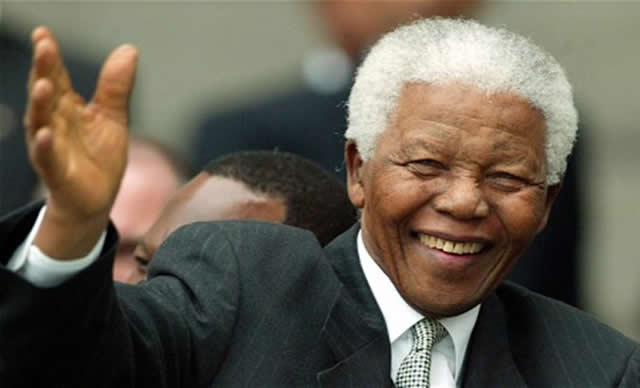
Lovemore Ranga Mataire
Mandela seemed to lean more towards liberalism and in turn made it difficult to place him in the same realm with Kwame Nkrumah, Sekou Toure, Abdel Nasser, Kenneth Kaunda, Julius Nyerere, Robert Mugabe, Joshua Nkomo, Patrice Lumumba, Samora Machel, Steve Biko or Chris Hani
ON April 20, 1964, during the famous Rivonia trial at which Nelson Mandela and others were being charged for treason, the late anti-apartheid hero carved what can be described as South African history’s seminal moment.
There, in a white court and white judges, a fearless Mandela pronounced his beliefs in a free South Africa for which he was prepared to die.
In concluding his defence, Mandela said: “During my lifetime I have dedicated myself to this struggle of the African people. I have fought against white domination.
“I have cherished the ideal of the democratic and free society in which all persons lived together in harmony and with equal opportunities.
“It is an ideal which I hope to live for and to achieve. But if needs be, it is an ideal for which I am prepared to die.”
It is said that a deafening silence engulfed the whole courtroom as Mandela finished his speech until the presiding judge called for the next witness.
The key aspects of that speech include Mandela’s reference to the African cause and the establishment of a harmonious status quo with “equal” opportunities.
Those who were close to Mandela at the time argue that his views about the struggle were clear and unequivocally defiant about blacks being indigenous inhabitants of South Africa and the rightful heirs to the ownership of the means of production.
But what happened thereafter?
The trajectory that characterised Mandela’s life from the Rivonia trial, his incarceration, his transfer from Robin Island to Pollsmoor Prison and his eventual release is laced by a consistent evolving of his ideological belief system.
Mandela seemed to lean more towards liberalism and in turn made it difficult to place him in the same realm with Kwame Nkrumah, Sekou Toure, Abdel Nasser, Kenneth Kaunda, Julius Nyerere, Robert Mugabe, Joshua Nkomo, Patrice Lumumba, Samora Machel, Steve Biko or Chris Hani.
Many analysts are convinced that if Mandela had carried through the spirit and intent enshrined in the ANC Freedom Charter and his defining speech during the Rivonia trial, South Africa and the African continent would have been a different place today.
Mandela’s revolutionary credentials before his incarceration were not in doubt, especially as he delivered his closing defence outline during the Rivonia trial.
His views apparently began to evolve in prison as he started having secret meetings with high ranking apartheid officials. Maybe he realised the futility of his ideological dogmatism in establishing an independent black South Africa given the hegemonic economic influence of the whites who had come ashore as early as the 16th century.
His transfer from Robin Island to Pollsmoor Prison was thus a direct product of those secret meetings.
Mandela’s evolving ideological thinking became more apparent upon his release when he sought to allay white fears of possible cataclysmic reprisals from previously marginalised blacks by assuring them that the ANC would advocate for private enterprise or a market driven economy.
Euphemistically calling his country the Rainbow Nation, Mandela’s reign therefore was to most Pan-Africanists a dumb-squib as it focused on abstract issues like unity and reconciliation, leaving out the real levers of power: land and capital.
Mandela thus became a darling of Boers or Afrikaners as they were content with Africans having political power while the economy remained firmly in their hands.
Could this be the reason why his ex-wife Winnie, on March 8, 2010, laid into the anti-apartheid icon, saying, “Mandela did go to prison and he went in there as a young revolutionary but look what came out.”
She added: “Mandela let us down. He agreed to a bad deal for the blacks. Economically we are still on the outside. The economy is very much ‘white’. I cannot forgive him for going to receive the Nobel with his jailer de Klerk. Hand in hand they went. Do you think de Klerk released him from the goodness of his heart? He had to. The times dictated it, the world had changed.”
In the words of John Pilger who once interviewed Mandela during the early days of his reign, the ANC clearly abandoned the Reconstruction and Development Programme (RDP), whose thrust was to improve the economic conditions of black South Africans arguing that “every process incorporates a change.”
It is often argued that Mandela was a mere transitional leader whose legacy was his ability to steer his country from the fragility that characterised the period before and after the first democratic elections.
However, this does not justify his lack of a coherent economic agenda to address the economic disparities that still exist to this day in South Africa. This does not in any way justify his apologetic overtures to whites, including the infamous invitation of wives of apartheid cabinet ministers and calling their husbands “heroes”.
The apparent discord from his former African comrades and those from the communist bloc forced Mandela to visit Cuba and meet with the revolutionary Fidel Castro.
But his visit was mere public stunt as pressure from moderates and white liberals within the ANC inevitably swayed him to adopt a linear perspective further distancing him from the real challenges confronting South Africans.
It was therefore not a coincidence that despite land being one of the topical issues in the ANC Freedom Charter, Mandela never realistically addressed it. So much hope was placed on Mandela’s shoulders to radically advance the African cause in addressing the unbalanced economic order but the former Umkonto weSizwe leader was so pampered by white liberals who awarded him a joint Nobel Peace Prize with the Nationalist Party leader FW De Clerk.
It is after the Nobel Peace Prize that Mandela became more of a white man’s person than an African revolutionary.
It is sad that even now as Mandela lies in state, the African voice is glaringly intermittent, largely ignored or non-existent in most international media houses. It is the white man who now owns Mandela and claims to know more about him.
As Africa and the world salute Mandela’s contribution in giving Africa a dignified status, one must never forget that he was the same man who presided over the consummation of a colourful national flag that curiously does not bear the black colour.
It is also curious that South Africa does not celebrate Independence Day but what they call Freedom Day. South Africa is also one of the few countries that do not recognise Africa Day.
More fundamental is the fact that land reform is still an emotive issue and the need to share wealth, nationalization and the need for the African majority to be at the centre of decision-making processes still remain as some of the unfinished projects that Mandela never attempted to address.
The state’s hold on the economy is still weak and the fact that so many of the large corporations are still controlled by whites does little to nurture solid state capital relations. The judiciary is still a sad relic of the apartheid era while the security sector is maladjusted and is in need of urgent reform.
Widespread crime is also testimony to a combination of debilitating factors, which include the breakdown of the social fabric owing to the high unemployment rate, and the non-integration of the police force which seems to have different command structures.
In short, Mandela leaves South Africa in a state of interregnum, with its populace still waiting for the promise of the Rainbow Nation as he espoused it.


 Online Reporter