

 Chronicle Editor
Mashudu Netsianda, Deputy News Editor
AISLES of mismatched wooden shelves and cabinets fill the fluorescent-lit room from wall to wall and there are countless bugs comprising dragonflies, lice, aphids, moths, butterflies, bees and beetles hidden in drawers, slide boxes and vintage cigar boxes.
Bulawayo Natural History Museum’s entomology department is home to a collection of millions of insect specimens, some dating back to the late 19th century. Entomology is the study of insects.
Among the millions of insect specimens in the collection room, is a 138-year-old jewel beetle, the museum’s oldest specimen.
The bullet-shaped beetle is not surprising for a collection of this size. The more than a century-old beetle was collected by RP Le Roy during his expedition to Zanzibar in the 1880s.
Jewel beetles live in farmland, garden, forest, jungle, or woodlands. They may live on a plant or tree that is dying. Some species are attracted to recently burned forests and lay their eggs there. They are a tough species, which can thrive in adverse conditions.
Bulawayo Natural History’s head of the entomology department and curator, Ms Dorothy Chipo Madamba stumbled across the beetle while conducting a study on edible insects in Zimbabwe.
Ms Madamba, a holder of an MSc in Biology (Sam Houston State University, Texas, USA) said from the research her findings were that there are 52 edible species in the country.
“Since 2013, I started seriously looking at the study of edible insects. The United Nations Sustainable Development Goal (SDG) number 2 talks of zero hunger and part of my study is trying to discover sustainable food,” she said.
“In Africa, we are way ahead because we have already been eating sustainable foods in the form of insects, which we have been harvesting since time immemorial. My study was to establish how much resources we have in Zimbabwe and so far, the paper that I published in 2020 lists 52 species that are available for Zimbabweans to eat.”
Ms Madamba said the study is important as it makes people aware of what to eat.
“In the future, we look forward to doing exhibitions to showcase that study and information on the edible insects we have in our collections and those found in Zimbabwe. We have also embarked on awareness programmes and educational drive to achieve the SDGs,” she said.
“Insect collections, like the collections housed here at the Bulawayo Natural History Museum, are vital to understanding the vast diversity of insects that inhabit our planet.”
Ms Madamba said insects, and other arthropods like spiders and crustaceans, make up a large portion of Kingdom Animalia.
“In fact, the phylum arthropods contains over one million identified species and that number grows every day. Arthropods also account for approximately 80 percent of all known living animal species,” she said.
The museum’s rare insect collections include Lepidoptera (an order of insects that includes butterflies and moths) and Odonata (an order of flying insects that includes dragonflies and damselflies) collected by the late entomologist Elliot Pinhey in tropical African countries.
Pinhey worked in Africa and specialised in African Lepidoptera and Odonata. He made major contributions in entomology to the knowledge of butterflies, moths and dragonflies.
There are also collections by the late British entomologist George Arnold who specialised in aculeate Hymenoptera (particularly ants, sphecid wasps and pompilid wasps).
Hymenoptera is one of the largest orders of insects and includes many species of bees, wasps, hornets, sawflies and ants.
The entomology section is the largest department in terms of specimen collections at the museum. Built in 1962, the Bulawayo Natural History Museum is rated among the best museum in Southern Africa and ranks fourth in size among the museums of Africa.
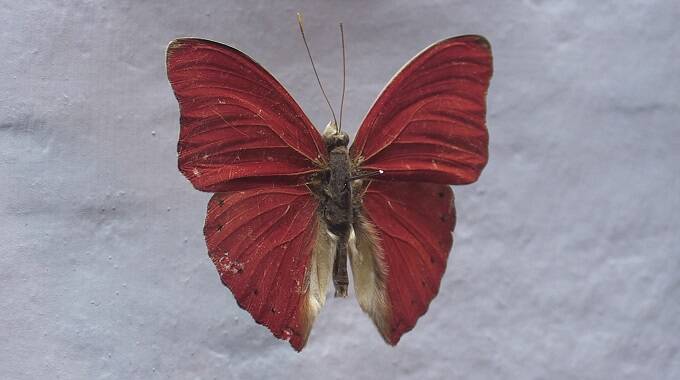
The museum has eight research departments which are: archaeology, entomology, ornithology, mammalogy, herpetology, ichthyology, palaeontology and geology with extensive study collections.
Ms Madamba said insects preserved in a cool and dry environment can last for centuries.
“Because of the environment where we keep our specimens, they can last for centuries in their natural state. Although we are still data-basing, so far, the oldest specimen that we have in our collection is from 1885, which is a jewel beetle collected by RP Le Roy in 1885 in Zanzibar,” said Ms Madamba.
She, however, said one of the biggest threats to their collections is actually other insects. Carpet beetles are famous for eating entire collections and leaving nothing but dust in their paths.
“The National Museums and Monuments of Zimbabwe’s vision is to have a society that is inspired by a well-preserved heritage by 2030. Entomology forms part of natural heritage and as museums, it is our mandate to preserve that heritage and to communicate about it to everyone in order to conserve it for future generations.”
Ms Madamba said to date, the department of entomology has not come up with the exact number of specimen collections.
“We have millions of specimen collections and for now we are still data-basing and haven’t even touched half of what we have. What you are actually seeing in our galleries on display is probably one percent of what we have in our department,” she said.
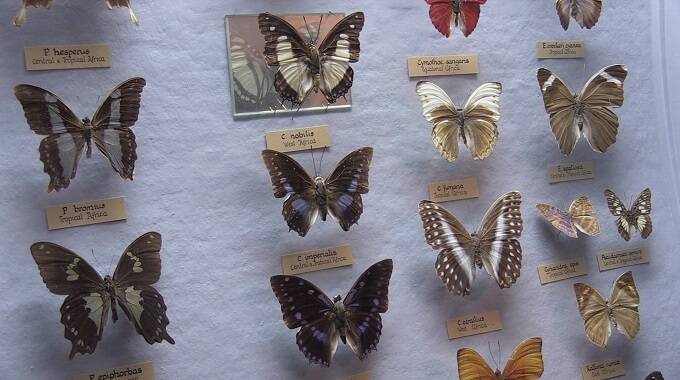
Research has shown that there are about 900 000 to one million species on earth.
“The collections we have so far are a contribution of many scientists who were working on entomology in the past both locally and outside the country, which is regionally and across other continents,” said Ms Madamba.
“Our collections are not only from Zimbabwe, but we do have international specimens as well. We have so many people who did different studies in entomology in the past dating back to 1800 and collected these specimens, which were put together in one big collection.”
Ms Madamba said while there are people who are still actively collecting insects, some of them are not aware of the repository in the museum where you can deposit those collections.
“We have significant types of specimens and when it comes to long-time preservation, the basic method that we use is drying and cooling. With good preservation, these specimens can last forever and this museum has been around for more than 60 years” she said.
“However, with time we do have infestations in the department hence we do fumigations from time to time. In the past, we benefited from societies that use collections and have donated towards the fumigation of these collections.”
Ms Madamba said insect collections are vast with 29 orders of insects.
“Notable collections housed at the museum include a George Arnold collection and Elliot Quinn who was a curator in this department at a time when a lot of discovery was being made. As the entomology department over the years there used to be a good network of local and international scientists,” she said.
“Part of what we are doing as a department is the formation of an entomology association for Zimbabwe so that entomologists in the country can come together and have a platform where we preserve these collections and share ideas and knowledge.”


 Blessing Chizhande
 Online Reporter