Online Reporter
Theseus Mauruki Shambare in MASVINGO
ABOUT 450 small-scale fish farmers in Masvingo are benefiting from an EU-Government initiative aimed at improving access to quality fingerlings, production knowledge, business skills and markets as Zimbabwe seeks to expand aquaculture.
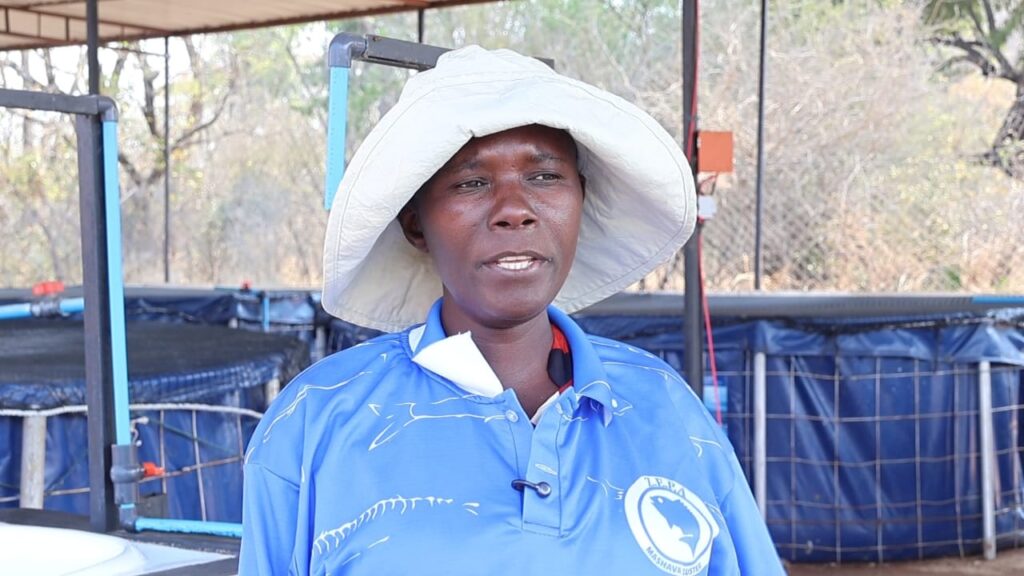
The farmers are being supported under the Fisheries and Aquaculture Development Project, implemented with technical support from the Food and Agriculture Organisation (FAO) through the FISH4ACP programme.
At the centre of the initiative is the Maponga Fingerling Hub, which is already supplying farmers with fingerlings and has been distributing about 700 000 fingerlings annually.
With more farmers joining the programme and new clusters being formed, the hub is targeting production of 1 million fingerlings this year, strengthening local access to quality stocking material.
For farmers such as Felistas Shayawabaya, the development is addressing one of the major challenges that previously made fish farming costly.
Shayawabaya said she had been producing fish independently but was forced to travel to places such as Bindura and Kariba to source fingerlings.
“I was doing fish farming on my own and I had to travel as far as Bindura and Kariba to look for fingerlings. The costs were high, and by the time the fingerlings arrived, some would have died,” she said.
The establishment of the Maponga hub is expected to reduce such costs by bringing fingerling production closer to farmers while providing a one-stop centre for aquaculture-related services.
For Esther Maswa, training provided through FAO and Government has given her the confidence to move from learning about fish farming to starting production.
Maswa said she was now preparing to purchase her first batch of fingerlings from the Maponga hub.
“FAO and the Government trained us under the FISH4ACP programme. We now understand how to manage the fish and run the business. I am ready to buy my first batch from Maponga because everything is available in one place,” she said.
Another farmer, Emma Musvosveri, said she was inspired to venture into fish farming after seeing other farmers using proceeds from the business to improve their livelihoods.
“I saw some people buying cars and building beautiful homes from fish farming, and I told myself that I should also try it,” she said.
Musvosveri has since constructed a 10-metre by 10-metre fish pond and is preparing to stock it.
“I have already constructed my pond, which is 10 metres by 10 metres. I am now ready to stock it and start my fish farming business,” she said.
The programme has also organised farmers into clusters, allowing them to collectively access inputs and services at lower costs while strengthening their bargaining power in the market.
Through the cluster approach, farmers can coordinate production, purchase inputs collectively and seek markets as a group, reducing some of the challenges faced by individual small-scale producers.
The initiative forms part of wider efforts to transform Zimbabwe’s aquaculture sector from largely small-scale production into a more commercially viable value chain, with farmers being equipped not only with production skills but also business and market knowledge.
The Maponga hub is therefore expected to serve as a link between fingerling production and the growing network of farmers seeking to enter or expand their participation in the fish value chain.