Chronicle Editor
Leonard Ncube, [email protected]
AFRICAN diamond producers have expressed concern over proposed unilateral restrictions imposed by the Group of 7 (G7) countries on trade in rough natural diamonds from Russia and third countries.
G7 countries is an informal grouping of seven countries of the world including Canada, France, Germany, Italy, Japan, the United Kingdom, the United States and the European Union.
The bloc provides global leadership and serves as an influential catalyst on issues that are later taken up by other fora with broader global and regional following.
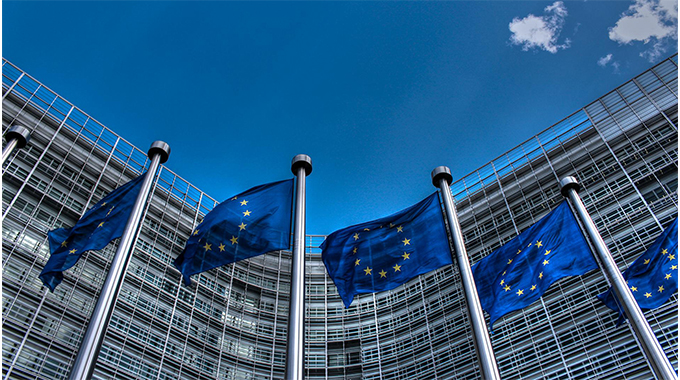
Russia joined the G7 in 1997 but was suspended in 2014 following its annexation of Crimea and with the war with Ukraine, the G7 leaders responded in January this year by effecting a ban on the importation of Russian rough diamonds or polished diamonds of one carat or heavier processed in third countries,from being traded in its market.
This ban did not apply to the industrial and personal jewellery of individuals crossing the border.
Russia is the world’s rough diamond giant, producing more than 41 million carats, followed by Botswana at 24 million carats while Canada is third at 16 million carats and is the only G7 country in the top 20 of rough diamond producing countries of the world,where Africa dominates.
Zimbabwe is the seventh top ranking producer at over four million carats after DRC, South Africa and Angola in fourth to sixth place respectively.
Namibia, Lesotho and Sierra Leone complete the top 10 list. Russia attended the ninth Meeting of the Council of Ministers of the African Diamond Producers Association (ADPA) in Victoria Falls last week as an observer, in solidarity with African producers.
Officiating at the conference, President Mnangagwa who was the guest of honour, bemoaned the proposed unilateral restrictions on the trade of natural diamonds being imposed by some market players and implored member states to protect natural diamonds from the threat of synthetic lab diamonds.
He called for cooperation and solidarity among member states for their voices to be heard, as Africa produces over 60 percent of world rough diamonds.
Speaking on the side-lines of the event, the Head of International Cooperation of Precious Metals and Stones at the Ministry of Finance in Russia, Mr Arthur Glazunov, accused the G7 of destroying the diamonds market.
“ADPA invited Russia to share our extensive experience and assist African diamond producers to have more value from diamonds and also share best practices. The G7 is destroying the industry here in Africa and imposing unreasonable restrictions on African stones,” he said.
“At the same time, the diamond market is fragmented into those consumers who introduced and impose restrictions and those who support free trade on rough diamonds based on the Kimberly Process Certification Scheme and this market is the future market, they will grow and consume more diamonds.” African countries established the Africa Mineral Strategy Group (AMSG), a continental intergovernmental body to which Zimbabwe is a founding member.
The AMSG seeks to facilitate international cooperation in the mining and mineral sector among member nations with a clear goal of promoting the exploration, extraction, value addition and local beneficiation of local commercialisation of our minerals, to ensure a sustainable, secure and transparent supply of these minerals while protecting the environment and improving lives of people to spur socio-economic transformation and prosperity of Africa.

AMSG secretary general, Mr Moses Michael Engadu, urged African countries to unite against the G7 move.
“Regarding the restrictions and newest plans that the G7 is trying to superimpose on already an existing process-the KP, a process that was agreed by everyone and here we have few producing countries that are trying to enforce a different standard from what we have, which creates an additional burden on continent’s producer,” he said.
“Why do you break what is working? What is working is the Kimberly Process, which we support. If there are any additional measures, this can be done either informally or bi-laterally to ensure that there is a process. This is why we are saying we must be respected.”
Mr Engadu said Africa respects G7 countries but standards must be followed.
“We came together and agreed as the world, why we have to change our standards on the request of seven countries. We believe that for the first time, we have a standard that we subscribe to, that was done with consultation and inclusion of everyone. Let it work and should there be need, we must go back to the same process that created the KP if we want to improve or amend, there should be consensus,” said Mr Engadu.
He said the continent’s natural endowments have for long been underrated, and the continent must take charge of energy transition and its market. He said the African Mineral Strategy Group is a shield for members to be able to negotiate better, get partnerships and market products.
With over 60 percent of rough diamonds made in Africa, Mr Engadu said the continent must have a strong voice towards the united Africa we want, where intra-trade grows and leveraging on natural resources.


 Online Reporter