Chronicle Editor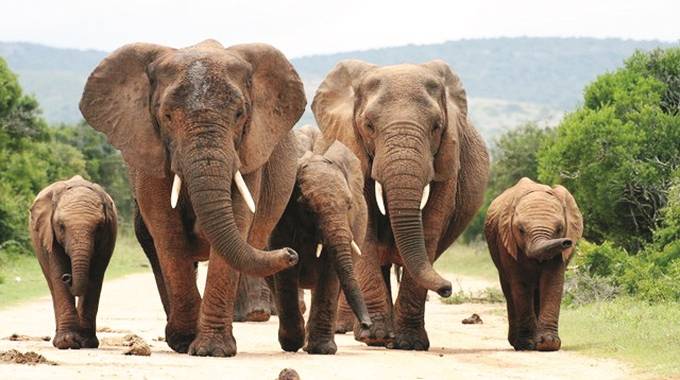
Rutendo Nyeve in Hwange
THE Zimbabwe Parks and Wildlife Management Authority (Zimparks), has assured the nation and stakeholders in the animal conservation sector that no animal is going to die amid concerns that the current drought was threatening survival of animals at Hwange National Park.
Zimparks director-general, Dr Fulton Mangwanya, told Sunday News in an interview in Hwange on Thursday that they were on top of the situation in ensuring that the animals were cushioned against the effects of climate change-induced drought.
He said reports that the animals were migrating from the park, were made out of ignorance of the fact that the giant national park was part of the Kavango-Zambezi Transfrontier Conservation Area (Kaza-TFCA), which allows for free movement of animals within the conservation area corridors that encompasses Zambia, Botswana, Namibia, Angola and Zimbabwe.
“Everything is under control in Hwange National Park. We do not have any reason to doubt that the park is heavily affected by climate change.
“We are saying so because last time we had some elephants and buffaloes ,which were found moving to Botswana. It is not uncommon, it is very normal because that is the corridor and that is the real essence of the transfrontier conversation area, of which Hwange is a part of it,” said Dr Mangwanya.
A tour of the park by the Sunday News, said most water points still have water while the park is still breathing green life from the limited rains received over the months. Herds of elephants, buffaloes, zebras and other species were also observed, giving tourists a breathtaking experience.
“Our park has healthy pastures and is still a good habitat for animals. We know the rains are not enough such that in July we might encounter water challenges but all the boreholes we have are functioning and they are all solar-powered and can pump at night. We may not be able to supply enough water, but the animals will not die because of that. The rains came and we have green everywhere, so our park is in a solid state and we have no reason to worry,” said Dr Mangwanya.
He said while the park had witnessed drought over the past years, the number of elephants continues to increase from 45 000 over the past years to 65 000 elephants within the transfrontier area. Dr Mangwanya said the increase in the number of elephants was threatening the habitat, which was not growing and had nothing to do with climate change. Measuring over 14 000 square kilometres, Hwange National Park is home to the world’s second biggest population of elephants after Botswana. -@Nyeve14


 Online Reporter