Chronicle Editor
Lumbidzani Dima, Chronicle Reporter
BULAWAYO has become the first city in Zimbabwe to join the Food and Agriculture Organisation’s (FAO) Green Cities Initiative which is aimed at improving food security, nutrition and quality of life in urban and peri-urban areas.
The initiative which was introduced in 2020 by the United Nations agency focuses on improving the urban environment, enhance cities contribution to sustainable growth and wealth at national level with a focus on innovation and green technologies for agri-food systems, green infrastructure and better food and water waste management through improved urban planning and rural urban linkages.
The initiative will also contribute to climate change mitigation and adaptation and sustainable resource management.
FAO is set to avail funding to conduct a needs assessment in Bulawayo.
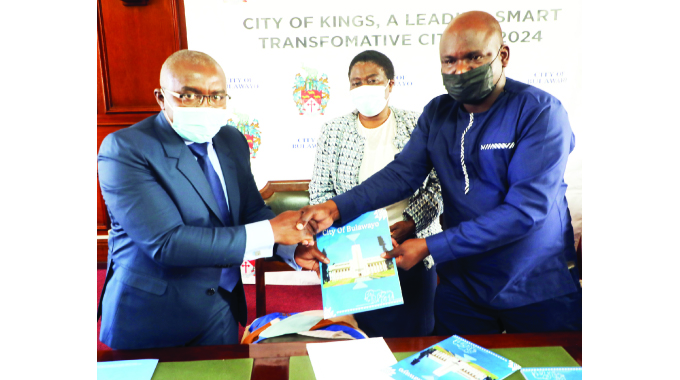
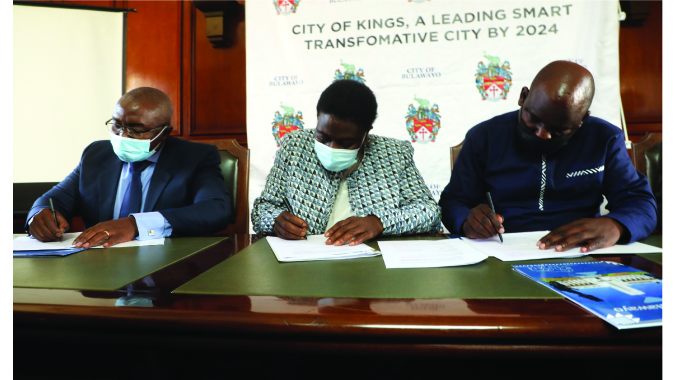
Yesterday, Bulawayo Mayor councillor Solomon Mguni, Bulawayo Provincial Affairs and Devolution Minister Judith Ncube and FAO country representative, Dr Patrive Talla Takoukam signed the letter of intent signalling Bulawayo’s entry into the Green Cities Initiative.
Dr Takoukam said in September 2020 FAO launched the green cities initiative to trigger transformative action for cities to become greener, cleaner, more resilient and regenerative.
He said the aim of the initiative is to reach 1000 cities by 2030.
Last year FAO launched the Green Cities Regional Action Programme for Africa and six cities joined Bulawayo became the seventh city to join yesterday.
“To address these challenges, cities are taking a more active role in contributing to national governments’ efforts in achieving the Sustainable Development Goals and the Paris Agreement.
Cities have realised that maintaining sustainable agri-food systems with green spaces that include urban and peri-urban agriculture and forests are essential for making cities more resilient to the impact of climate change and socio-economic crises,” said Dr Takoukam.
He said the advantage of Bulawayo is that it already has existing initiatives to do with resilience, climate change, market access and food waste.
“The Green Cities Initiative is a major opportunity to strengthen these existing initiatives and the much-needed urban and rural linkages for the City of Bulawayo and success rests on the active participation of stakeholders through broad and diverse partnerships.
It is an umbrella initiative that leverages different urban and peri-urban projects, programmes and agendas to achieve actions with greater scale, uptake and impact,” said Dr Takoukam.
Minister Ncube said the green cities initiative complements Government efforts to address challenges facing urban areas such as water scarcity, electricity blackouts, deteriorating waste management services, air, water and plastic pollution and poor connectivity among others.
She said past Bulawayo city leaders started some initiatives and the agreement with FAO will result in their revival.
Minister Ncube said the Green Cities Initiative is part of risk mitigation measures that cities and towns should be invested in.
“If you remember where Bulawayo is coming from, you will realise that this initiative is not new.
There was a gumtree plantation meant to ensure that there is food security in the city as vulnerable people benefitted from it.
There was also a project to plant vegetables in sacks to address the problem of landlords who were denying their tenants land to plant vegetables,” she said.
Minister Ncube commended the initiative for introducing new ways of doing things.
“By 2050, it is predicted that 67% of the world population will be living in urban areas and the rapid levels of urbanisation will be taking place in developing countries,” she said.
Clr Mguni said the signing of the intent letter is a declaration of the city’s intent to work with FAO on the Green Cities Initiative.
He said the city was already feeling the impact of the Climate change as evidenced by increased droughts which has resulted in reduced inflows into the city`s supply dams.
Clr Mguni said Bulawayo is committed to ensuring that urbanisation becomes an opportunity to improve its citizens’ livelihoods.
“We will work in harmony to underpin the importance of the enabling environment needed to support the planning, design and management of green spaces, urban and peri-urban agriculture and forestry and sustainable food systems addressing the common and diverse challenges and opportunities that small, intermediary and metropolitan cities face,” he said.
Clr Mguni said there is a need to come up with strategies on how the city can reduce climate change risks and vulnerabilities through land use management and other mitigation measures.



 Online Reporter