Nqobile Bhebhe in Mvuma
STEEL producer Dinson Iron and Steel Company (Disco) has positioned its Manhize project as a strategic anchor customer for the National Railways of Zimbabwe (NRZ), saying reliable rail logistics will be critical to transforming the massive steel complex into an industrial and export hub.
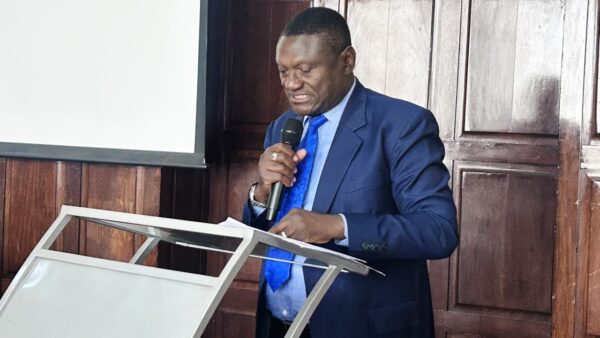
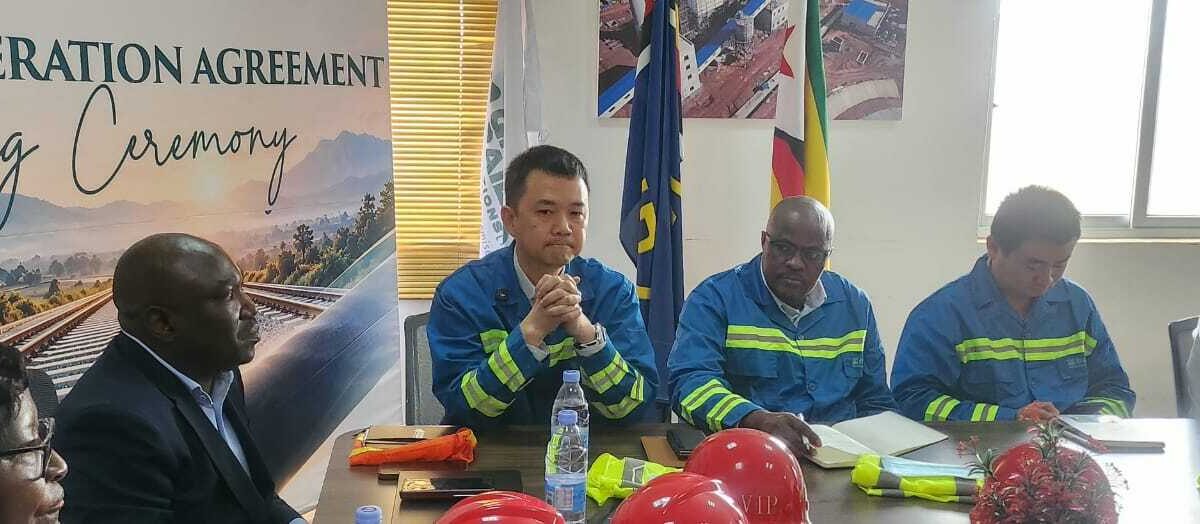
Dinson chief executive officer Mr Benson Xu said the strategic partnership between NRZ, Dinson and Grand Railway Solutions (GRS) Private Limited, signed in Mvuma, marked an important step towards linking Zimbabwe’s growing industrial production to an efficient bulk freight network.
“Dinson is proud to be the anchor customer of NRZ and the industrial partner,” the CEO said.
The agreement comes as NRZ seeks to rebuild its capacity and increase freight volumes by targeting sectors with sufficient cargo demand to support investment in the railway network.
The Manhize steel project provides one of the potentially largest sources of bulk freight for NRZ, given the movement of raw materials, finished steel products and other industrial inputs and outputs.
Mr Xu said the scale of the Manhize development meant rail was not simply a transport option, but a critical component of the wider industrialisation strategy.
“Manhize is not only a steel plant, it is an industrial park, a centre of production, processing, value addition, and export.
“For that hub to succeed, reliable, efficient and competitive rail logistics are essential.”
The remarks reinforce the growing push for a more commercially driven NRZ revival, where major industrial projects provide predictable freight volumes while the railway provides cost-effective logistics to support production.
Mr Xu said rail remained particularly important for heavy industry because of its ability to transport large volumes of cargo while reducing pressure on the road network.
“Rail is the backbone of heavy industry. It moves bulk cargo at scale. It reduces costs, eases road congestion, improves safety, lowers emissions and connects production centres through regional and international markets.”
For Zimbabwe, the development of bankable rail freight corridors is increasingly being viewed as essential to supporting mining, steel production, agriculture and other bulk-producing sectors.
At the recent Zimbabwe Economic Development Conference in Bulawayo, delegates called for NRZ to prioritise corridors with sufficient freight demand to support investment and repayment, with mining identified as a critical anchor because of its bulk cargo requirements.
The Manhize-NRZ-GRS partnership provides a practical test case for that approach, linking an industrial customer with railway infrastructure and potentially creating a predictable cargo base for rail investment.
Mr Xu said the benefits of the partnership would extend beyond the companies involved, particularly through its potential impact on production, exports and employment.
“It is partnership for production. It is a partnership for exports and it is a partnership for the public.”
The Manhize project is expected to deepen domestic value addition by processing iron ore into steel and related products, while creating opportunities for downstream manufacturing and exports.
Efficient rail connectivity could also improve the competitiveness of Zimbabwean products in regional and international markets by reducing logistics costs and facilitating the movement of high-volume cargo.
Mr Xu commended NRZ and GRS for their role in developing the partnership and Government for policies aimed at attracting investment and strengthening infrastructure.
“We thank NRZ and GRS for their vision, professionalism and hard work.
“We thank the Government for creating an enabling environment and for supporting policies that attract investment, strengthen infrastructure and promote industrial development.”
However, he cautioned that the signing ceremony should be viewed as the starting point rather than the conclusion of the partnership.
“Let us celebrate today, but let us also commit to implementation, with speed, safety, transparency, mutual respect, and measurable results.”
He said the ultimate measure of the agreement would be its ability to translate into actual freight movement, employment and skills development.
“The signing is the beginning, not the end. The true test of this agreement will be in the trains that run, the cargoes that move, the jobs that are created, and the skills that are transferred and the value that is retained.”
For NRZ, the partnership comes at a critical time as the railway seeks to restore its infrastructure, rolling stock and operational capacity after years of underinvestment.
The railway has identified industrial and mining freight as key to rebuilding volumes and creating a stronger commercial base for future recapitalisation.
The Dinson partnership could therefore provide a significant demonstration of how anchor customers can support the revival of strategic rail corridors while simultaneously lowering logistics costs for industry.
Stronger rail connectivity would support Zimbabwe’s ambitions to become a regional logistics and industrial hub by connecting production centres to domestic markets, regional trade routes and ports.