Online Reporter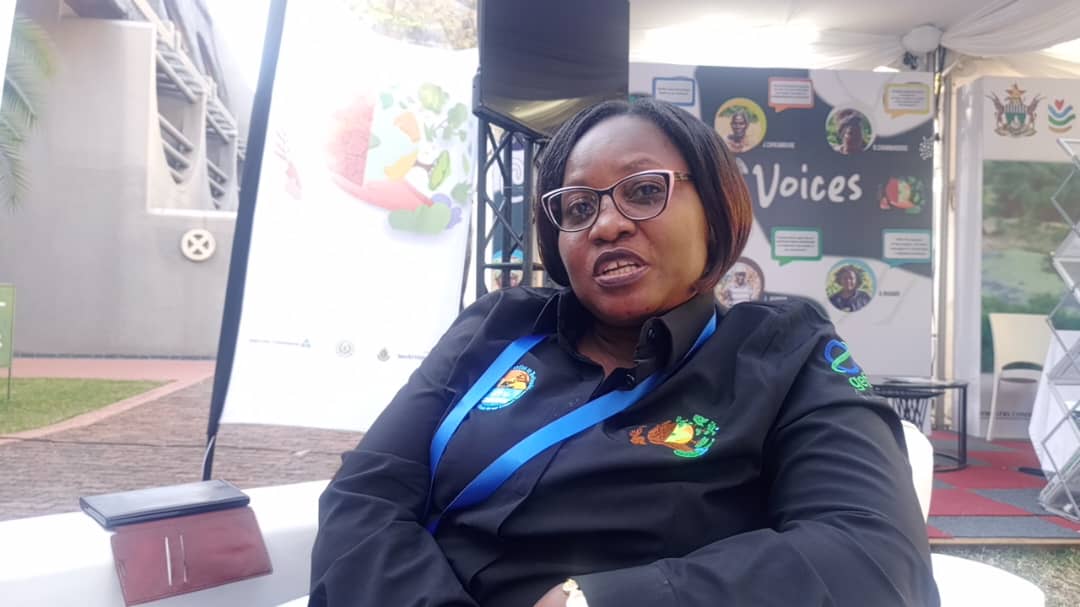
Rutendo Nyeve, Victoria Falls Reporter
THE Dry Lands, Sustainable Landscapes Impact Programme (DSLIP) is making significant strides in promoting sustainable land and forest management across the country’s most vulnerable regions.
Implemented in three provinces, including Manicaland, Masvingo, and Midlands, the programme is restoring ecosystems, empowering communities, and safeguarding critical wetlands.
Funded by the Global Environment Facility (GEF) and implemented by the World Bank in collaboration with the Government of Zimbabwe, DSLIP operates in 11 countries, with Zimbabwe being a key beneficiary.
The programme focuses on enhancing ecosystem resilience while improving livelihoods in dryland regions.
In an interview with Zimpapers, the National Project Coordinator for DSLIP Mrs Precious Magwaza explained the programme’s objectives.
“So the DSLIP, in short, is a programme that is running in 11 countries, Zimbabwe included. The focus of this programme is sustainable land and forest management in all of these countries. The objective is mainly to ensure the ecosystem’s resilience and improved community life,” said Mrs Magwaza.
She said in Zimbabwe, the project is being implemented in eight districts across 44 wards, targeting dryland areas where wetlands play a crucial role in sustaining agriculture, forestry, and water supply.
Cognisant of the fact that wetlands are lifelines in dry regions, providing water for farming, livestock, and biodiversity, she said DSLIP has prioritised their protection, working with the Environmental Management Agency (EMA) and the Community Technology Development Organisation (CTDO) to fence off and rehabilitate degraded wetlands.
One notable success is in Masvingo, where a critical wetland was fenced to prevent overgrazing and illegal cultivation.
“We managed to fence off the wetland core and as we speak, we have been hearing good stories coming from the community in terms of the increased water integrity and also the biodiversity in the area.
“The community is already testifying of the good works that are coming out of it within two years of implementation,” she said.
This intervention has led to improved water retention, benefiting both agriculture and wildlife.
DSLIP’s success stems from strong collaborations with key partners, each playing a distinct role.
The Environmental Management Agency (EMA) leads policy reviews and strengthens bylaws for sustainable land and wetland management.
The Forestry Commission promotes reforestation and sustainable forest practices, while the Community Technology Development Organisation (CTDO) supports community-based conservation and agroforestry.
World Vision Zimbabwe enhances livelihoods through climate-smart agriculture and value chain development.
“Each partner has its component in the project. EMA handles policy and institutional capacity building, while CTDO and World Vision work directly with communities to implement sustainable farming and business initiatives,” she said.
Recognising the challenges of climate change, DSLIP is promoting drought-resistant crops and sustainable farming techniques.
Farmers are receiving training in agroforestry, conservation agriculture, and small livestock management.
The programme has also provided two-wheeler tractors, planters, and threshers to improve efficiency.
Additionally, four community seed banks have been established to preserve indigenous seeds adapted to dry conditions.
“The idea is to ensure that farmers grow crops that are climate-resilient and adaptable to the areas they are operating in,” she said.
With tangible results already visible, DSLIP aims to expand its interventions. Mrs Magwaza emphasised the need for policy integration to replicate successes nationwide.
“We are working to influence policy and Government programming so that all of these activities, the good stories coming from the landscape, are adopted and scaled out to other areas,” she said.
@nyeve15