Chronicle Editor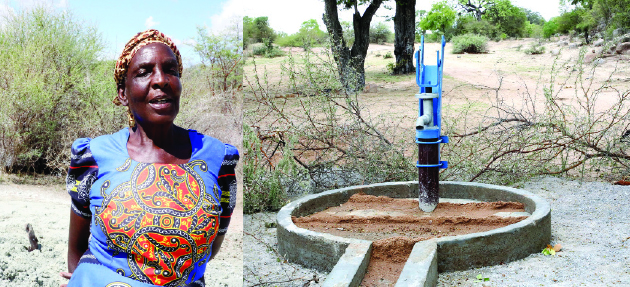
Nqobile Tshili, [email protected]
THE Government has taken urgent action to provide water for livestock in Bulilima district, Matabeleland South, where thousands of cattle have perished due to drought.
However, low water tables in some areas pose a challenge to the drilling of boreholes.
Bulilima is the worst affected district in the province, where farmers have lost more than 1 000 head of cattle since the beginning of the year. The province has lost 7 000 head of cattle to drought and January Disease, threatening the national herd.
The El Nino-induced weather conditions have delayed the rainy season, causing some community dams to dry up and leaving villagers in a desperate situation. Some animals have been trapped in muddy sections of drying water sources while searching for water.
Two weeks ago, Lands, Agriculture, Water, Fisheries and Rural Development Minister Dr Anxious Masuka visited Ngwana and Ndiweni villages in Bulilima to assess the situation and offer solutions.
He instructed the Zimbabwe National Water Authority (Zinwa) to drill boreholes for livestock and human consumption, as well as for horticulture gardens.
A Chronicle news crew followed up on the minister’s directive and found that four boreholes had been drilled in the two villages, but only two of them had sufficient water; indicating that the water table was too low in some areas.
Area councillor Dolly Dube praised the minister for his swift response and said the teams arrived a day after his visit and started drilling. She said the boreholes will help save the remaining livestock and improve the livelihoods of the villagers.
“The minister came here on Friday (December 8) after we requested to engage him because of our water situation. Our dams have dried up and our livestock, cattle, donkeys and goats are dying due to drought. Some of our animals are getting stuck in muddy areas while searching for water. So, he understood our concerns and promised us boreholes for livestock and another for the community so that we establish horticulture gardens. Following his visit on Friday, December 8, the rig arrived the following day on Saturday evening and they started drilling the very same Sunday in Ngwana,” said Clr Dube.
She said they drilled at two different sites, getting water in both sites in Ngwana.
Clr Dube said at Ndiweni Village, they did not get water at both sites.
“At the first site, they drilled up to 63 metres and there wasn’t a sign of water. We did the second point and at 70 metres we still were not getting water. I think the water table is too low, I think what needs to be done is to drill further and reach up 100 metres, maybe we can get the water. This area is very dry,” she said.
The councillor expressed concern that the little rain received in the area could result in more livestock losses at Ndiweni Dam, which was muddy and dangerous for the animals. She said 110 head of cattle had died after being trapped in mud at the dam.
Ngwana senior village head Mr Wellington Dube said the Government had delivered on its promise and brought hope to the community. He said one of the boreholes in his area had enough water for human consumption and would also be used for livestock as a temporary measure.
“Two boreholes have been drilled in this area. But one of the boreholes doesn’t have much water and is adequate only for human consumption. As a stop-gap measure, we will also use the borehole to provide for our livestock as they no longer have anywhere to access water. We appreciate the interventions by the minister, we are now hopeful as a community. We were experiencing difficulties but now I think our situation would be better,” said Mr Dube.
Another villager, Mr Michael Moyo, said he appreciated the boreholes.
“I’ve lost two cows due to drought and we are happy that there was urgency in taking care of our situation. A lot of people have lost their cattle. But we have a concern that while two boreholes were drilled, one of them had no water. So what is going to be done because of the minister’s intervention was that we should have two boreholes, one for livestock and the other for us to drink and establish a horticulture garden,” he said.
The Government has said stop-gap measures are being implemented to save livestock in most affected areas.
Mrs Irene Ngwenya, a widow from Ndiweni Village said losing livestock to drought was a serious concern for villagers.
“This is very desperate because to us cattle is our source of livelihood. I can send my children to school and even buy food when I sell some of the cattle. I can say livestock is like an employer to me, that is where I get money and when we lose them like this we are losing our wealth,” said Mrs Ngwenya.
Another villager Mr Roy Nkomo said communities were hoping that the Government could intervene and provide them subsidised feed.
“We have been trying to buy feed but these days it is extremely expensive. I hope the Government can intervene and provide us with subsidised feed. We’ve been trying to buy feed but it is increasingly becoming expensive,” said Mr Nkomo.


 Online Reporter