


 Vusumuzi Dube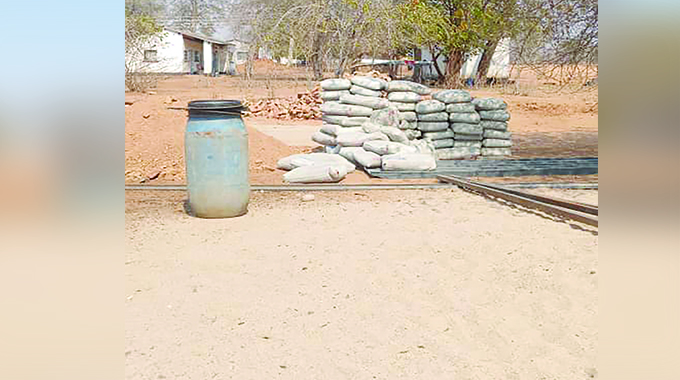
Vincent Gono recently in Binga
SIGNIFICANT developments are taking place in Binga District’s educational infrastructure with Manjolo High School transitioning into a boarding school.
The move is expected to benefit the local community and improve the pass rate. The district has been lagging behind most areas in educational infrastructure where learners would walk painful distances to the nearest schools with limited classrooms, furniture and other resources.
Mindful of that situation, President Mnangagwa instructed that something should be done for the district to play catch-up and Manjolo High School was identified to be part of the 24 projects supposed to be given top priority in the district.
Presenting figures during a recent tour of Manjolo High School in Binga by the Special Advisor to the President on Monitoring Implementation of Government Programmes and Projects, Dr Jorum Gumbo, the District Schools Inspector for Binga Mr Edson Masungo revealed that the district is home to 172 schools, comprising 125 primary and 47 secondary.
He said out of the 47 secondary schools in Binga, only 20 are officially registered, while the remaining 27 function as satellite schools lacking permanent staffing and not allowed to handle examinations.
For Binga, however, some of the satellite institutions now serve as examination centres under special arrangements, reflecting ongoing challenges in providing stable educational opportunities.
“On the primary education front, 60 out of 125 schools are officially registered. The 65 unregistered primary schools struggle to meet minimum infrastructure standards, highlighting the urgent need for stakeholders’ intervention to reduce the gap and ensure a comfortable learning environment for our children,” Mr Masungo said.
Despite these obstacles, Mr Masungo expressed optimism regarding recent Government initiatives aimed at addressing infrastructure deficiencies and improving school registration processes.
In terms of resources, around 44 schools across the district have access to electricity.
“The educational institutions that we have, serve over 47 000 primary school learners and more than 12 000 secondary school students, but the disparity in educational quality due to lack of infrastructure remains a pressing concern.
“There are nine high schools in Binga, yet most lack the facilities to adequately teach upper-level science subjects. Additionally, while more than 60 schools have boreholes, many of these water sources have dried up due to ongoing drought conditions,” said Mr Masungo.
He added that there was a notable challenge facing Binga where he said there was an exodus of teachers driven by poor infrastructure and inadequate resources, creating a perpetual cycle of recruiting new educators.
He said despite the challenges, some of which were not peculiar to Binga, he was heartened by the strong commitment to education demonstrated by the Government, local villagers and community members saying there was a collective desire for positive change.
He said the initiative to establish Manjolo as a boarding school has garnered significant local support, which he said was pivotal in propelling the endeavour forward.
According to the headmaster of Manjolo High School, Mr Nodisto Ngwenya, the school currently enrols 447 pupils, with 247 girls and the remaining being boys.
The school also services four satellite institutions and, in the past, it had an abnormal enrolment of 900 learners before changes impacted figures.
The school has 26 qualified teachers and offers 175 low-cost boarding spaces, illustrating ongoing efforts to improve educational accessibility in the district.
Dr Gumbo said the Government has intensified its focus on enhancing educational infrastructure in Binga to help fulfill the community’s aspirations for a more robust educational environment, which he said was within reach.
“With the commitment of local stakeholders and Governmental support, Binga is witnessing transformative changes in its education sector,” he said.



 Bongani Ndlovu
 Online Reporter