Chronicle Editor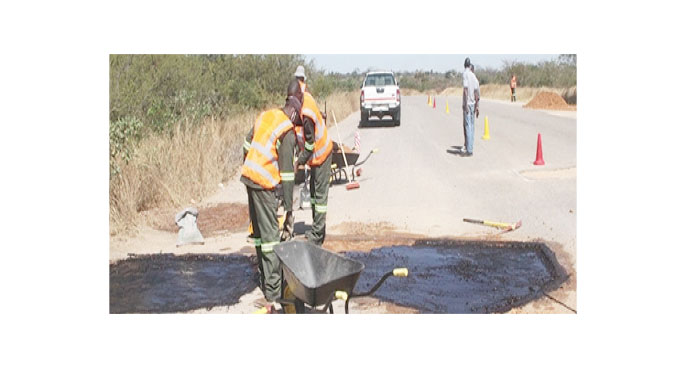
Limukani Ncube
“Consistent with the collective aspirations and determination of the people of Zimbabwe to achieve an empowered and prosperous upper middle-income society by 2030, the Second Republic launched Vision 2030 to chart a new transformative and inclusive development agenda. It is the pursuit of this vision which will deliver broad- based transformation, new wealth creation and expanding horizons of economic opportunities for all Zimbabweans, with no one left behind,” President Mnangagwa said in the foreword of the National Development Strategy 1 (NDS1) document.

And true to his word, there has been a lot of activity on the ground. Citizens in various parts of the country can testify coming across bulldozers and graders moving rubble and clearing roads. The heavy rains which fell in December and early this year left the country’s road network in bad shape, and the situation is worse in towns and cities where local authorities have over the years failed to maintain the roads.
In order to remedy the situation, Government in February declared the country’s road network a state of disaster as most of the roads had become untrafficable. And pursuant to that, Government set aside $33,6 billion for the Second Phase of the Emergency Roads Rehabilitation Programme (ERRP2), and US$400 million had been set aside for the first phase.

Road construction and rehabilitation is one of the main pillars for any economy. The quality of infrastructure in an economy is a measure of the quality of life of the citizens in a country. Further, the amount of a nation’s infrastructure has an important bearing on sustainable long-term economic growth.
It is against that background that Government has said during the subsistence of NDS1, efficient infrastructure delivery will be key in the realisation of national priorities and overall socio-economic development. This will involve restoration of basic infrastructure services such as roads and expansion in critical areas mainly targeting key sectors of energy, transport, water and sanitation, Information and Communication Technology (ICT) and housing.
“The targeted infrastructure sector outcomes in the Strategy will be underpinned by clearly defined and realistic sector strategies and interventions, including performance indicators geared towards ensuring restoration of basic infrastructure services that contribute meaningfully to economic growth and development,” reads part of a Ministry of Finance and Economic Development presentation on NDS1.
Focus on infrastructure is also critical in the sense that the country’s road infrastructure has been deteriorating over the past two decades. This has resulted in Zimbabwe being ranked number 127 out of 138 countries in the Infrastructure Index under the 2017-2018 World Economic Forum Global Competitiveness Report.
Apart from attending to roads in rural areas, the Government has now taken over some of the roads in towns and cities that fall under the jurisdiction of local authorities so as to enable swift movement of its citizens. The rehabilitation programme has started across the country where teams are maintaining and repairing existing infrastructure and equipment, completing on-going and stalled projects. In addition, as part of improving the road network, Government also seeks to attract Foreign Direct Investment in the sector, up-scale private sector investment in the provision of public infrastructure, promote facilities that cater for people with disabilities, design and implement climate proofing and resilient infrastructure and promoting infrastructure sharing.
In Bulawayo road rehabilitation has started in various parts of the city that include Siyepambili Drive which connects western areas to Victoria Falls Road. The road was in extreme bad shape, with some parts in Emakhandeni virtually unusable, forcing motorists to run on the gravel on the side of the road. The Central Mechanical Equipment Department (CMED) is on the ground rehabilitating Siyepambili Drive covering a 16,3km stretch from Bulawayo-Victoria Falls Road turn-off to the Bulawayo-Plumtree Road in Belmont and various sections along 4th Avenue and 8th Avenue, Fife, Samuel Parirenyatwa, Lobengula and Herbert Chitepo streets and Matopos Road.
A total of 43 roads in Bulawayo have been identified to be rehabilitated under the Government’s Emergency Roads Rehabilitation Programme (ERRP). Some of the major roads to be rehabilitated under the facility include Fife Street (Masotsha Ndlovu Avenue to 23rd Avenue, 4,1 kilometres), Luveve Road- arterial (Lobengula Street to Nguboyenja Avenue, 2,1 kilometres), Luveve Road -arterial (Nguboyenja to Siyephambili drive, 4,7 kilometres), Waverly Road (Sixth avenue Avenue Extension to Khami Road, 1,7 kilometres), Matopos Road (23rd Avenue to Leander Avenue, 2,5 kilometres) and Matopos Road (Leander Avenue to City boundary, 2,9 kilometres.
The roads also include; Nketa Drive-major collector (Hyde Road to Emadibheni Road 2,1 kilometres), Nketa Drive-major collector (Hyde Park Road to Khami Road 1,1 kilometres), Coghlan Avenue (George Avenue and Cecil Avenue, 2,8 kilometres), George Avenue (Gwanda Road to Harare Road, 2,4 kilometres), Dundee Drive (Plumtree Road to Matopos, 2,9 kilometres), Cowdray Corridor (Railway line to Cowdray Park service station, 2,9 kilometres, Doncaster Road (Bristol Rd South to 23rd Avenue. 1,09 kilometres) and Josiah Chinamano 14th Avenue to Halifax road, 2,9 kilometres.
The Bulawayo City Council has indicated that about 75 percent of the city’s road network has outlived its lifespan, and the intervention by Government came at the right time as council appears out of depth to remedy the situation.
Bulawayo was allocated about $625 million for the rehabilitation of its estimated 2 460km road network. The city was also this year allocated an additional $15 million by the Zimbabwe National Roads Administration (Zinara) for routine roadworks.

The NDS1 also seeks to revitalise the country’s rail network, another key pillar to economic resuscitation. A good railway network is key to the growth of domestic, regional, and international trade through connecting all major economic centres. In addition, a good railway network also eases the burden on the road networks as well as reducing the costs of transportation of goods and services. Records indicate that out of the total rail network of 2,627 km, about 229km or nine percent is under caution. The deteriorated infrastructure has also led to prevalence of accidents and derailments.
“This programme is vital given that roads are intricately linked with our economy within the country and beyond. Furthermore, a good transport network is an important cog in the realisation of a wide array of the sector priorities and objectives outlined in the National Development Strategy 1, as we journey towards Vision 2030. Hence, my administration remains seized with the provision and maintenance of sustainable infrastructure and other associated services,” President Mnangagwa is on record as saying.



 Online Reporter