Chronicle Editor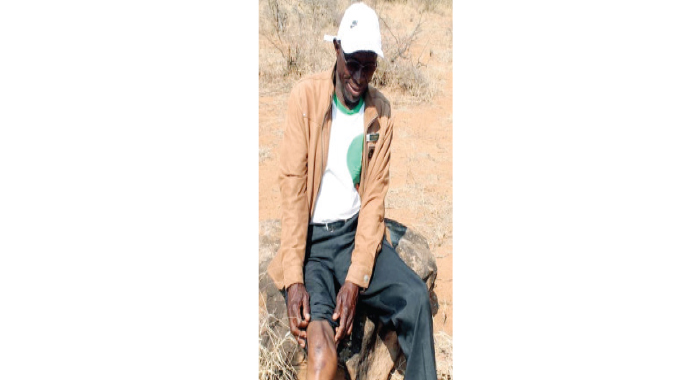
Sukulwenkosi Dube-Matutu, Chronicle Reporter
CDE Phineas Maphosa does not only carry memories of the liberation struggle but also a bullet lodged below his left knee cap following Rhodesian forces’ attack that killed over 300 of his comrades more than 40 years ago.
The ex-combatant whose liberation name is Sikhathini Zondo vividly recalls the attack at Zipra’s Mboma Training Camp near Luso in Angola which occurred at 7:03AM on February 26 in 1979, killing 325 comrades and injuring 550 others including himself.
Cde Maphosa said the attack on the camp that was under Cuban and Russian instructors occurred on the day that they were supposed to be transported from the training camp to Zambia for deployment to the battle front.
He said while the injuries he sustained during the attack robbed him of the opportunity to fight in the battle front, that did not stop him from ensuring that the struggle became a success.
He said he assumed the role of commander and instructor at the Angola training camp where he successfully trained 4 000 men that were later deployed to the war front.
“On 26 February in 1979 we were having breakfast when the Rhodesian Army Airforce attacked us at 7:03. The troops came in from the Democratic Republic of Congo (DRC). We were gathered as trained troops of about 1 000 comrades awaiting to be transported to Zambia and from there we were supposed to be deployed home to fight. We lost 325 comrades while 550 were seriously injured, including myself,” he said.
“We noticed the enemy when it was already too late to take cover. I was on my way back to our sleeping quarters to collect something when they attacked. One bullet hit me on the hip while another hit me below the knee cap of my left leg. I also fell and dislocated my other knee while I was trying to take cover. The bullet on my hip was removed while the one below my knee cap wasn’t as they said it would dissolve on its own. The last X-Ray I had which was done last month showed that the bullet was still there. The dislocated knee is giving me problems up to now and as you can see, I’m limping because of these injuries.”
Cde Maphosa said prior to the attack, there was movement of Rhodesian Forces aircraft disguised as Angolan civilian planes for spying purposes.
He said at that time there was civil unrest in Angola and the leader of the opposition Jonas Savimbi had marauding forces that were constantly attacking their camp hence the Rhodesian Army took advantage of that.
“After being injured during the attack I was ferried to a military hospital in Luanda in Angola where I stayed for three months. Thereafter, we were taken to a camp which belonged to the South West Africa People’s Organisation (Swapo) party in Namibia and during that time the late Vice President Joshua Mqabuko Nkomo in the company of former President of Namibia Samuel Nujoma used to visit us to check on how we were recovering,” said Cde Maphosa.
“Since some of our commanders and trainers had died during the attack at our camp in Angola I was appointed as a commander of the military intelligence and reconnaissance unit at Mboma Training Camp in Angola. That was the post I held until we came back home”.
He said since he could not be deployed to the battlefield anymore because the injuries, he took the opportunity to train more comrades.
“There were a lot of battles going on in the training camps because the Rhodesian forces were constantly attacking us. Their strategy was to attack our training camps in order to cripple us and stop us from sending in more reinforcements but their plan failed as we kept training and churning out more reinforcements.
“They realised that they could not contain our troops on the front and they kept attacking our camps in various countries,” he said.

Cde Maphosa said one of the things that was a stumbling block in the journey to liberation were sellouts. He said the way their camp was attacked was a clear indication that the Rhodesian Army had received precise information on their movements and when to attack.
Cde Maphosa said he left his home in Gwanda to join the liberation struggle in 1977 at the age of 24. He arrived at Nampundwe Transit Camp in Lusaka, Zambia where he joined 15 000 other recruits under the leadership of camp commander Cde Killion Sibanda.
He said in May 1978, he was moved to Freedom Camp for a month and was later flown to Mboma Training Camp in Angola where he underwent military training.
“We started our training in August 1978 for a period of six months. The late Vice-President Joseph Msika in the company of other nationalists came to assess our preparedness for battle and they instructed that we get retrained as we were not ready. We had to undergo six months of training.
“The training which we underwent was intensive as it was not guerilla training but counter guerilla training. It was a mixture of guerilla warfare and conventional warfare. We were even using big weapons such as heavy machine guns, anti-air guns and tanks. We were being trained to be a regular army,” he said.
Cde Maphosa said he was inducted into the Zimbabwe National Army in 1981. He later wrote entry examinations which he passed and qualified to go to the Zimbabwe Military Academy in Gweru where he was trained as an officer cadet and qualified as a captain. He served in various battalions until he retired in 2006. Cde Maphosa said he went on to contest for the position of councillor for Gwanda’s Ward 14 under Zanu-PF, a position which he has held up to now.
“When I left to join the struggle, I was working at Collen Bawn Mine as a clerk. The oppression which we were experiencing as black people at the time is what led me to join the struggle. As black workers we were not being treated like our white workmates and our salaries were lower,” he said.
“Some of the white workers who were getting better salaries were not even educated and we had to end up doing their work for them. I left with my 23 other team mates of a football team from Collen Bawn. We attained political freedom in 1980 but what had remained was for us to attain economic freedom and now the Second Republic is focusing on ensuring that we attain economic freedom.”
Cde Maphosa said as a councillor, he wants to ensure that development is realised so that people from his area reap the benefits of the liberation struggle as much as possible. — @DubeMatutu.


 Online Reporter