Chronicle Editor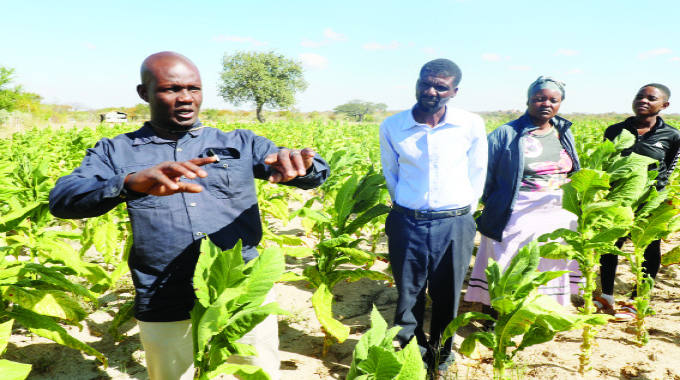
Raymond Jaravaza, [email protected]
IN a first-of-its-kind tobacco farming project that promises to change the lives of Marula villagers in Mangwe District, Matabeleland South Province, 17 farmers are now part of a pioneer commercial venture project to tap into the rich pickings of the golden leaf.
Tobacco is predominantly grown in Mashonaland provinces with a few farmers involved in Midlands Province and not so common in the entire Matabeleland region, which majors in cattle ranching.
The pioneer tobacco scheme was introduced last year at Syringavale Farm in Ward 11, Marula, breaking the decades cycle of reliance on subsistence staple grain farming and livestock keeping.
The increasing incidents of drought have greatly affected yields, plunging the majority of the communal farmers in the area into poverty, prompting a shift to the adoption of a different mode of generating income – tobacco.
Tobacco farming specialist, Mr Rodrick Musiiwa, a former Tobacco Industry and Marketing Board (TIMB) employee is the brains behind the first-ever tobacco-growing project in Marula and yesterday he took a Chronicle crew on a tour of the fledging tobacco fields where some of the new tobacco farmers are seized with harvesting the golden leaf.
One of the farmers, Mr Cortin Mpofu, already has a sizeable yield of cured tobacco stored at his home and is still harvesting more tobacco leaves from his one hectare field and curing it on site.
“We planted Mr Mpofu’s field in mid-December and he has over 15 000 tobacco plants on a piece of land that is one hectare in size. Right now, his crop is at the third stage of reaping where he harvests two leaves from each plant every week,” said Mr Musiiwa.
“This season was not a good one because of the El Nino phenomenon. So, we expect the tobacco harvest to be a bit lower but that is not to say that the farmers will not benefit from their efforts. From my calculations, Mr Mpofu can expect about 1 100 kilogrammes from this crop, which is a decent harvest considering that the area received very little rainfall this season.”
Mr Musiiwa said in a good season when an area such as Marula receives normal rainfall, tobacco farmers can expect at least 1 800 kilograms of tobacco from one hectare.
“The price of tobacco was US$3,40 per kilogram at the auction floors as of today (Monday). So, the mathematics will show that a farmer who harvests more than 1 000 kilograms from a single hectare will smile all the way to the bank,” he told the news crew.
“The soil here is as good as the one you find in places like Karoi where tobacco farming is big business.”
The tobacco specialist said unlike in other places where tobacco farming is rife, the community does not have to worry about rampant cases of deforestation where farmers cut trees to cure their tobacco before selling it.
“The issue of cutting trees to cure tobacco is very sensitive in most communities but we won’t face that challenge here because the tobacco is sun-dried for about three weeks after harvesting, so there will be no cutting down of trees to cure the tobacco,” he explained.

Mr Musiiwa said the idea of introducing tobacco farming in Marula was motivated by the need to capacitate farmers in the southern parts of Zimbabwe to try cash crops that can do well in drought conditions so that the country continues to meet the demand for tobacco in world markets.
“The demand for tobacco continues to grow but we cannot expect the traditional tobacco in Mashonaland provinces where the crop is grown to meet that demand relying on the same land that they have been growing tobacco on for all these years.
“So, we decided to come to Marula, teach farmers how to grow tobacco, and fully utilise their land, which is abundant but under-utilised,” said Mr Musiiwa. In addition to the 17 farmers that have ventured into tobacco farming, another 40 have already registered to join the project next planting season. Mr Musiiwa said they were targeting 200 farmers next year, all of them from Marula who will use their communal land.
One of the local farmers, Mrs Sikhathele Sithole, said she never imagined herself as a tobacco farmer but was intrigued by Mr Musiiwa’s pilot piece of land that he prepared, planted the golden leaf, and took the villagers through every step of growing tobacco as a way of giving them practical lessons on the intricacies of tobacco farming.
“I have been growing maize for years but we always have challenges with the amount of rain that we receive in this area resulting in the crops withering and we get nothing,” she said.
Even the youth are not being left out of the tobacco project. Miss Condoleezza Ndlovu, a young farmer who also took the opportunity to learn about tobacco farming, said she used the family’s land that had remained idle for years and is now counted as part of the pioneer team of tobacco growers in Marula.
“When harvesting tobacco, we start by cutting the leaves at the bottom of the plant, which we call prime leaves and we do that at least once a week. After harvesting the leaves we tie them in small bundles and put them in a barn for a week and the tobacco leaves start turning from green to a golden colour,” she said. “From the barn, we then dry the tobacco leaves on a rack for three weeks. Growing tobacco is labour intensive but I’m not complaining.”



 Online Reporter