Chronicle Editor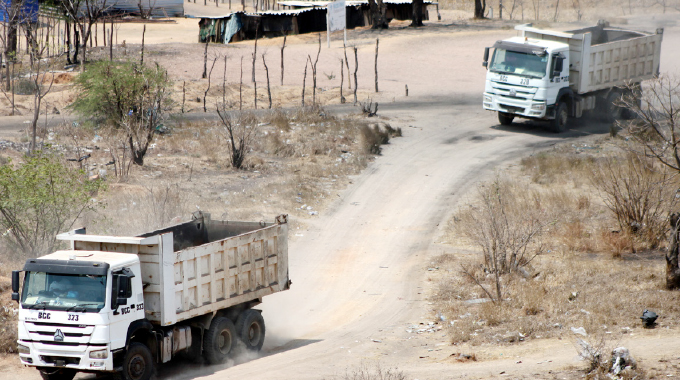
Raymond Jaravaza
MR Elvis Mpofu, a resident of Cowdray Park suburb in Bulawayo, lives less than 500 metres from the Richmond landfill, commonly known as Ngozi Mine. For the past five days, his family has been keeping windows and doors open, fearing their home might be filled with smoke from fires burning at the dumpsite.
Dumpsite fires, also known as landfill fires, are notoriously difficult to extinguish for several reasons. There are two main types of landfill fires, surface fires and underground fires. Surface fires involve recently buried or uncompacted refuse and are generally easier to manage. However, underground fires occur deep below the surface and involve older, decomposed materials, making them much harder to reach and extinguish.
Landfills contain a mix of materials, including organic waste, plastics and hazardous substances. This variety of fuels can cause the fire to burn at different temperatures and produce toxic fumes, complicating fire-fighting efforts. Decomposing waste produces methane, a highly flammable gas. Methane can accumulate and cause explosions or help the fire spread more rapidly through the landfill.

Fires need oxygen to burn and landfills can have numerous pathways for air to enter, especially if the waste is not properly compacted or covered. This makes it difficult to suffocate the fire. Using water to extinguish landfill fires can create leachate pools, which are harmful to the environment. Additionally, the fire can damage the landfill’s protective liner, leading to groundwater contamination.
Some materials in landfills can spontaneously combust due to chemical reactions or bacterial decomposition, making it challenging to predict and prevent fires. These factors combined make landfill fires a complex and hazardous issue to manage.
Since Monday, a smouldering fire has been burning at Ngozi Mine, suffocating nearby Cowdray Park residents. Two schools, Tategulu Primary and Cowdray Park High School, are within a short walking distance from the site where the fire has been raging for several days.
A blanket of thick black smoke has enveloped Mr Mpofu’s house. He shared with the Chronicle news crew how his family struggles to sleep amid the suffocating smoke that makes breathing difficult for both parents and children.
“It’s been five days since the fire started at Ngozi Mine, and because our houses are so close to the dump site, we are struggling to sleep at night due to the smoke. During the day, it’s still bad but not as severe as at night. We are appealing to the Bulawayo City Council to extinguish the fire. We have two schools just next to Ngozi Mine and our children are suffering,” said Mr Mpofu.
Tategulu Primary School and Cowdray Park High School are the closest buildings to Ngozi Mine, separated by a small river. Mr Mpofu’s two young children attend Tategulu Primary School, and his heart aches thinking about the smoke they and their classmates inhale daily.
“May the city council please do something about these fires at Ngozi Mine. We are suffering because of the smoke. Our children are still going to school, but I don’t even want to think about what they are going through because of the smoke they inhale every day in class,” he said.
The Chronicle news crew took a mini-tour of Ngozi Mine and observed several scattered fires burning at the top of the dump site. Surprisingly, children were spotted scavenging for valuables, among the heaps of trash.
Ngozi Mine residents’ association vice-chairman, Mr Thulani Nxumalo, said community members at the decades-old dump site have banned their children from scavenging in the area.
“The fires are spread across the dump site. As parents, we are scared and have reprimanded our kids from going up there,” said Mr Nxumalo, who is also a village head at Ngozi Mine.
The community is closely knit and everyone knows everyone.

“Way back, the city council used to send trucks with sand to compact the top layer at the dump site, which minimised cases of fires breaking out,” he said.
Mr Nxumalo, a long-time resident of Ngozi Mine, an informal settlement on the road leading to the Victoria Falls Highway, said he cannot recall a fire lasting this long at the dump site.
He blames unscrupulous companies for dumping containers with flammable substances at Ngozi Mine.
“It’s normal for a fire to break out here, but this time it’s serious. Some companies are dumping flammable substances that are causing the fire to spread so badly,” he said.
Mr Nkosilathi Mlilo, another resident at Ngozi Mine, suspects someone started the fire to burn old trash delivered at the dump site, making it easier to scavenge for new trash.
“It’s been bad for the last four to five days. I suspect someone lit the fire to burn the old trash so that it’s easier to collect valuables from the new trash dumped by trucks,” said Mr Mlilo.
BCC communications manager, Mrs Nesisa Mpofu, said it’s normal for fires to break out at landfills due to the nature of the materials dumped there.
“Waste disposal sites are obnoxious but necessary. They receive all kinds of waste. Putrescible waste gives rise to odour and fly nuisance challenges, whereas some inorganic waste, such as old batteries, present fire hazards when subjected to pressure through compaction, a normal landfill maintenance process.

“Broken glass presents physical damage and injury to vehicle tyres and employees. As putrescible waste decomposes, it produces methane, a greenhouse gas that contributes to climate change,” said Mrs Mpofu.
“We currently have one Richmond Landfill, but there are other waste disposal sites that preceded it (Sobukhazi school grounds to Mbuyazwe flats; Site opposite Matshobana and Hyde Park behind the cemetery). The Richmond landfill was commissioned in 1994, and once the city is done with it, the plan is to turn it into a park with a bird sanctuary,” she said.
Residents’ association chairman, Mr Steven Nkomo, said: “The smoke from the site is affecting residents in Cowdray Park. They spend day and night in that smoke, which is causing disease and contributing to climate change.”


 Online Reporter