Online Reporter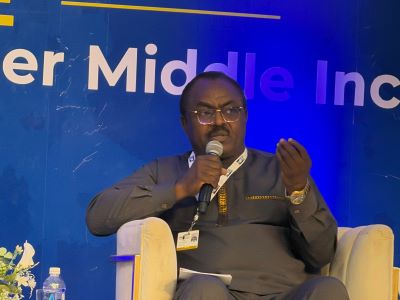
Nqobile Bhebhe [email protected]
THE National Railways of Zimbabwe (NRZ) could unlock a potential 20 million-tonne annual cargo market capable of providing the revenue base needed to attract private capital into the rehabilitation and modernisation of the country’s rail network, the Infrastructure and Development Bank of Zimbabwe (IDBZ) has said.
The cargo opportunity, coupled with long-term off-take agreements with private sector players, could strengthen NRZ’s commercial viability and improve its ability to raise funding for infrastructure renewal.
Speaking during a panel discussion at the ongoing Zimbabwe Economic Development Conference (ZEDCON) in Bulawayo, IDBZ representative Engineer Farai Madondo said Zimbabwe already had significant volumes of domestic, import and export cargo that could be channelled onto the railway network.
“Our estimates are that local cargo is about 8.2 million tonnes, imports about 6.5 to 6.6 million tonnes, and export cargo about 5.6 million tonnes,” he said.
“We are looking at 20 million tonnes of cargo to be moved and that is available to the National Railways of Zimbabwe virtually with no competition. There is your steady stream of income, your steady stream of revenues.”
Eng Madondo said private sector off-take agreements could provide NRZ with greater certainty of revenue and strengthen the case for investment.
“There are private institutions here who want all of this cargo. We are happy to have off-take contracts with the National Railways of Zimbabwe, and that will put the National Railways of Zimbabwe in a very strong position when it comes to attracting investment,” he said.
The remarks come as Government and the private sector explore financing models to revive NRZ, whose ageing infrastructure and rolling stock require substantial capital to restore the railway system to efficient regional and international standards.
Eng Madondo, however, said the scale of the rehabilitation required meant NRZ could not be revived through isolated interventions.
“The scope of what really needs to be done with the National Railways of Zimbabwe at the moment does not need a piecemeal approach,” he said.
“We need to upgrade the tracks to reach the regionally integrated standards in terms of the gauges.”
He said the rehabilitation programme should cover signalling and traffic control systems, rolling stock, training facilities and workshops, while new railway lines would be required to support national and regional integration.
“Traffic controls need to be in place. The National Railways of Zimbabwe used to have a vibrant training centre to train up-and-coming professionals to be able to look after the infrastructure and the business itself. That needs to be revived,” Eng Madondo said.
“National Railways of Zimbabwe used to have vibrant manufacturing workshops, and we need as well to replace the existing rolling stock itself.”
“Now we are talking of regional integration. We also need to build new lines to integrate regionally and to meet national and regional needs.”
The IDBZ representative said the magnitude of the required capital investment made private-sector participation critical to the railway revival.
“All this requires huge capital outlays. Does the Government have the money to do this? No, obviously not,” he said.
He said the starting point should be to restore NRZ as a commercially viable business focused on its core freight and passenger operations.
“The first thing we want to look at is the National Railways of Zimbabwe as a business,” he said.
“At the moment, in spite of the potential that is there in terms of the business itself and the policy support that exists from Government, we have got a dead horse that is full of life.
“That’s the National Railways of Zimbabwe.”
Eng Madondo said restoring confidence in the railway would also depend on improving service reliability, cargo security and infrastructure safety.
“At the top of it all, in everything that any national railway service does, it has, number one, to look at the safety and security of cargo in transit. It’s very important. It has to look at assured turnaround times,” he said.
He said a range of policy measures could also be considered to increase rail’s share of bulk freight, including proposals for a statutory requirement for a proportion of heavy cargo to be transported by rail.
“Indeed, I heard that proposal to put in place a kind of statutory mandate as to the percentage of heavy cargo that can be carried by rail. That is one of them, and we believe it has to be an assortment or a whole gamut of options around,” Eng Madondo said.
The proposed shift of more bulk cargo from road to rail comes as Zimbabwe seeks to strengthen its logistics infrastructure and improve the competitiveness of its mining, manufacturing and agricultural sectors.
A commercially sustainable NRZ would also provide greater capacity for moving bulk commodities to domestic markets, ports and neighbouring countries, supporting Zimbabwe’s ambitions to strengthen its position as a regional trade and transit hub.