Online Reporter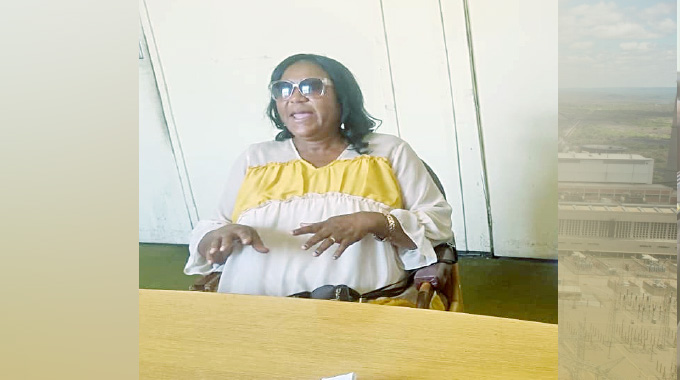
We conclude our interview with Cde Neddy Sibanda (née Nkiwane). Cde Sibanda, whose pseudonym was Cde Sithembiso Nxumalo, was “recruited” from Manama Mission in January 1977 while she was a Form One pupil. It was during this time that a stick of ZPRA guerrillas swooped on the school and took away 400 pupils, five teachers, and a clerk, leading them to Botswana en route to Zambia. In previous interviews, Cde Sibanda told our Assistant Editor, Mkhululi Sibanda (MS), about her and her fellow schoolmates’ journey to Botswana in the company of the guerrillas. She also spoke about their arrival in Zambia, where, as girls, they were housed at Victory Camp (VC), a transit camp for women. Later, she and others were moved to Mkushi Camp, which ZPRA opened as an all-female training camp for women combatants. They were the pioneers of the camp. Today, she continues her narration, reflecting on how she and others survived the bombing of 19 October 1978. On that day, the Rhodesian forces first attacked Freedom Camp near Lusaka before turning their arsenal on Mkushi, where they launched both an aerial and ground assault on the women’s camp. The attacks on the two camps formed part of a revenge mission by the Rhodesian forces in the wake of intensified nationalist activities. Below are excerpts from the interview with Cde Sibanda. Read on…
MS: Let’s resume our conversation with the bombing of Mkushi.
Cde Sibanda: The new recruits who were at the kitchen were the most affected. As I mentioned last time, when the bombing started, they were the ones being served food there. Another issue was that, time and again, the instructors had been telling everyone in the camp that, in the event of a Rhodesian attack, we were to run to the trenches or defence pits. So, when the bombs started raining on the camp, the new recruits remembered those instructions and sought shelter in the underground defence pits, which, on that day, turned out to be a tactical error.
MS: So they ran to the defence pits?
Cde Sibanda: Yes, they tried to reach them, but it seemed the Rhodesians had done their homework. They appeared to have full information about the geography of the camp. They bombed the area where the defence pits were located and, in the process, hit the girls hard. It was a sorry sight. Others were caught while trying to get into deeper trenches. The napalm caused further devastation, it flares up even more when it comes into contact with water. Mkushi River thus became a killing zone, from both bullets and napalm. This was because the comrades in their bid to escape moved to the river. As I said before, it was heart-wrenching to see my former schoolmate from Manama, Mercy, lying dead. She was shot and killed just near us.
MS: Despite the dangers you faced, it seems you were still determined to hold on and not surrender. Where were you getting that inspiration from?
Cde Sibanda: We had received adequate training, the same training that our male counterparts had undergone in their camps. We were prepared to fight the enemy despite the disadvantages we faced. The revolutionary spirit was upon us, and sometimes, when I look back, I still struggle to understand what drove us. Quick decisions had to be made in those tense moments. While all the killings were taking place and we were trying to escape the enemy’s bullets, a girl called Charity, who had been shot in the leg, said we should hold on and find a way to leave at night. At that moment we were hiding under the boulder that I mentioned last time where we sought refuge. Then, during their comb-up, two heavily built enemy soldiers approached our position. They were giants, heavily bearded, with pierced noses. As they came closer, it was Charity’s idea that we use the dead as our cover. It worked, and that’s how we managed to survive. To be honest, it was by God’s grace that we lived. The Rhodesians were determined to wipe us out. Even now, I bear visible scars on my neck. The loss of our comrades traumatised us deeply, but we had to soldier on, there was no other way. Some of the men who were part of the security detail were also badly affected.
MS: But as women combatants, how did you rate yourselves as soldiers?
Cde Sibanda: We were adequately trained, there was nothing men could do that we couldn’t. In handling weapons, we could do everything, including stripping and assembling guns. Our training was top-notch.
MS: Tell us what happened after the announcement of the ceasefire.
Cde Sibanda: When we came back home, we were taken to Sierra Assembly Point at Insukamini near Gweru. However, I didn’t pursue a military career; I chose instead to resume my education. I later enrolled for nurse training at Gweru Provincial Hospital. After qualifying, I worked at health institutions such as Mpilo Central Hospital and later at the United Bulawayo Hospitals (UBH), where I retired a few weeks ago. My husband is also a former freedom fighter who served in the Zimbabwe National Army with the rank of Major. We met in 1981 and we had our wedding in 1986. We were blessed with four children, one boy and three girls and we are now proud grandparents.