

 Chronicle Editor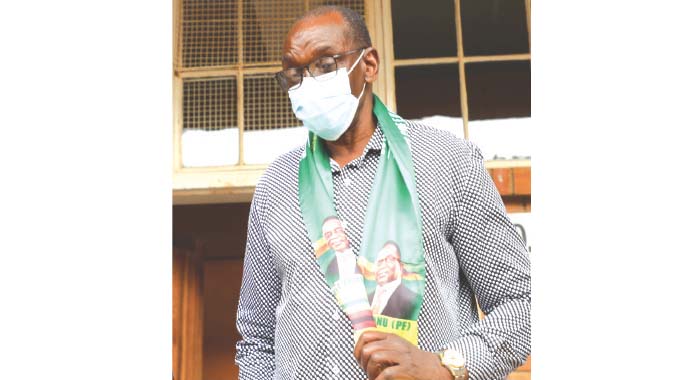
Sukulwenkosi Dube-Matutu, Chronicle Reporter
ZANU-PF vice-president Kembo Mohadi has said the country under the Second Republic has proven its resilience and capacity to sustain itself through the successful implementation of various development projects.
In an interview at the Zanu-PF Bulawayo party offices yesterday following a closed-door meeting with party leaders from the province, Cde Mohadi said the new dispensation had used locally available resources and personnel to spearhead development unlike under the first dispensation which was relying on foreign aid.
He said Government had gone a step further to address some of challenges created by opposition led local authorities. Yesterday’s meeting was attended by the party’s leadership from both the national executive to grassroot structures under strict Covid-19 regulations. All those who attended were tested for Covid-19.
“For the past three years the Second Republic has embarked on the theory that we are on our own and we have to develop our nation ourselves. Zimbabwe has shown its resilience and projects that have been implemented across the country can testify this. We came up with the Transitional Stabilisation Policy where we wanted to stabilise the economy and we did,” he said.
“Prices were fluctuating but we managed to control them. We now know the value of our dollar against the US dollar that it’s between 80 and 85. In doing so we managed to control the prices and that led to the establishment of the foreign exchange floor.”
Cde Mohadi said the country was now able to record a surplus which has helped Government to embark in Public Sector Investment Programmes (PSIP) projects. He said for years Zimbabwe has not had money for PSIP projects.
He said these include road projects such as the Beitbridge-Chirundu highway where a large section of that road has been rehabilitated.
Cde Mohadi said for these projects the new dispensation has been engaging young contractors and entrepreneurs unlike the first republic which was engaging foreigners. He said a number of water bodies have been established across the country and they have resulted in establishment of a number of irrigation schemes.
Cde Mohadi said innovation hubs had also been introduced in tertiary institutions in order to equip students with skills to ensure that when they graduate, they are able to create jobs instead of looking for employment.
“Bulawayo had perennial water shortages. Now with the advent of the new dispensation we have commissioned the Epping Forest project and Nyamandlovu Aquifer which are both giving Bulawayo 20 litres of water per day.
“We also looked at local authorities that are being run by the opposition who have done a disservice to our people and we have moved on to rehabilitate their roads and we will move into the sewer and water reticulation. As Government we have to look after the people and not segregate,” he said.
Cde Mohadi, who is also the party’s second secretary, is conducting a nationwide engagement with Zanu-PF provincial leadership structures as the ruling party seeks to strengthen its base.
On Tuesday he met with party leadership from Matabeleland South Province at the Zanu-PF provincial party offices in Lupane while on Wednesday he held a similar meeting in Gwanda, Matabeleland South Province. He has so far met with party leadership from nine provinces.
He said part of the purpose of these meetings was to listen to the grievances of the party leaders and then respond.
“The leaders have to nurture new members because when they recruit new members most will be young people who will be knowing little about what happened before they were born. We also discussed how we will grow the party and how we will empower the youth.
“I also talked to them about the kind of leadership we want within the Zanu-PF party. We want leaders that live with the people, listen and learn with the people and love the people,” he said. — @DubeMatutu



 Online Reporter