Online Reporter
Nqobile Bhebhe [email protected]
ZIMBABWE is positioning infrastructure development at the centre of its economic transformation strategy, with the Government targeting the country’s emergence as a logistics hub serving the Southern African Development Community (SADC), Common Market for Eastern and Southern Africa (COMESA) and the wider African continent.
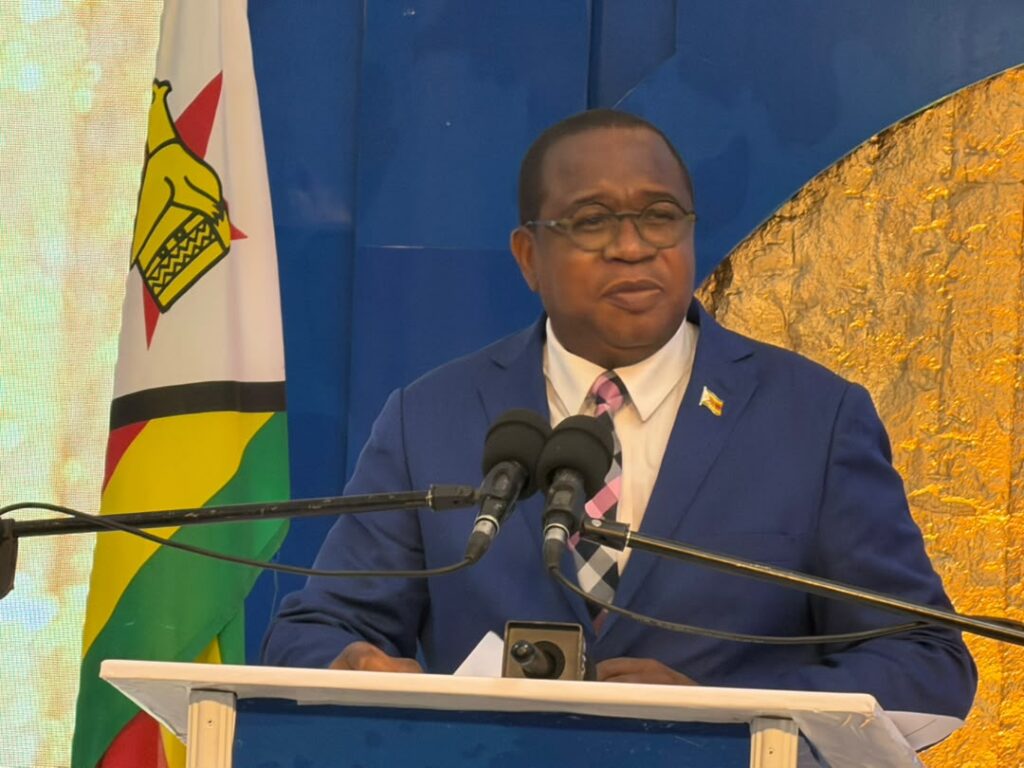
President Mnangagwa said modern and efficient infrastructure would be critical in lowering the cost of moving goods and services while enabling Zimbabwe to exploit its strategic geographical position and opportunities presented by the African Continental Free Trade Area (AfCFTA).
The President said this in a speech read on his behalf by Finance, Economic Development and Investment Promotion Minister Professor Mthuli Ncube during the official opening of the fifth edition of the Zimbabwe Economic Development Conference (ZEDCON) in Bulawayo on Friday.
Held under the theme, “Smart Infrastructure for an Upper Middle Income Society,” ZEDCON 2026 is focusing on infrastructure requirements to support Zimbabwe’s economic transformation and attainment of upper-middle-income status.
President Mnangagwa said infrastructure development was no longer simply a construction agenda, but a critical foundation for structural transformation and inclusive economic growth.
“The fifth edition of ZEDCON convenes under a timely and strategic theme which is ‘Smart Infrastructure for an upper middle income society’. This theme is more than an aspiration; it is a clarion call to action, defining the very engine of our structural transformation, building foundations of our economy, brick by brick, layer upon layer, leaving no one and no place behind,” he said.
He added: “Zimbabwe will be built by our own people today, tomorrow, and beyond.”
The President said modern infrastructure would strengthen Zimbabwe’s position within regional value chains by improving connectivity between producers, markets and trade corridors.
“By modernising infrastructure, we will facilitate the simplest movement of goods and services across the region, unlock the full potential of the African Continental Free Trade Area and optimise the benefits of our unique location in the region and beyond,” he said.
He said Zimbabwe’s geographical position should be viewed as an economic advantage rather than a limitation.
“Zimbabwe is not landlocked. We are landlinked,” he said.
The President said the Government’s ambition was to transform the country into a major regional logistics and trade centre.
“Our vision is to become the logistics hub of SADC, COMESA and the entire African continent,” he said.
He also highlighted Zimbabwe’s forthcoming role in COMESA, saying the country was set to assume the chairmanship of the regional bloc.
Zimbabwe is scheduled to assume the COMESA chairmanship at the 25th COMESA Heads of State and Government Summit in October.
The logistics ambition dovetails with Zimbabwe’s wider industrialisation strategy, with improved connectivity expected to support the movement of raw materials and finished products while strengthening linkages between domestic producers and regional markets.
With AfCFTA providing a framework for deeper intra-African trade, the Government sees modern infrastructure as an important enabler for Zimbabwean companies to participate in regional value chains.
The infrastructure strategy encompasses road, rail, energy, water, digital connectivity and logistics infrastructure, with these networks expected to support productive sectors including mining, manufacturing, agriculture and tourism.
The President said infrastructure investment should therefore be aligned with long-term economic development objectives rather than being treated as a stand-alone construction programme.
The ZEDCON 2026 discussions are expected to examine how infrastructure investment can contribute directly to economic productivity, competitiveness and the country’s Vision 2030 objective of attaining upper-middle-income status.
Zimbabwe’s strategic location between major markets in Southern and Eastern Africa provides a potential platform for the logistics strategy, with the country seeking to strengthen its role in regional trade corridors.
However, translating the ambition into reality will require reliable and competitive infrastructure, efficient trade corridors and investment in logistics facilities capable of supporting increased movement of goods across the country.