Nqobile Bhebhe [email protected]
ZIMTRADE is targeting to surpass the US$58 million in business generated during last year’s Export Week Buyers Seminar as the country intensifies efforts to expand international market access, secure new export orders and diversify its export base towards value-added products.
The trade development and promotion organisation is hosting international buyers in Bulawayo as part of the ongoing 2026 Export Week programme, which brings together 15 buyers from various countries to engage local producers and explore potential business partnerships.
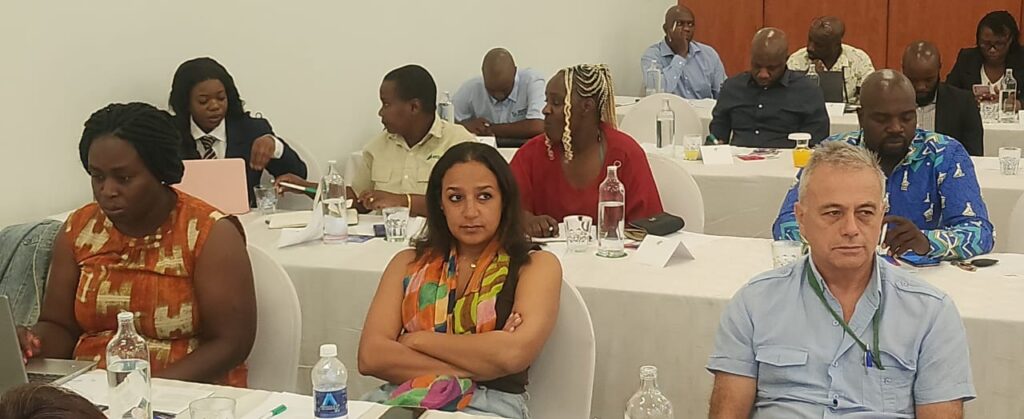
The buyers, drawn from markets including Mozambique, Zambia, Poland, Germany, the United Kingdom, Rwanda and Angola, represent various sectors, among them horticulture, building and construction, agricultural inputs and implements.
Speaking on the sidelines of the ongoing Buyers Seminar in Bulawayo, ZimTrade director of operations Mr Similo Nkala said the engagement was designed to provide Zimbabwean producers with direct access to potential international customers and create opportunities for sustainable export business.
“As ZimTrade, we are hosting the buyers seminars here in Bulawayo today and we will also be having another session in Harare on Wednesday, on the 4th of November,” he said.
He said the programme was structured to enable international buyers to interact directly with local companies, understand their production capabilities and assess the quality of goods and services available for export.

“The reason why we are organising this buyers’ seminar is to provide a platform for producers here in Zimbabwe to engage with potential buyers so that they also get to visit their factories, they see the production happening at their factories, which makes them believe that they will be able to supply the goods to the buyers,” said Mr Nkala.
The factory visits are expected to strengthen buyer confidence in the capacity of local businesses to meet international demand, while providing Zimbabwean companies with opportunities to establish supply arrangements, distribution networks and longer-term commercial relationships.
Mr Nkala said ZimTrade was optimistic that this year’s engagement would surpass the US$58 million in business generated through the 2025 Buyers Seminar.
“I think the other key issue to note is that from our buyers seminar for 2025 the business generated amounted to US$58 million and it is our hope that this year we should also surpass that figure of US$58 million in terms of the business generated, which will go a long way in terms of contributing towards our total exports,” he said.
The targeted growth comes against the backdrop of improving export performance, with Zimbabwe’s merchandise exports reaching US$10.4 billion during the nine months to September 2026, bringing the country closer to its US$10.6 billion export target for the year.

Zimbabwe is also targeting to increase annual exports to US$14 billion by 2030, in line with broader efforts to strengthen the productive sectors, increase industrial capacity and generate more foreign currency through trade.
Mr Nkala said the latest export figures demonstrated progress towards the country’s medium-term export ambitions, expressing confidence that the US$14 billion target remained achievable.
“The figures for our exports for this year up to September 2026, they stand at US$10.4 billion, which is closer to the US$10.6 billion target for 2026 and ultimately we were meant to increase our exports to US$14 billion by 2030 and from the figures that we have generated they say it is our hope that we will reach that US$14 billion figure by 2030,” he said.
However, he noted that the composition of Zimbabwe’s exports remained a major consideration, with the country still heavily reliant on primary products, underscoring the need to accelerate value addition and beneficiation.
Zimbabwe exports a range of primary commodities, particularly minerals and agricultural products, but increasing the proportion of processed goods would help the country capture greater value from its natural resources, strengthen domestic industries and broaden its export earnings.
Mr Nkala said the Buyers Seminar was among the platforms through which ZimTrade was seeking to promote value-added products and services in international markets.
“But I think the key issue that we also need to point out is that the bulk of our exports are more on the primary products.
“So as ZimTrade through this platform that we have provided in terms of bringing buyers to buy value-added products and also services to actually assist in terms of diversifying our exports to include more of value-added products,” he said.
The focus on value-added exports is expected to create opportunities for local manufacturers and processors to move beyond exporting raw materials towards supplying finished and semi-processed products to regional and international markets.
The engagement also provides an opportunity for Zimbabwean businesses to understand changing consumer requirements, identify market gaps and improve their competitiveness in export destinations.
Through its Export Week programme, ZimTrade is seeking to strengthen the link between local production and international demand, with the ultimate objective of translating buyer interest into concrete export orders, increased capacity utilisation, employment creation and sustainable foreign currency earnings.