admin
admin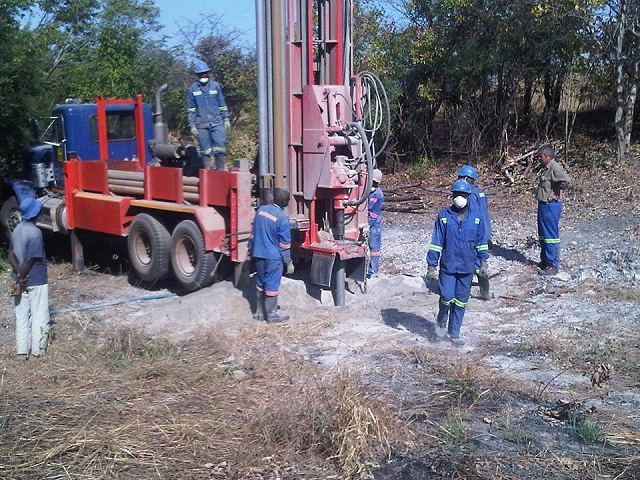

Leonard Ncube, Victoria Falls Reporter
Despair, desolation and anguish grips communal farmers each time they look at their wilting crops and dying animals.
The farmers are already counting their losses as the 2015/2016 rainy season draws to an end.
Water bodies like rivers and dams have dried up or have very little water left.
Mkhulunyelwa Nkomo, a livestock farmer in Marula Ward in Matabeleland South province, has witnessed successive drought seasons and has lost hope of rebuilding his herd.
His animals have no water for drinking and the pastures are dwindling by the day. Each day, Nkomo worries about his livestock.
“We definitely need dams because the little rains we received were wasted into Botswana as run off since our rivers such as Embakwe and Sanzukwi have no dams.
“We are likely to have a serious challenge watering our cattle this year and at the moment we are thinking of how we can augment the little water left. We are thinking of sinking boreholes and we wish government could come in and help us,” said Nkomo.
Most cattle farmers like Nkomo who rely on rain-fed agriculture are facing the same challenge of providing water for their live stock this year.
A number of rivers in districts like Bubi, Hwange, Binga, Lupane, Tsholotsho, Bulilima, Mangwe, Matobo, Gwanda, Mberengwa, Zimunya and Chivi did not receive significant inflows. Most of them are choking from the silt that accumulated over the years, making it difficult for the rivers to hold even the insignificant inflows.
While the government is grappling with sourcing grain to feed millions of drought-hit citizens, little efforts are being made to harvest water.
A snap survey of rivers in Matabeleland North province showed that rivers such as Gwayi, Shangani, Matetsi, Lubangwe, Manzamnyama, Mbembesi and Inyantue hardly covered their beds with inflows this year.
Experts say in order to counter the effects of climate change, it is crucial for the country to invest in the development of water harvesting technology.
One way of doing this is damming all rivers.
Rivers that need damming are Manza’mnyama, Maitengwe, Tekwane, Ramakgwebana, Embakwe, Shashe, Gomfi, Thuli, Shashane, Simukwe, Tegwani and Umguza, among others. Some of these cut across, Midlands, Matabeleland South and North provinces.
There are few major dams in Matabeleland North and Midlands provinces while those in Matabeleland South are silted except for a few which include major dams supplying water to Bulawayo City.
“The government plans for irrigation projects to sustain food production can only be possible with sustainable water bodies,” says Nkomo.
Government says it is courting the private sector to invest in water harvesting as a drought mitigation strategy.
Minister of State for Matabeleland North Province Cain Mathema revealed that plans were underway to secure funding to reinvigorate efforts to construct dams and drill boreholes in the province.
“The government and President Robert Mugabe take water harvesting seriously. However, illegal sanctions have been disturbing our progress. The government has plans to build dams and drill boreholes in Matabeleland North and a all we need is funding,” he said.
Cde Mathema says water infrastructure is a key part of Zim-Asset hence the need to court development partners as the country seeks to avert the worst drought in 18 years.
He says he will soon lead a team of Zimbabwe National Water Authority (Zinwa) and District Development Fund (DDF) to dam sites as part of the programme to improve the province’s water situation.
The government also wants to invest in sand abstraction especially on Manzamnyama and Shangani Rivers.
Cde Mathema says the government has ambitious plans to connect all rural households to piped water because, “akula khiwa elikotshozayo” (no white man drinks from a bush pump).
Environment, Water and Climate Minister, Cde Oppah Muchinguri-Kashiri will soon be launching the national water harvesting programme as a way of encouraging Zimbabweans to harvest water for use during drought years.
Zinwa spokesperson Marjorie Munyonga said once launched, the programme will then cascade across the country.
Munyonga said Zinwa was committed to ensuring water is available in dry areas.
“The completion of the Bubi Lupane Dam in 2012 represents some of the major water infrastructure investments in the province. The dam will improve access to water for drinking, irrigation, mining and industry.
“Zinwa is always ready to play its part in water provision in the country and will be working closely with other government agencies to ensure sustainable water provision,” she said.
The immediate response to drought is borehole drilling. Munyonga says water users countrywide are encouraged to preserve the resource in homes, fields and businesses in view of the current drought.
She said: “Irrigating farmers should also ensure they have water abstraction agreements, which is a legal requirement in terms of the Water Act. Government can also equip communities to do sand abstraction, with the help of organisations that focus on such activities”.
Cde Muchinguri-Kashiri recently said at least 12, 000 boreholes countrywide no longer produce water due to the low levels of the water table caused by perennial droughts.
She now expects most cities and towns to introduce strict water management strategies as sources are drying up in all the seven catchment areas, namely Mazowe, Runde, Save, Manyame, Sanyati, Gwayi and Mzingwane due to low rainfall patterns over the past five years.
Matabeleland North has 1, 775 non-functional boreholes, Matabeleland South (2, 087), Midlands (399), Masvingo (1, 327), Manicaland (1, 640), Mashonaland West (990), Mashonaland East (2,074) and Mashonaland Central (2, 699).
Cde Muchinguri-Kashiri said ground water levels were depleting faster because people turned to it as an alternative whenever municipal water is not available.
Most dams do not have enough water to last the country until the next rainy season and Bulawayo’s supply dams are less than 50 percent full.
In January, Zinwa reported that of the 21 catchment areas in the country, water levels from only 14 of them was more than 50 percent full while the others especially in the western parts of the country remained below average.
There is therefore a need to expedite plans for construction of dams such as Kunzvi Dam in Harare and Gwayi-Shangani Dam in Matabeleland North.
Dean Roberts, proprietor of Drill Boy, said borehole drilling is the only panacea to water challenges at the moment.
He says demand for boreholes was high but there is no money for such projects. “Boreholes drilling is a good way to go and should be done in line with the international programme of managing underground water because only three percent of it is drinkable while the rest should be processed,” said Roberts.
“We need set guidelines to help people manage water because they are careless with deforestation and soil erosion. We need to dam our rivers for best results,” said Roberts.
He says Matabeleland North has the deepest water table in the country at 80 metres on average. Boreholes in Dete are 120m deep while in Victoria Falls they are around 135m deep.


 derick.khumalo